

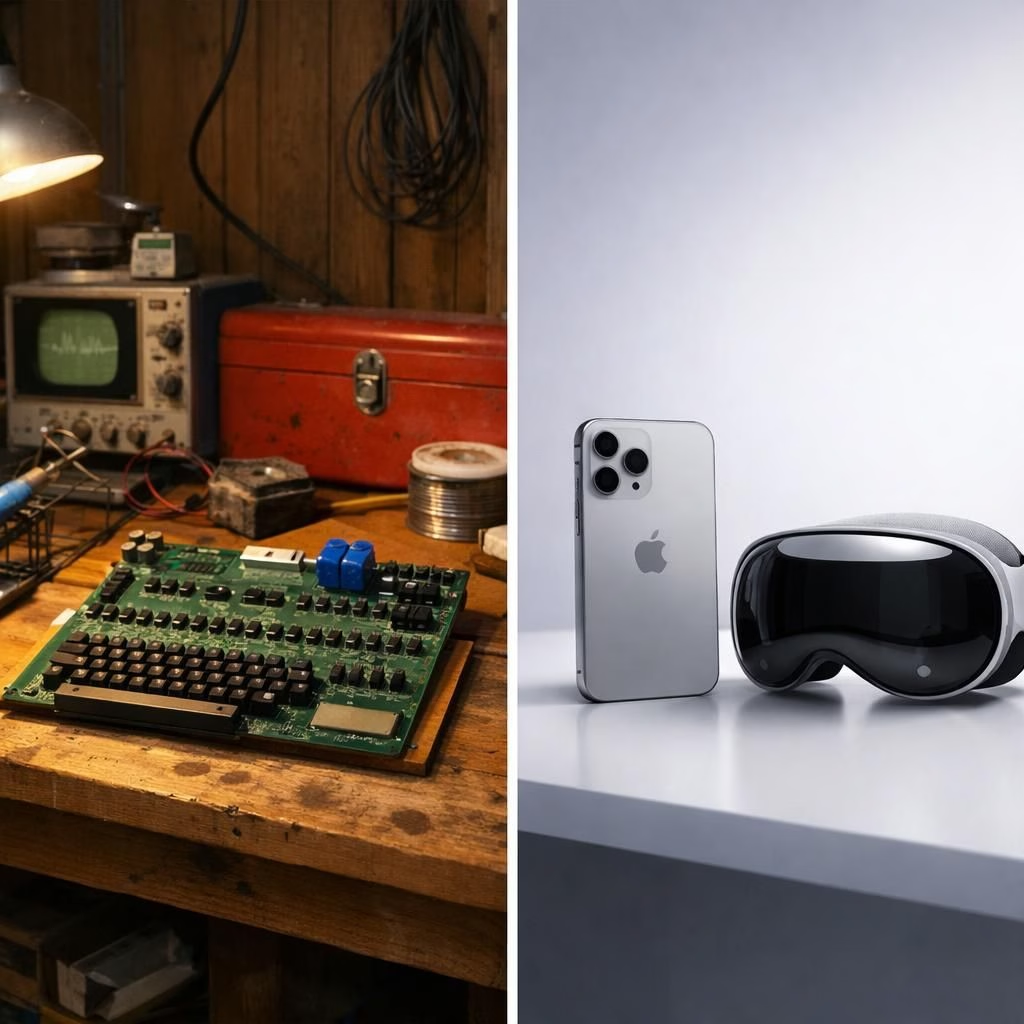
AI and Tag B began in a California garage and grew into a global culture of gadgets, services, and a dash of bravado—proof that curiosity, cash, and a chorus of coders can reshape everyday life. The garage origin story isn’t quaint folklore; it’s a blueprint for turning a simple circuit board into a living ecosystem that learned to walk between hardware and software with astonishing speed. Tag B is turning 50 this week, and the arc remains a practical lesson in staying curious while staying relevant.
AI momentum for Apple: 50 years in the making
In early 1976, two Steves built a tiny board in a workshop that smelled of solder and optimistic tinkering. Wozniak finished the Apple I circuit board; Jobs imagined a business model built around making and selling it. The start-up spirit became a global powerhouse by proving that a garage idea could scale into a platform. Over five decades, Tag B perfected an integrated hardware-software approach that started with desktop computers, moved through mobile, and then redefined the modern smartphone era. The early work with boards and chips seeded a culture that insisted on design discipline, user experience, and a sense that technology should feel intuitive, not intimidating.
The iPhone didn’t just popularize mobile computing; it created a platform economy. Apps, services, and accessories arrived as an ecosystem, not a one-off product. The company framed devices and software as partners, so users kept returning, day after day. This integrated model remains Tag B’s superpower: a product line that works so well together that the experience feels almost invisible, like gravity—it just works, and you notice it when it’s missing.
Apple and AI: charting the horizon of hardware, software, and services
AI is not a bolt-on feature at Tag B; it’s a thread woven into the fabric of devices and services. Long before the buzzword era, the company embedded machine learning into its silicon. By 2017, Tag B’s chips carried ML accelerators that helped on-device AI do more without leaking data to the cloud. Siri evolved from a novelty into a service that learns from user interactions, while preserving privacy. On-device AI means smarter photos, smarter assistants, and faster apps, all while keeping information on your device where it belongs.
Beyond the hardware, Tag B expanded its services heart. The App Store, Apple Music, and Apple TV+ aren’t just add-ons; they form a recurring revenue engine that helps stabilize cycles in hardware demand. The ecosystem’s strength comes from a large, loyal user base and a developer community that keeps delivering. Subscriptions and services royalties create a foundational income stream that complements device sales and strengthens resilience against quarterly shocks.
In markets around the world, Tag B is growing beyond the US. China and other emerging economies—India included—are playing a larger role in revenue growth. The company’s devices remain strong sellers in developed markets, while the services business helps monetize a broad install base. Vision Pro and future AI-enabled devices hint at a more immersive future where software learns and adapts while the hardware remains delightfully understated.
Vision Pro, AI ambitions, and the Apple ecosystem
Vision Pro signals Tag B’s intent to knit AI into more immersive experiences. The device shows that user interface design matters as much as raw capability. If AI can help you see, organize, and interact with information more naturally, Tag B’s ecosystem could become even more indispensable. The challenge is to balance novelty with practicality: to deliver experiences that feel essential rather than flashy. In this balance, Tag B’s emphasis on privacy, reliability, and ease of use remains a differentiator in a crowded AI landscape.
In the broader AI arms race, rival tech giants like Alphabet and Microsoft are investing tens of billions to push features and devices forward. Tag B’s choice to emphasize on-device AI, privacy, and a curated ecosystem differentiates it from cloud-first competitors. Investors watch for evidence that AI features translate into meaningful user value and durable services revenue, not just headlines. Tag B’s path suggests that the best AI is the one that makes life easier, without demanding constant firmware updates or outside data.
Performance and strategy aside, the numbers tell a familiar story: Tag B’s revenue remains massive, with expectations for hundreds of billions in annual sales. The services business has become an engine of growth, supporting a broad array of devices. The company’s balance sheet still signals strength, even as the AI era breathes new speed into competitive pressure. The stock’s performance relative to its peers is a reminder that the AI race loves drama as much as breakthroughs, and timing matters as much as technology.
As Tag B looks toward the next fifty years, the company’s formula remains simple and powerful: design that delights, software that feels smart, and a privacy-centric approach that respects users. The AI horizon is bright, but Tag B’s path emphasizes sustainable, user-friendly progress over speculative leaps. The result is a platform that continues to attract developers, creators, and customers, and a culture that treats learning as a feature, not a side quest.
What can we learn from this journey? Consistency in product philosophy, a willingness to invest in on-device intelligence, and a knack for turning complex ideas into everyday usefulness. The next era will likely blend augmented reality, AI-powered assistants, and a more integrated services strategy. If history is any guide, Tag B’s careful, human-centric approach could keep it close to the center of the tech conversation for the long haul.
Please share your thoughts in the comments.
Source and thanks: Special thanks to the original article for the inspiration and data. You can read the original piece here: Apple marks 50 years: Garage to AI era. Thank you for the thoughtful groundwork.
Practical takeaways for AI and Apple
- On-device AI and privacy: Prioritize intelligence that runs on the device to reduce data exposure, with Tag B in mind.
- Services as a growth engine: Build recurring revenue through subscriptions on top of devices for a stable base.
- Seamless user experience: Keep interactions intuitive so users notice the product less and rely on it more.
- Develop ecosystem strategy: Nurture developers with clear APIs and robust tools to expand the platform.
- Hardware-software symmetry: Align hardware capabilities with software features to deliver a cohesive experience.
FAQ
- Q: How has Apple’s AI approach differed from rivals?
A: It emphasizes on-device AI, privacy, and a tightly integrated ecosystem that minimizes data sharing.
- Q: What is Vision Pro’s role in the AI landscape?
A: Vision Pro represents an immersive interface where AI helps organize and interact with information in ways that feel natural.
- Q: Will AI define Apple’s next 50 years?
A: The path is likely gradual, focusing on human-centric, privacy-preserving AI that enhances everyday tasks.
Conclusion and takeaway
Apple’s fifty-year arc from a garage to a global tech titan shows how disciplined design, an integrated software-and-hardware approach, and a privacy-first mindset can shape technology and culture for generations. The next era will demand practical, usable AI that fits into daily life without being intrusive. For readers, the takeaway is simple: stay curious, prioritize user value, and watch how the ecosystem evolves.
References
External sources:
Apple Newsroom,
WSJ Technology,
The Verge Tech.
Original source: Apple marks 50 years: Garage to AI era.