

AI and tech-policy in the wild: Meta’s strategic spend
AI and tech-policy shape Meta’s bold year as the company plans its largest-ever election-focused spend to influence state-level candidates who back the AI industry. The strategy marks a shift from quieter lobbying to a louder, data-driven push that reads like a modern civics class taught by a social network.
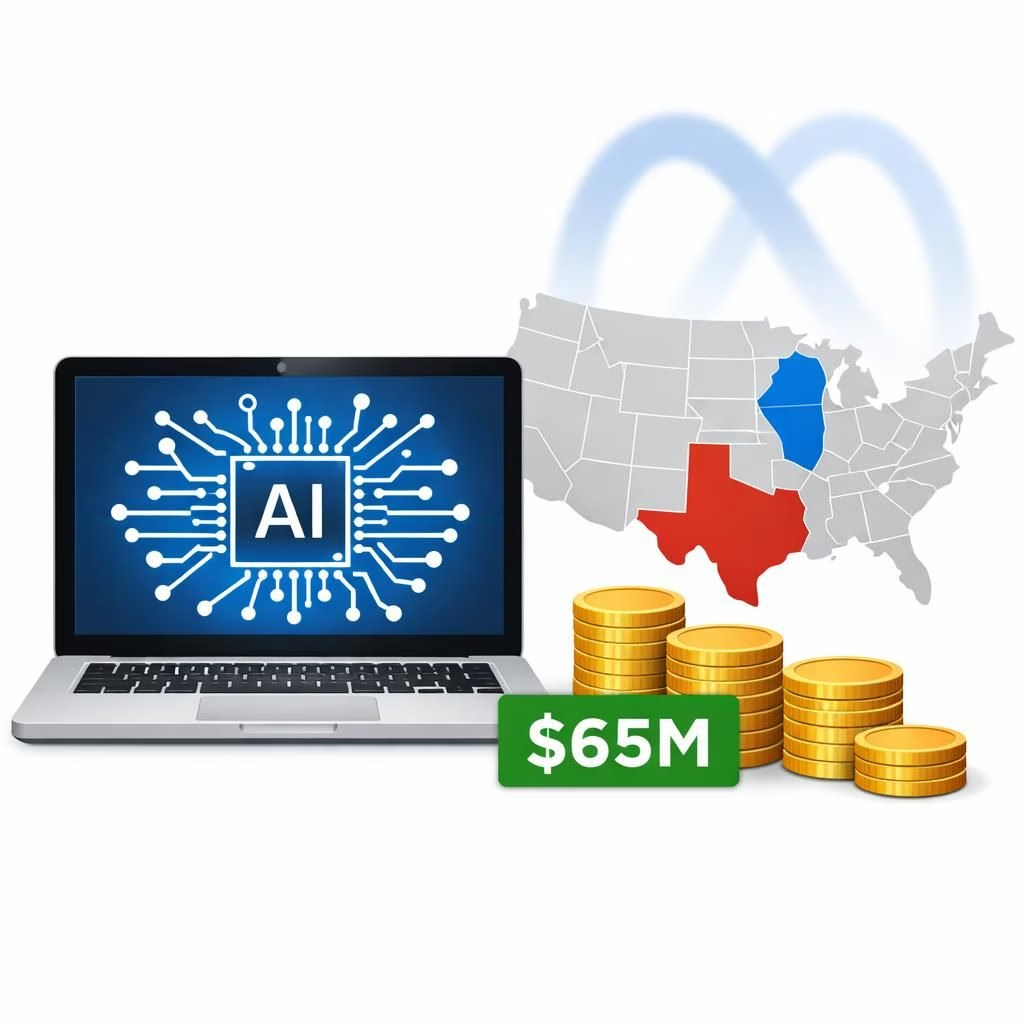
According to insiders, Meta plans about $65 million split among four super PACs to back state politicians who are friendly to AI progress. The move comes as AI regulation debates gather steam across the US, with state lawmakers weighing everything from data privacy to algorithmic transparency. Meta has quietly formed two new political groups: Forge the Future Project (backing Republicans) and Making Our Tomorrow (backing Democrats). Together with the American Technology Excellence Project and Mobilising Economic Transformation Across California, they map a four-PAC strategy designed to influence regulators at the state level without inviting a full-blown national showdown.
The company’s paperwork classifies these groups as vehicles to promote and defend U.S. technology leadership, with emphasis on AI progress and parental oversight online. Meta’s public stance remains careful, but executives have signaled that erratic state policies could slow innovation. Brian Rice, the company’s public policy VP, has said that the push into politics is a response to inconsistent regulations that threaten homegrown AI investments. He frames the effort as a shield against a patchwork of rules that could hamper growth and cross-state coordination.
AI policy at a glance: what this means for 2026
In practice, Meta is deploying funds in Texas and Illinois first, as primaries near. In Texas, Forge the Future is backing Republican state legislators who champion the tech future and the competitive edge. The state’s data centers—crucial hardware for AI—are hot topics as officials clash over proposals to expand or restrict facility growth. The Texas plan includes advertising and get-out-the-vote activities designed to boost champions of a robust tech ecosystem.
In Illinois, Making Our Tomorrow targets several State House races, with energy humming around a nuclear plant deal that powers Meta’s local operations. Democrats, who control the legislature, have already passed cascading AI regulations. The group’s messaging aims to elect Democrats who advocate policies that support technology, innovation, and broad opportunity. The effort underscores a larger pattern: AI-aligned groups are moving into state capitols where races are cheaper and potentially decisive.
AI policy snapshot at the state level
- State bills can move faster than federal rules, creating room for pilots and early deployments.
- Local energy and data infrastructure decisions shape deployment timelines for AI services.
- Public-private partnerships may accelerate safe AI adoption with parental oversight online.
Tech-policy in action: quick take
- Per-state engagement can align investment climates with local regulatory realities.
- Policymaking at the state level often tests ideas before wider rollout.
What this means for AI and tech-policy in 2026
Observers say the trend reflects pragmatic, if controversial, insight: local policymakers can move faster and cheaper than federal bodies when it comes to AI rules. Meta’s spend is a cautious bet that a patchwork of state laws could either accelerate or impede growth in the AI industry. If a state writes favorable rules, other states may imitate them; if a state slides into heavy-handed regulation, the company could shift its operations or reframe its engagement tactics. The company’s move also hints at a broader strategy among AI-aligned groups to press state legislatures where attention and budgets are more accessible than the national stage.
To supporters, the approach normalizes a necessary dialogue between business and government. They argue that clear, consistent, tech-friendly state policies could shorten the time from invention to deployment. To critics, the money looks like a political shortcut that binds policy to corporate interests rather than public welfare. The truth likely lies in between: policy needs speed and evidence, and in some places a well-timed infusion of capital can accelerate good ideas. Meta’s teams insist the aim is aligned with American innovation and consumer protection, including parental oversight online.
Other observers note that the four-PAC configuration signals a more formal, per-state footprint for AI lobbying. This includes a blend of advocacy, public messaging, and targeted campaigning that keeps policy conversations focused on technology trajectories, rather than random regulatory drift. The practical effect could be measurable: faster debates on AI safety, more predictable investment climates, and a public face for industry concerns in statehouses that often pilot policy experiments before they reach the mainstream.
As for the technology itself, the underlying concern remains: AI moves quickly, but laws do not. Meta’s approach acknowledges that a hundred state-level rules could slow a universal AI operating system more than a single, harmonized framework. The company’s data centers—already the backbone of its AI ambitions—lie at the heart of the debate in states like Texas. In Illinois, the nuclear-powered operations pose different questions about energy resilience and grid reliance as the company scales.
In a sense, Meta’s plan reads like a high-stakes civics lesson wrapped in a corporate press release: clear objectives, a blend of partisan languages, and a hope that policy, not fear, will guide tomorrow’s technology. The groups’ names sound almost like a branding exercise for political engagement, yet the practical effect could be real policy shaping with tangible consequences for innovation ecosystems across multiple states.
We should also acknowledge the broader ecosystem: tech policy groups are increasingly active inside statehouses, where campaigning to influence AI rules can cost less and deliver faster results than grand federal efforts. Meta’s filings with the Internal Revenue Service show formal affiliations with these entities, though the company has not widely publicized them. The public, meanwhile, gets a front-row seat to a finance-and-policy ballet that could define how AI tools are developed and regulated in the next few years.
Thank you to The New York Times for the groundwork and investigative coverage that shed light on these new dynamics. Original reporting by The New York Times. Read the original article here.
If you have thoughts, questions, or concerns about Meta’s AI-related investments and how they might affect state policy, please share your perspective below. Your voice matters in this evolving conversation about AI and tech-policy in 2026.
We close with a straightforward note: this analysis reflects the best available reporting and aims to balance optimism with healthy skepticism about how much money buys better policy. For more context, see the NYT article linked above. Thank you for engaging with this exploration of AI and tech-policy in 2026.
Original article attribution: The New York Times. Thank you for the thoughtful journalism that makes this discussion possible. The New York Times.
Please share your thoughts in the comments to help broaden the perspective on AI and tech-policy in 2026.
Practical implications for AI policy readers
- Follow state-level AI policy developments to gauge where regulations may converge or diverge.
- Assess how funding dynamics could influence timelines for AI deployments.
- Consider engaging with local policymakers through public consultations or sessions.
FAQ: Meta, AI policy and state spending
Q: What is the core aim of Meta’s spending?
A: To shape state-level policy in ways that support AI innovation while maintaining consumer protections.
Q: Which states are involved?
A: Texas and Illinois are highlighted first, with more states possible as primary cycles unfold.
Q: Could this affect AI safety and privacy rules?
A: Yes, the aim is to influence regulatory environments that shape how AI is developed and deployed, including safety and privacy considerations.
Conclusion and next steps
Meta’s approach signals a higher-stakes, state-focused strategy for AI policy. For readers, staying informed about shifts in state rules offers practical insight into the near-term tech landscape.
References
Original source: Times of India. Times of India.
For broader coverage, see: The New York Times, Brookings AI policy, NIST AI framework.