

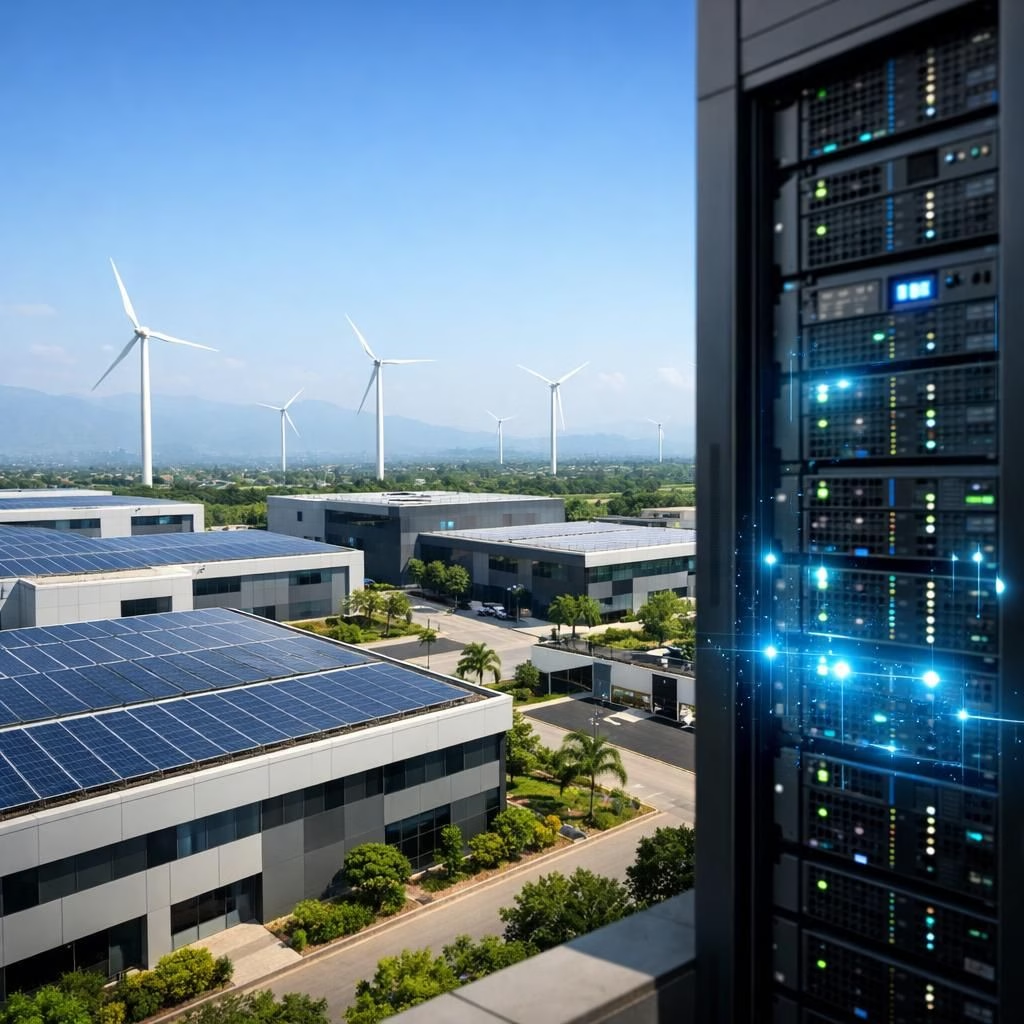
In a week packed with AI headlines, India’s outlook brightened in a big way as the Adani Group unveiled a bold bet: invest $100 billion to build renewable-energy-powered AI-ready data centers by 2035. The move aims to form the world’s largest integrated AI platform and links to a broader $250 billion AI infrastructure push in India, with an expected $150 billion ripple across server manufacturing, sovereign cloud platforms, and related industries. Building on AdaniConnex’s existing 2 gigawatts of national data centers capacity, the target rises to 5 GW, anchored by a partnership with Google. Gautam Adani, the chairman, described the industry as entering an “Intelligence Revolution.” The announcement lands as India hosts the AI Impact Summit, signaling a practical, optimistic path for AI and data centers across the Global South.
The plan reads like a blueprint for pairing sustainable energy with machine intelligence. It envisions data centers that sip solar and wind power, balanced by advanced cooling and storage, to host AI workloads that accelerate digital services for millions. Google’s involvement lends credibility and scale, suggesting India’s cloud ambitions are no longer a domestic dream but a global project. The numbers are eye-popping, yet the logic remains straightforward: you want a nationwide AI platform, you need dependable data centers that don’t burn through fossil fuels. The ripple effects extend to server manufacturing growth, an appetite for sovereign cloud services, and a cascade of downstream industries—each link in the AI supply chain benefits from this data centers backbone.
AI and data centers: A vision for India’s renewable-powered edge
Energy strategy centers on renewable power paired with modular cooling and intelligent workload orchestration to minimize carbon footprint while maximizing uptime. The plan prioritizes a scalable footprint across critical AI workloads, including natural language processing, analytics, and edge computing. With Google backing, India’s AI ambitions gain an international stamp of approval, while the data centers become software-definable infrastructure ready for AI workloads, governance, and secure sovereign cloud services. The broader aim is not just bigger servers but smarter, greener operations that can power digital government services, healthcare, education, and commerce at scale. In short, data centers behind it are reliable, decarbonized, and thoughtfully integrated into the energy grid, making AI practical for millions of users.
From renewable zeal to policy reality: AI across devices and platforms
Meanwhile, the tech week featured a microcosm of AI in daily life. Apple rolled out an iOS 26.4 beta with AI-driven playlist experimentation, refining Apple Music and Podcasts, and testing end-to-end RCS encryption for messages. The Playlist Playground lets users describe a mood or era to generate a starter 25-song set, a practical example of on-device AI orchestration that mirrors broader trends in edge AI and privacy-preserving workloads. Regulators in Spain signaled probes into AI-generated content on major platforms including X, Meta, and TikTok, highlighting governance challenges that accompany rapid AI deployment. UK communities near new data centers organized protests over green-space concerns, underscoring the friction between AI infrastructure expansion and local stewardship. Separately, SpaceX and xAI leadership moves hint at AI-driven strategies spanning hardware, software, and even space-based data centers. The thread is clear: AI is not a single gadget; it’s a global platform requiring thoughtful policy, resilient data centers infrastructure, and cross-border collaboration. For context, external analyses reinforce the need for careful governance around AI-enabled infrastructure.
AI ecosystem moves: partnerships, leadership, and practical bets
The pace of AI infrastructure news reflects a tapestry of partnerships and leadership shifts. Nvidia’s DGX-1 unit stories echo the demand for powerful accelerators to train and run models like those that power AI-assisted services. OpenAI’s collaboration with Nvidia hardware reinforces the close tie between chip capability and AI software. Infosys and Anthropic announced a multi-industry enterprise AI partnership centered on Claude models and Infosys Topaz, aiming to automate complex workflows, accelerate software delivery, and improve governance in regulated sectors. SpaceX’s orbiting ambitions for data centers illustrate how AI-grade compute could extend beyond Earth’s surface. On the India front, government and industry players tout a plan to mobilize up to $200 billion in data centers investments as the nation builds a trusted AI ecosystem. Google pledged $15 billion to create its first AI hub in India, Microsoft committed $17.5 billion to expand cloud and AI infrastructure, and Amazon signaled $35 billion by 2030 to push AI-driven digitization. A long-term tax holiday for data centers and a shared computing facility with tens of thousands of GPUs for startups and researchers further illustrate the scale of ambition. The pattern is unmistakable: AI and data centers are becoming inseparable levers of national growth, not just tech toys for enthusiasts.
On the hardware and governance front, the narrative remains pragmatic. The sector leans toward interoperable AI platforms and sovereign clouds rather than single-vendor dominance, all while navigating a web of safety, privacy, and export controls. The global regulatory mood—focused on content, safety, and cross-border data flows—adds friction but also clarity on what responsible AI infrastructure should look like. The overarching takeaway is that AI-enabled data centers will anchor a more connected and capable economy, provided they stay green, secure, and well-governed.
In a broader sense, the week’s AI news reinforces a simple truth: to unlock scalable, ethical growth, you need a robust framework that links data centers, devices, and policy. Adani’s plan is audacious, yet it sits within a practical trend: substantial investment in AI infrastructure that supports a diverse economy while reducing carbon footprints. The future is not a single gadget; it’s a network of AI-enabled systems—from data centers and satellites to smartphones and regulatory bodies—working in concert to deliver tangible benefits for citizens and businesses alike.
So, dear reader, what do you think about a $100 billion bet on AI-ready data centers? Is India ready to scale, and will renewable energy truly power the AI era? Share your thoughts in the comments and tell us how you see AI and data centers shaping your industry in the next decade.
Original article and material inspiration: Original source article. A big thank you to the original authors for their thoughtful reporting and rich data that helped shape this rewrite.
Practical path for AI and data centers deployment
- Align policy with investment by creating a clear national framework for renewable-powered AI infrastructure.
- Deploy modular, scalable cooling and microgrid solutions to keep data centers reliable and green.
- Build sovereign cloud capabilities to support governance, security, and local data storage needs.
- Boost domestic manufacturing and supply chains for server equipment and GPUs to reduce dependency on imports.
- Foster global partnerships (like Google) to accelerate talent, compute, and research ecosystems.
FAQ
- What is the core idea behind India’s $100B plan?
It aims to pair renewable energy with AI-ready data centers to create a scalable, sustainable national AI infrastructure by 2035. - Why emphasize renewable energy for data centers?
Decarbonized power helps manage cost and resilience for AI workloads while reducing the environmental footprint. - What role does Google play?
Google’s involvement signals international cloud-scale ambition and access to capital and technology for India’s AI ecosystem. - What are the regulatory risks?
Regulators are balancing safety, data sovereignty, and cross-border data flows, which can affect deployment timelines and standards.