

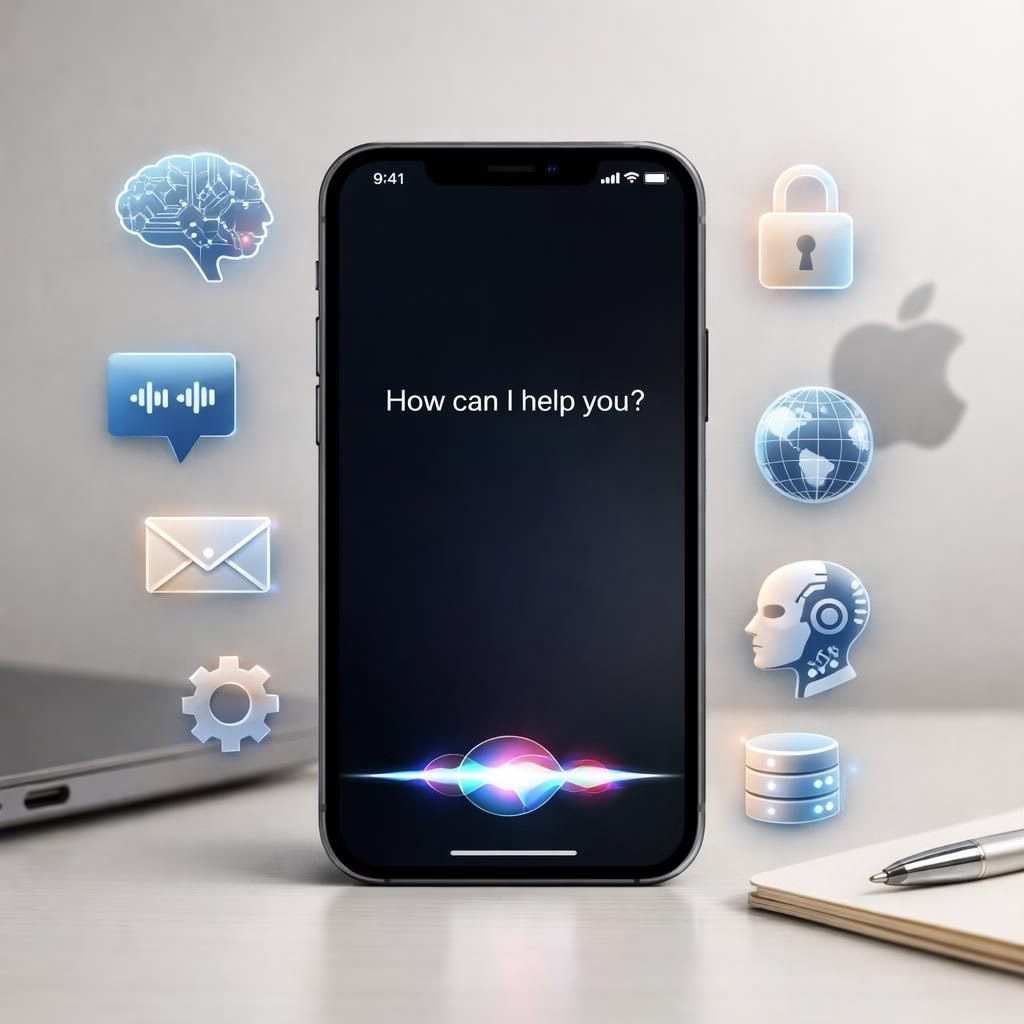
In 2026, as WWDC approaches, AI and Apple pivot away from a pure race to build the best artificial intelligence toward a smarter hypothesis: build the best products that AI runs on. The shift is practical, not flashy—a makeover that makes your smartphone feel like a well‑organized toolkit. Bloomberg’s Mark Gurman signals the company recognizes its AI lag isn’t closing fast, and the response isn’t a mad dash to outpace rivals. Instead, Apple aims for a calmer, more durable win: platforms where AI can thrive inside the OS and inside Siri itself. This pivot keeps the emphasis on user experience and privacy while inviting external AI services to join the party.
AI and Apple have a two‑part plan. First, embed just enough AI into the core operating system to reduce the itch of Android switching, and second, open Siri and Apple Intelligence to third‑party AI services. In other words, don’t chase the hottest chatbot; empower the ecosystem so users get smarter tools without heavy-handed prompts. Apple reportedly intends to offer a marketplace for AI that lives in the App Store, reserved for AI integrations. Users will get to pick which AI powers their experience—whether it is Google Gemini, Anthropic’s Claude, OpenAI’s ChatGPT, or others that come along—without sacrificing the familiar polish of Apple.
AI and Apple: The WWDC Pivot Explained
The centerpiece of the WWDC story is Extensions, expected to arrive with iOS 27. Extensions would let users install third‑party AI chatbots and run them directly inside Siri. Imagine asking Siri, not merely to fetch a fact, but to run a planning chatbot that helps you schedule, optimize battery life, and curate content—all within the same conversational thread. There will be a dedicated App Store section for these AI integrations, turning clever demos into a thriving marketplace. The practical effect is simple: you control the AI you trust, and Apple provides the plumbing to keep it secure, private, and reliable. This isn’t a coin‑op AI assistant; it’s a design that lets AI participate in everyday tasks with minimal friction.
A crucial nuance is the Gemini collaboration with Google. Apple plans to leverage Gemini technology to power core AI functions while preserving on‑device processing. The partnership lets Apple design its own Foundation Models that ride on Gemini infrastructure, giving it a faster path to capable AI without building everything from scratch. The arrangement supports on‑device processing and a Private Cloud Compute approach, so user data stays off Google’s servers and remains under Apple’s privacy guardrails. In practice this means smarter features that operate locally and securely, while still tapping external AI services when you want something specialized.
AI and Apple: What It Means for Users and Privacy
The user experience story is the heart of the pivot. On the surface, Apple weaves AI into the fabric of iOS, watchOS, and macOS so intelligent behavior feels default rather than a premium add‑on. The home screen could surface assistant‑style suggestions that feel contextually aware—yet never intrusive. The Extensions idea gives third‑party AI developers a sanctioned space to enhance daily workflows, from scheduling to content recommendations, within a trusted privacy model. And because the AI runs on device or within Apple’s Private Cloud Compute, your data moves through fewer hands, reducing the risk of data leakage and surveillance concerns. If you value privacy as a core feature, this approach should feel encouraging, even if it comes with the caveat that “privacy by design” remains a continuous discipline rather than a checkbox.
Developers, take note: this strategy lowers the friction for integrating AI into existing apps. A robust Extensions ecosystem means your product can harness AI capabilities without waiting for an in‑house giant to do it first. For users, the potential is clearer: your iPhone or iPad could offer more helpful, more personalized experiences with fewer interruptions and more reliable performance. It’s not a single killer AI; it’s a more intelligent, more coherent Apple experience that respects user privacy and device constraints. AI becomes a tool that augments what you already do, and Apple positions itself as the steward of that tool.
From a product design lens, the two‑pronged plan makes sense. The first prong—embedding AI into the OS to reduce switching costs—addresses a real friction point: people don’t like migrating their ecosystem. If iOS feels capable enough to handle tasks that people otherwise attempt with a messy mix of apps and services, they’re less likely to jump ship to Android or other ecosystems. The second prong—opening Siri to third‑party AI—injects flexibility into a closed system, letting outside builders layer on value without Apple having to own every clever feature. The result is a hopeful blend of consistency (the Apple experience) and novelty (innovative AI integrations). It’s a strategy with risk, but also with a clear path to scale within the Apple platform boundaries.
Important caveats remain. The privacy shield is central to how these features will be perceived. If you’re worried about AI chatbots pulling data from your messages or preferences, you’ll want assurances that on‑device processing and Private Cloud Compute keep sensitive details on your device or in trusted Apple infrastructure. The Gemini partnership helps Apple accelerate capability, but it must be transparent about what is computed where and how data is used or anonymized. In 2026, users are more privacy‑savvy than ever, and a successful rollout will articulate not just what AI can do, but what it will not do with your data.
For developers and tech enthusiasts, this pivot signals the AI landscape maturing from a race to a platform. The mandate shifts from “who has the strongest model” to “who makes AI feel invisible and useful.” If Apple nails the experience, the result could be a more productive everyday life for millions, with AI quietly lifting the weight of routine chores while you stay in control.
Finally, a note on the current year context: as we discuss 2026, the evolution is ongoing, and the partnerships are still unfolding. The goal remains to offer powerful AI‑assisted experiences without compromising the trust people place in their devices. The new path for AI and Apple is less about creating a single blockbuster feature and more about quietly engineering a stable, scalable environment where AI can mature alongside the hardware you already rely on.
If you’ve enjoyed this look at Apple’s AI strategy, we’d love to hear your thoughts. Share your perspectives on how AI should live inside iOS and how much openness you want for Siri extensions. Do you expect Extensions to improve your day, or are you wary of third‑party bots living in your Siri conversations? Your input helps shape the conversation, so please drop a note in the comments and join the discussion.
Special thanks to Bloomberg and The Information for the reporting and context that helped frame this story. Original reporting and analysis from those outlets informed this piece; you can read more through the original articles via the links below. Thank you for the thoughtful groundwork that made this reflection possible.
 Apple ecosystems with Extensions and Gemini integration” />
Original coverage and attribution: Bloomberg – Gurman’s WWDC notes. Thank you for the original reporting and analysis.
Want to share your thoughts? Please leave a comment below and join the conversation. We value insights on how Apple and AI shape the technology you use daily.
Practical questions about Extension and privacy
- What is Extensions and how does it work with Siri?
- Will my data stay on device or be sent to servers?
- How can developers participate in the Extensions ecosystem?
- What happens to existing apps when Extensions arrives?
Quick takeaways for users
- Expect a more capable OS with AI baked in, reducing the need to juggle multiple apps.
- Look for a curated marketplace for AI extensions inside the App Store.
- Privacy remains central: on‑device processing and Private Cloud Compute minimize data exposure.
- Open ecosystems invite external AI services without erasing the Apple experience.
FAQ
- Will Extensions affect my current Siri experience?
- Extensions are designed to augment Siri with trusted third‑party AI, while keeping the core experience consistent.
- Where will my data be processed?
- Processing can occur on device or within Apple’s Private Cloud Compute, with strong privacy safeguards.
- When can I try Extensions?
- Expect the rollout with iOS 27, alongside the broader WWDC announcements.
Conclusion: a steadier, privacy‑minded AI path
The strategy isn’t about one blockbuster feature; it’s about a stable, scalable environment where AI can mature alongside the devices you depend on. If executed well, this approach could make everyday tasks smoother, while keeping you firmly in control of your data and your experience.