

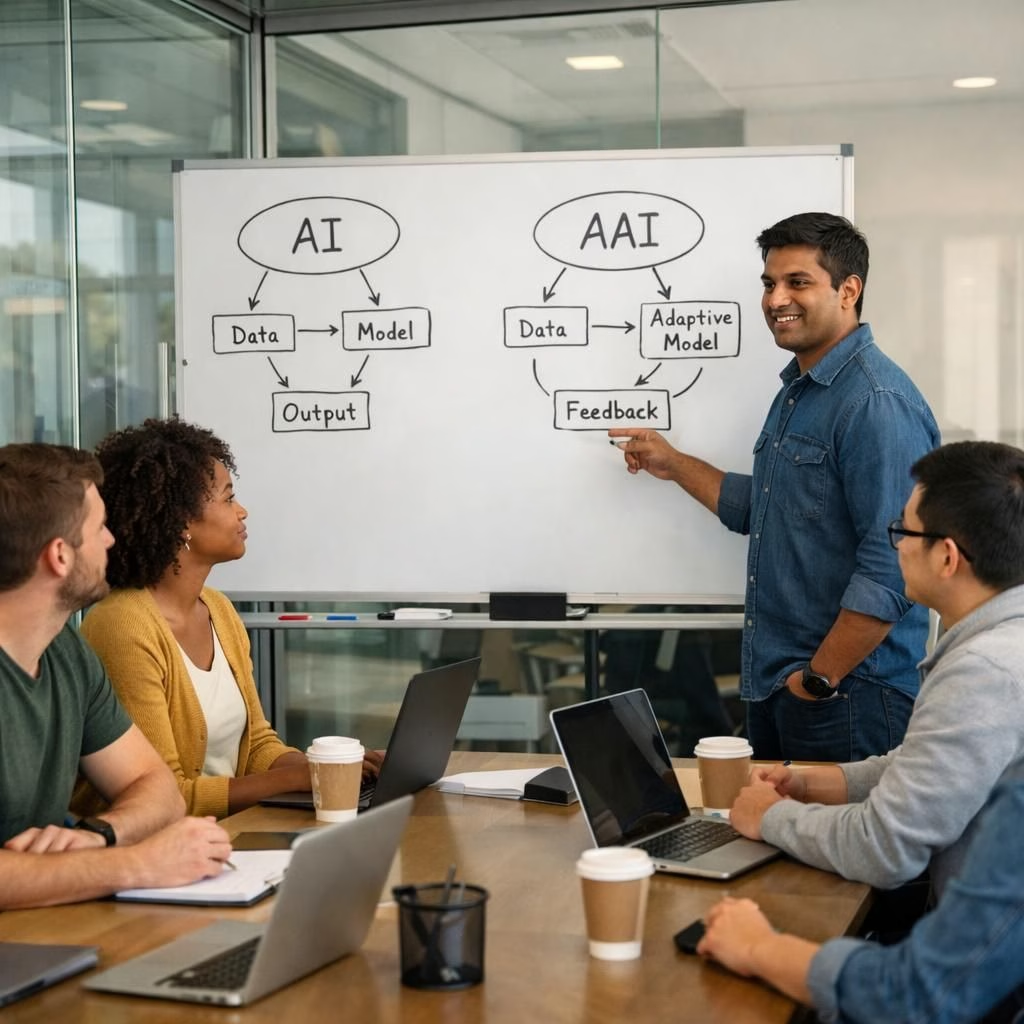
Meta is pulling its best software engineers into a brand-new Applied AI (AAI) Engineering unit, signaling a bold shift into AI-driven product development. The move comes as the company braces for accelerated AI bets and potential layoffs to fund those bets. The goal is simple: scale the team, push AI-centric tools, and turn ambitious plans into shipped features.
AI and AAI: Meta’s 2026 Engineering Reorg
Internally, the memo outlines a methodical push: selected software engineers across divisions will transfer into the AAI unit. The transfers are not optional; Meta aims to scale the AAI team by prioritizing core SWE talent. The decision to make transfers mandatory signals a shift from voluntary sign-ups to a workforce-wide alignment around AI work. Meta’s leadership, including Maher Saba, frames this as scaling the team rather than punishment, focusing on what they call high-priority AI work. The tone from Reality Labs lands in these notes is practical: move the pieces where they will contribute to AI progress the fastest. The result, in short, is a push intended to boost performance targets for 2026 and manage the ongoing cost of AI infrastructure. AI remains the common language across teams, and the company uses that language to justify the reorganization as efficient and future-oriented.
Beyond the push to recruit top SWE talent into the AAI unit, Meta describes this as a broader workforce reorganization. The goal is to unify disparate groups that work on machine learning tooling, code generation, and AI evaluation into a single, coherent engineering line. The AAI unit is expected to run experiments and ship capabilities faster, with strong emphasis on governance, risk controls, and human oversight. The memo notes that AAI tooling will generate reports and metrics to help managers make decisions, but the core value proposition remains clear: AI will help Meta code, test, and ship more quickly than human teams could alone. The plan is not about replacing people; it is about redirecting human effort toward higher-leverage tasks in a rapidly changing AI ecosystem. AI remains the common language across teams, and the company uses that language to justify the reorganization as efficient and future-oriented.
AI and AAI: Beyond the Hype in Reality Labs
At the core, the AAI unit is tasked with building tools and evaluations to accelerate the development of AI agents that can write code and carry out complex tasks autonomously. In practice, that means a suite of experiments that blend machine learning models, agent architectures, and runtime systems. Saba described the end goal as agents performing a large share of the work to build, test, and ship products and infrastructure at Meta, with humans overseeing the process. Critics worry about layoffs and the fragility of over-automation, but the company positions this as a necessary step to stay competitive in a fast-moving tech landscape. The AAI team will test everything from code generation to automated deployment, all while ensuring security and privacy guardrails. The broader Reality Labs organization will likely see the first serious integration of AI-native tooling into product development, with managers now receiving AI-generated status updates rather than relying solely on manual reporting. AI is positioned as a productivity multiplier, not a replacement for human judgment.
AI and AAI: Practical implications for Meta’s workflow
In practice, the plan translates into significant changes in day-to-day work. Managers will restructure teams around AI-native workflows, using AI-generated dashboards to monitor progress. Engineers will be moved into roles that emphasize building, testing, and refining AAI agents, rather than pure feature implementation alone. The reorg aims to flatten hierarchies and speed up decision cycles, while still preserving essential governance. Meta signals that the AI-native tooling will help reduce manager-to-staff overhead, allowing individual contributors to push more work forward with less overhead. If Meta succeeds, employees could see shorter cycles from idea to shipped product, and a leaner, more responsive organization that can pivot quickly as AI advances demand. AI and AAI become the twin engines behind collaboration and delivery in a leaner Meta.
CEO Mark Zuckerberg has hinted that 2026 could be the year when AI starts to dramatically change how the company operates. He has described AI-native tooling as an enabler for more output with fewer bottlenecks, a shift that touches recruiting, performance evaluation, and daily standups. Some teams may resist the change, while others will embrace the chance to experiment with new workflows. The hope is that this reorganization yields tangible improvements in product velocity, reliability, and customer value, even as the AI bill grows and the company adjusts to a more AI-forward operating rhythm.
As part of the ongoing coverage, Reuters documented Meta’s reorganization and the transfer plans, underscoring the broader move into AI-native tooling. Reuters coverage provides additional context on leadership decisions and anticipated effects on teams across Reality Labs.
Attribution: Thanks to Reuters for the original reporting on this reorg. Original article: https://www.reuters.com/technology/meta-drafts-top-software-engineers-ai-unit-2026-01-01/.
We invite you to share your thoughts in the comments below.
Attribution: Thanks to Reuters for the original reporting on this reorg. Original article: https://www.reuters.com/technology/meta-drafts-top-software-engineers-ai-unit-2026-01-01/.
References
- Original Indian Express article: indianexpress.com article
- Reuters coverage: Reuters: Meta drafts top software engineers into AI unit