

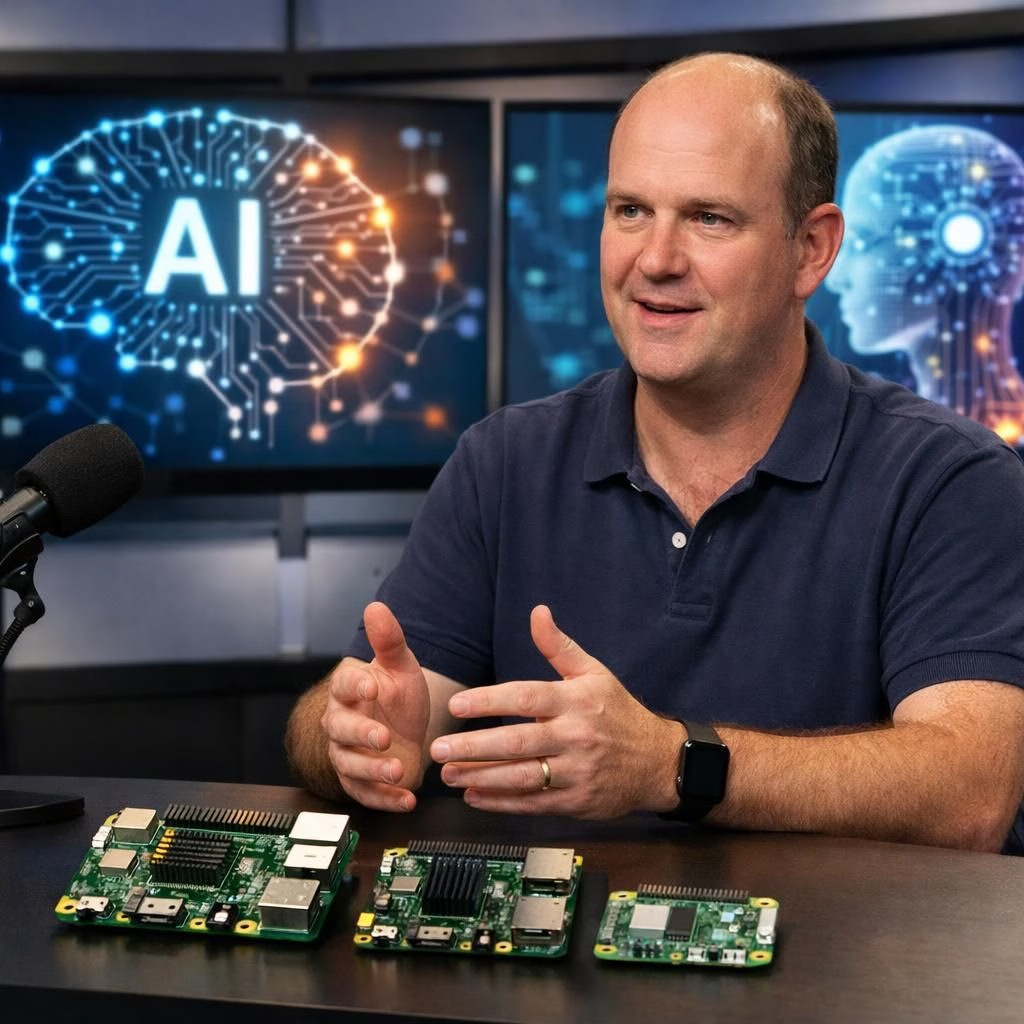
AI and Engineering are not mere buzzwords; they are living systems shaping career choices and the economy in 2026. Eben Upton’s view on AI hype blends caution with optimism.
He warns that overstating AI capabilities could nudge students away from tech paths and worsen the very skill shortages we rely on to build the future. The message is practical: celebrate the tools, but respect the discipline that turns ideas into devices and systems that work when you press the on switch. In other words, AI is a companion, not a replacement, for hands-on Engineering and problem-solving.
AI and Engineering in 2026: Pi’s Lighthearted Reality
Raspberry Pi’s founder has built more than tiny computers; he has sparked a learning movement. Pi devices are among the most widely sold by a UK tech company, and they’re beloved by hobbyists and learners who discover that you can go from click to code to capability with a single, affordable kit. The Pi story is a celebration of practical Engineering in action—a reminder that real innovation often begins with simple hardware and clear pedagogy. The joke here is that while the public cheers for AI demos, it’s the patient work of Engineering teams that makes those demos reliable and useful in classrooms, workshops, and tiny home labs.
On the fear of mass layoffs, the message is measured. The hype about AI replacing vast slices of computing work can be seductive, but it’s not the full picture. The reality is a shifting landscape where automation handles routine tasks and Engineering teams design, supervise, and refine the tools that do the heavy lifting. This isn’t doom; it’s a nudge toward upskilling and applying critical thinking to new tools. In practical terms, AI raises the bar for what Engineering do and how they add value—think fewer drudge tasks and more creative integration of software and hardware across products and services.
We should be cautious about data-free predictions and avoid decisions that sound clever in headlines but fall apart in labs and classrooms. The question about GCSE guidance in an era of AI is a fair one. The sensible answer, he argues, is to wait for better data, invest in strong foundational skills, and build a pipeline that keeps students engaged with hands-on projects. In short, AI hype should be a catalyst for thoughtful planning—not a shortcut that shortchanges education. This is where Engineering again becomes the steady hand on the wheel: it translates high-level ideas into concrete, testable outcomes.
Upton does not ignore industry realities. He notes the UK’s enormous industrial capacity and the persistent need for practical know-how. Yet he flags a structural barrier that can undermine progress: energy costs. High energy bills can raise labor and production costs, making Engineering and manufacturing less competitive. The takeaway is straightforward: to keep Engineering thriving, we must tackle energy efficiency, policy alignment, and investment in sustainable production. The aim is not to pretend the problem doesn’t exist but to fix the bottlenecks so clever ideas can scale up and reach users at a reasonable price. This is the kind of pragmatic thinking that keeps Engineering alive even when the market is loud about shiny tools.
Raspberry Pi’s marketplace success also shows a broader truth: great hardware thrives when the ecosystem lowers barriers to entry. Affordable hardware, open-source learning, and community support can ignite curiosity and nurture capable technicians, software developers, and Engineering designers—the people who turn AI concepts into usable products. The London Stock Exchange listing is more than a ceremony; it signals that hardware innovation paired with strong governance and capital access can flourish in the UK. The story isn’t just about cute boards; it’s about an ecosystem that can sustain long-term growth in both Engineering and production sectors, even as other markets chase flashy exits abroad.
For students and professionals, the lesson is simple: stay curious about AI, but stay grounded in Engineering. Invest in learning that translates into hands-on capability, experiment with real projects, and look for opportunities to apply AI responsibly to tasks that improve systems and services. The future rewards engineers who can navigate both software and hardware, who understand energy dynamics, and who can ship reliable products that people actually use. And yes, the public conversation matters: it should celebrate practical skills as much as dazzling demos, because civilization runs on well-engineered solutions more often than on clever headlines.
AI and Engineering in 2026: Lessons for Raspberry Pi and UK Industry
So what does this mean for students, workers, and decision-makers? It means take AI seriously, but keep your feet on solid Engineering ground. It means keep learning, keep building, and demand data before you change paths or policies. It also means policymakers and business leaders must tackle energy costs, invest in training pipelines, and honor engineers who bridge imagination and execution. The supply of engineers is essential for growth, and Upton’s perspective is a reminder that a country’s future rests on its ability to train people who can design, implement, and maintain the tools that power modern life.
For Raspberry Pi enthusiasts, for UK manufacturers, and for anyone who enjoys watching clever technology become practical, the core message is clear: AI can be a powerful ally, but only if Engineeeringr are ready to harness it. The industry needs more engineers, not fewer, and it deserves a public conversation that blends optimism with solid planning. The future belongs to those who translate bright AI ideas into reliable hardware, good software, and scalable systems. That is the sweet spot where AI meets Engineering in the everyday world of product development.
In sum, Upton’s warning is not a prophecy of doom; it is a practical blueprint for action. Embrace AI tools, invest in people, and push for policies that lower energy costs and boost Engineering education. Then watch how AI supports human ingenuity instead of dictating its limits.
Original article: https://www.bbc.co.uk/news — Thank you to the BBC for the original coverage and thoughtful insights that inspired this piece.
We’d love to hear your thoughts—please share them in the comments below and join the discussion on how AI and Engineering will shape 2026 and beyond.
Practical steps to balance AI and Engineering
- Pursue hands-on projects that blend AI tools with Engineering fundamentals.
- Attend workshops that pair hardware tinkering with AI concepts to build intuition across domains.
- Build a portfolio of projects showing reliable hardware-software integration and problem-solving in realistic settings.
- Track energy use and design for efficiency, aiming to lower costs without sacrificing performance.
FAQ
- Should I focus on AI or on traditional engineering tracks?
Answer: Both. Seek a foundation that blends coding, mathematics, and hands-on making, then explore how AI can augment real systems rather than replace them. - Will AI replace jobs?
Answer: It will change tasks and roles. Upskilling and practical experience remain essential for staying valuable in the workforce. - What about energy costs and manufacturing?
Answer: Reducing energy use and improving efficiency helps sustain growth in Engineering activities and long-term production capabilities. - How should policymakers act?
Answer: Invest in training pipelines, support energy-efficient infrastructure, and ensure access to affordable hardware and tools for learners.
References
- BBC coverage (original source): BBC article
- Brookings: AI and the labor market
- Nature: AI and jobs debate