

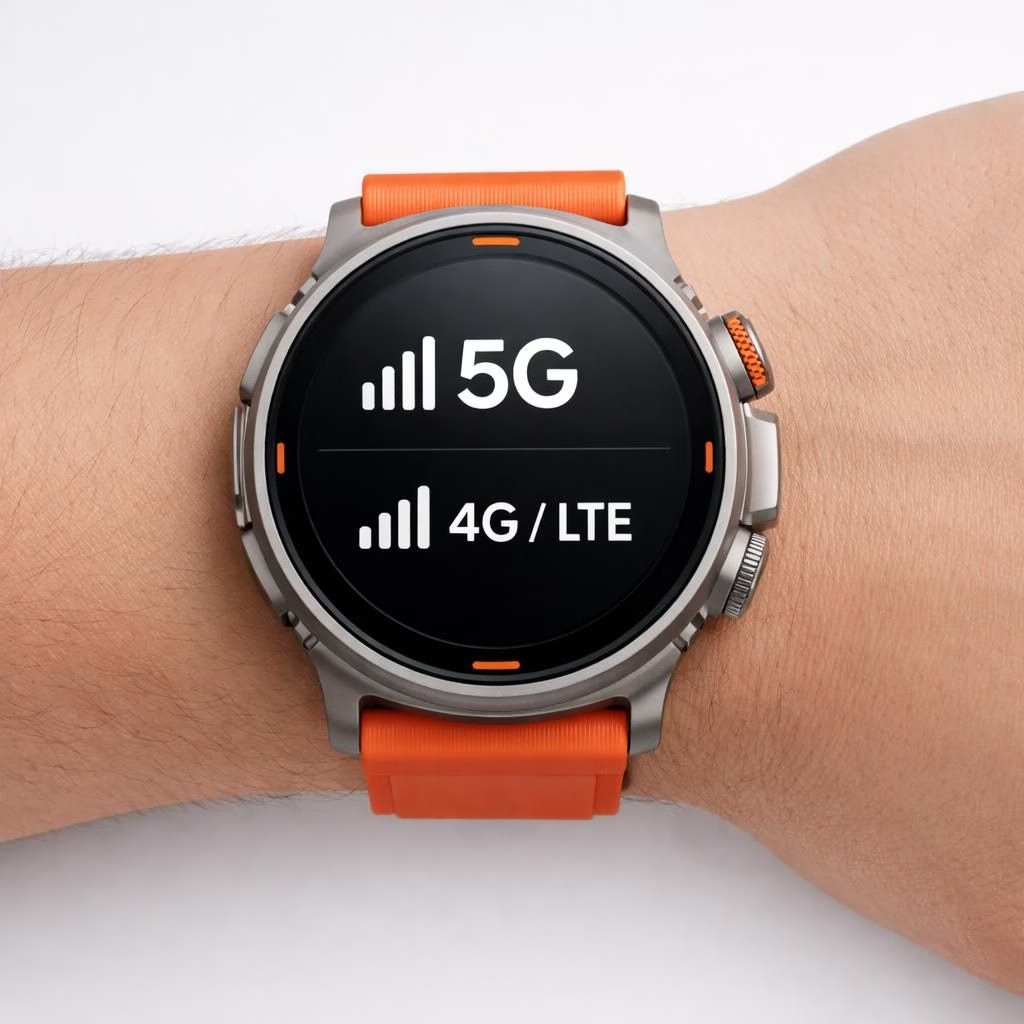
In February 2026, a Samsung device coded SM-L716 popped up in the IMEI databases, and the rumor mill labeled it the Galaxy Watch Ultra 2. The 6 in the model number hinted at advanced connectivity, following Samsung’s naming cues: 0 for Wi‑Fi only, 5 for 4G/LTE variants, and 6 for 5G models. Then a firmware build marked SM-L715F surfaced on Samsung’s servers via Galaxy Club, which strongly argues this is the 4G/LTE version of the Galaxy Watch Ultra 2. Taken together, these receipts point to a dual-launch scenario: a 5G version and a 4G/LTE version coexisting in the market. On top of that, Qualcomm pulled back the curtain, confirming that the next Samsung wearable will run the Snapdragon Wear Elite chipset, a tidy reminder that the watch is stepping up its chip game. If you like scheduling your tech with a dash of suspense, July can’t come soon enough, because Samsung is expected to unveil the Galaxy Watch Ultra 2 alongside the Galaxy Z Fold 8 and Galaxy Z Flip 8, probably with a few extra surprises to boot.
5G vs 4G/LTE: Galaxy Watch Ultra 2’s connectivity split
The core rumor stack says the 5G model may be restricted to the US and South Korea, while the 4G/LTE variant heads for broader markets. That split mirrors Samsung’s past playbooks: keep the fastest stack where it moves the needle most, and offer a capable but more widely available version elsewhere. The 5G version, if limited to the US and Korea, plays into carrier strategies, regional hardware certifications, and the hunt for faster bandwidth in flagship wearables. Meanwhile, the 4G/LTE version is positioned as a global traveler, ready to accompany users on a world tour of wearables without the need for a 5G rollout in every country. This division will surely affect early adopters, band compatibility lists, and how accessories align with the two SKUs. Regardless of where you live, the Snapdragon Wear Elite chipset promises improved efficiency and smoother app performance, a welcome upgrade that makes the connectivity choices feel less like a riddle and more like a practical upgrade for daily use.
Why the connectivity split matters for users and markets
Connectivity in a wearable matters because you aren’t just buying a novelty; you’re buying a tiny lifecycle companion. The 5G variant’s targeted regions may benefit from lower latency and faster updates, enabled by more responsive health tracking, faster map loads during workouts, and snappier notifications on the go. Yet the 4G/LTE variant remains a solid choice for travelers and regions where 5G isn’t ubiquitous, ensuring that the device remains usable, connected, and useful without getting stranded on a roadside reboot or a stubborn network negotiation. The global 4G/LTE option helps Samsung keep the Ultra 2 family accessible to a broad audience, which, in turn, influences watch bands, strap ecosystems, and third‑party accessory compatibility. It also means Samsung can test features in a controlled 5G environment while still shipping a robust 4G/LTE version to the rest of the world. The end result is a smarter, more adaptable wearable that fits a wider set of lives and data plans, rather than a single “premium only” pathway.
Original reporting and additional context come from Galaxy Club, whose early findings helped shape this roadmap. Thank you to Galaxy Club for the original reporting and thoughtful analysis that informed this piece: Galaxy Club.
What to expect in July 2026: features, timing, and ecosystem
Bearing in mind the two connectivity variants, expect Samsung to pair the Galaxy Watch Ultra 2 with refreshed software, perhaps parallel to the bigger device launches that often accompany a flagship. The Wear Elite chipset signals better power efficiency, smoother multitasking, and more responsive fitness tracking. The July window also aligns with the release cadence Samsung uses to maximize impact for its Fold and Flip lineups, offering a coordinated product showcase that emphasizes ecosystem synergy rather than isolated gadgets. It’s reasonable to anticipate improvements in health tracking metrics, sleep analytics, and more customizable watch faces that tap into data streams from the Galaxy ecosystem, even if you are choosing between a 5G or 4G/LTE model for your daily routine. If you love a device that feels both practical and playful, the Ultra 2 could strike that balance with a dash of premium polish, all while keeping the focus on meaningful usability rather than flashy specs alone.
Practical implications for buyers, carriers, and fans: a balanced verdict on 5G and 4G/LTE
For buyers, the choice between 5G and 4G/LTE will hinge on location, carrier support, and how much you value future‑proofing versus global usability today. For carriers, a two‑tier model can simplify network testing while letting the brand push a higher‑end option to priority markets. For fans and early adopters, this look at the Ultra 2’s connectivity strategy offers a clearer sense of Samsung’s long‑term wearable strategy: a connected, efficient, and compatible device that plays nicely with a broad range of networks. The Snapdragon Wear Elite platform can deliver on smoother UX, better battery life, and snappier health metrics, which makes both the 5G and the 4G/LTE variants feel like credible upgrades in a crowded wearables market. In short, whether you chase the peak 5G performance or the all‑rounder 4G/LTE experience, the Galaxy Watch Ultra 2 aims to be more than a status symbol; it’s a practical companion for daily life and travel.
External context and ongoing discussion from Galaxy Club help frame this roadmap and its timing: Galaxy Club.
FAQ
- Will there be two Galaxy Watch Ultra 2 models? Yes. A 5G variant and a global 4G/LTE variant are expected to coexist, each targeting different regions and networks.
- Do both variants work abroad? The 4G/LTE version is designed for broad international use, while the 5G model may have more limited regional coverage awaiting carrier support and local certifications.
- Will battery life differ between variants? Qualcomm’s Wear Elite platform promises efficiency improvements, but actual battery life will depend on usage, networks, and features enabled on either model.
- Should I wait for official details before buying? Yes. Official specs, regional availability, and carrier options will clarify which variant best fits your location and travel plans.
External context
References
Have thoughts on which variant you’d pick or how you’d use a dual‑tier wearable in 2026? Share your ideas in the comments below and join the discussion.