

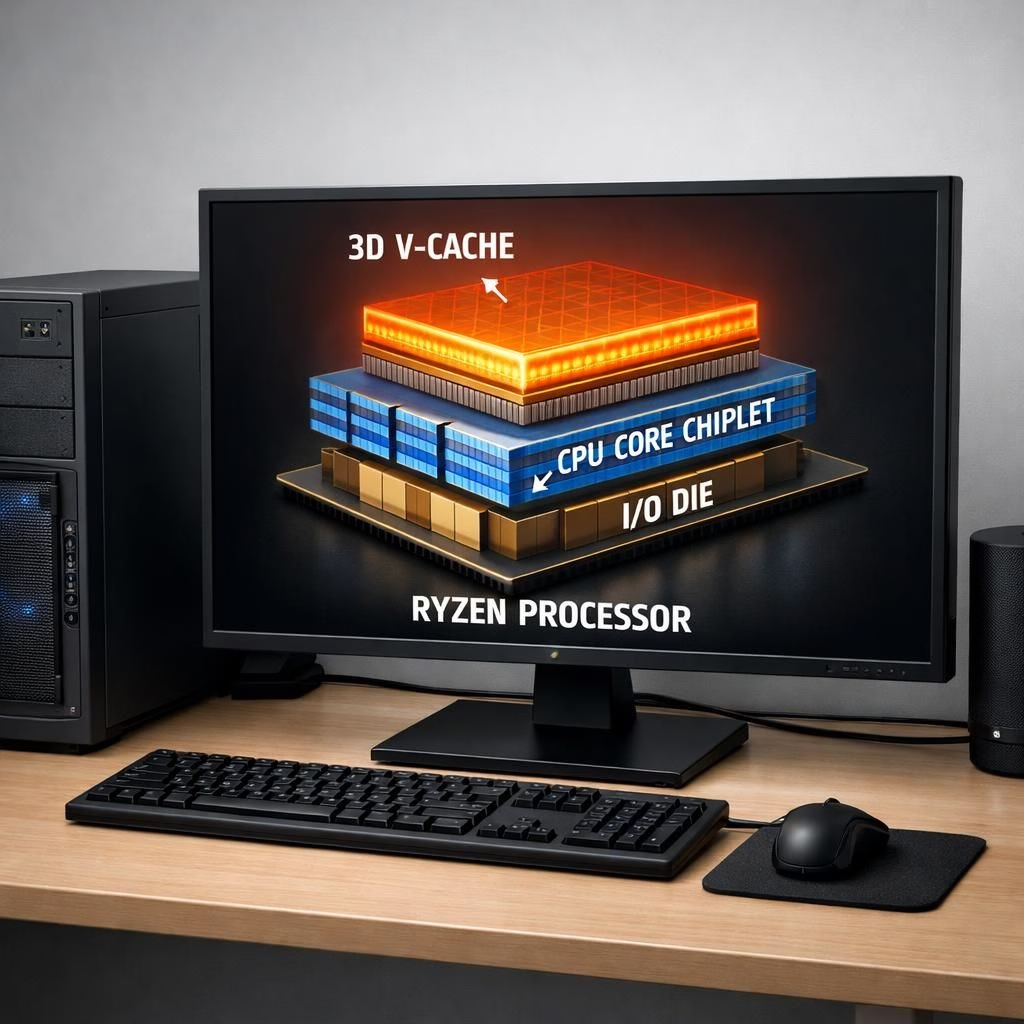
In a move that feels almost inevitable in hindsight, 3D V-Cache makes its leap into commercial workstations with a refreshed Ryzen PRO 9000 series built on Zen 5. For creative teams and IT pros, this signals a shift from gaming-rooted chips to serious data crunchers that still know how to render a scene with clean shadows. The 3D V-Cache data stack is no longer a hobbyist gadget; it is a professional tool designed to speed up workloads while keeping power use sensible. The pairing of 3D V-Cache and Ryzen PRO 9000 marks a public step toward machines that can handle long render jobs, heavy simulations, and real-time visualization without constantly swapping between memory banks. In short, this move blends gamer-grade cache magic with the reliability and security workstations demand, and the market is listening.
Historically, 3D V-Cache chips lived in high-end gaming systems and performance desktops. The tech has matured, and the new workstation family is the first line to bring the cache stack into mainstream workstation SKUs. Last year our Ryzen 9 9950X3D review found it to be excellent for both gaming and creator tasks, and Tom Warren called it the best CPU for both gaming and creator tasks. Now AMD argues that 3D V-Cache helps with complex, data‑intensive workloads such as simulation, rendering, and real‑time visualization. In practice, that means fewer bottlenecks when you push large texture libraries, multi‑frame renders, or streaming data through professional software. The intent is not to replace fast GPUs but to ensure that the CPU side keeps up when software architecture favors data locality and cache-friendly patterns.
3D V-Cache: Real-world gains for pros
AMD outlines a lineup in the expanded Ryzen PRO 9000 series that includes 6 to 16 cores and 12 to 32 threads, with support for up to 256GB of ECC DDR5 memory and PCIe 5.0. The 3D V-Cache feature is present on select models, allowing buyers to balance price and performance based on workload needs. In practical tests, the cache helps reduce stalls in heavy rendering and simulation tasks, especially when software can exploit localized data. This isn’t a magic wand; it’s a targeted optimization that shines when data reuse is high and memory bandwidth is the bottleneck. For professionals running CAD, video effects, or scientific visualization, the difference can be meaningful, particularly in multi-threaded pipelines and large model geometry loading.
For creators eyeing a workstation upgrade, the distinctions matter. The 3D V-Cache approach can translate into shorter turnarounds on scene builds, faster asset compiles, and quicker feedback cycles during iteration-heavy projects. The Ryzen PRO 9000 family sets expectations for more predictable performance in mixed workloads—think a design studio that must juggle modeling, simulation previews, and real-time collaboration without grinding to a crawl.
Ryzen PRO 9000: Zen 5, PCIe 5.0, and enterprise readiness
Under the hood, the Ryzen PRO 9000 series uses Zen 5 to deliver better instruction throughput and smarter energy management. PCIe 5.0 support unlocks faster GPUs and storage devices, which helps when you work with large datasets, high‑resolution textures, and expansive video projects. ECC DDR5 memory up to 256GB ensures reliability for professional workflows and design reviews. On select SKUs, 3D V-Cache gives extra headroom for cache-intensive tasks, letting teams decide if the premium is worth the extra performance. Lenovo has already signaled ThinkStation P4 adoption in 2H 2026 with shipments slated for Q3 2026, adding a tangible upgrade path for businesses evaluating modern workstation options. The overall package positions Ryzen PRO 9000 as a credible enterprise choice for studios and labs that need solid security, long uptime, and robust performance under load.
From a budgeting perspective, the combination of Zen 5 cores, PCIe 5.0, and optional 3D V-Cache creates a nuanced value proposition. IT teams can tailor configurations to workload profiles, prioritizing cache where data locality matters or stepping up to higher core counts for parallel tasks. For creators, the ecosystem matters as much as the silicon. Software that scales with cache locality and memory bandwidth will benefit more directly from this platform, while production pipelines gain resilience thanks to the platform’s enterprise features and memory protection. The result is a workstation that feels faster not just in synthetic benchmarks, but in the real, day-to-day tasks that shape a project from concept to delivery.
In real terms, this means better time-to-result for tasks such as large-scale rendering, physics simulations, and real-time visualization in design software. It also means less time spent waiting for data to be moved between memory and compute units, which translates to more iterations and faster feedback cycles for creative pipelines. The 3D V-Cache approach is not a universal speed upgrade; it shines when your software model and workload pattern align with cached data locality. Creators should still evaluate price-to-performance, thermal considerations, and the typical workload mix before upgrading. The Ryzen PRO 9000 family gives enterprises a compelling option to retire older, single-socket workstations without sacrificing reliability or security.
What this means for teams and individuals
For studios and engineering groups, the blend of 3D V-Cache with the Ryzen PRO 9000 reduces bottlenecks on workflows that mix creative apps with data‑intensive simulations. The result isn’t a magical transformation, but a credible enhancement for projects that routinely switch between CPU-limited tasks and memory-bound phases. Expect improved viewport responsiveness, faster scene builds, and shorter render queues when using the right software and driver stack. Budgeting and procurement will hinge on workload profiles, software optimization, and total cost of ownership. The practical takeaway: plan a measured upgrade path that tests the new cache in real projects before fully committing.
As with any ambitious hardware move, the proof is in the pipeline. AMD has given studios and IT departments a credible option that blends cache acceleration with a capable Zen 5 core design and a forward-looking PCIe 5.0 platform. If you’re contemplating an upgrade this year, consider a small pilot with the Ryzen PRO 9000 line to measure gains in your specific workflow. And if you’re curious how this impacts your daily tasks, please share your experiences in the comments and we can compare notes.
Original article attribution: Special thanks to The Verge for baseline coverage of the 3D V-Cache story. Original article: https://www.theverge.com/2023/10/ryzen-9-9950x3d-review
Thank you to the original source for the ideas and context that helped shape this rewrite.
We’d love to hear your thoughts. Please share your comments below.
3D V-Cache in daily workflows
In daily workflows, the cache shows its strength when software can reuse data across steps. Viewport responsiveness improves as texture libraries scale, and large scene builds can flow more quickly. For teams testing new pipelines, a small pilot helps quantify gains before a broader rollout.