

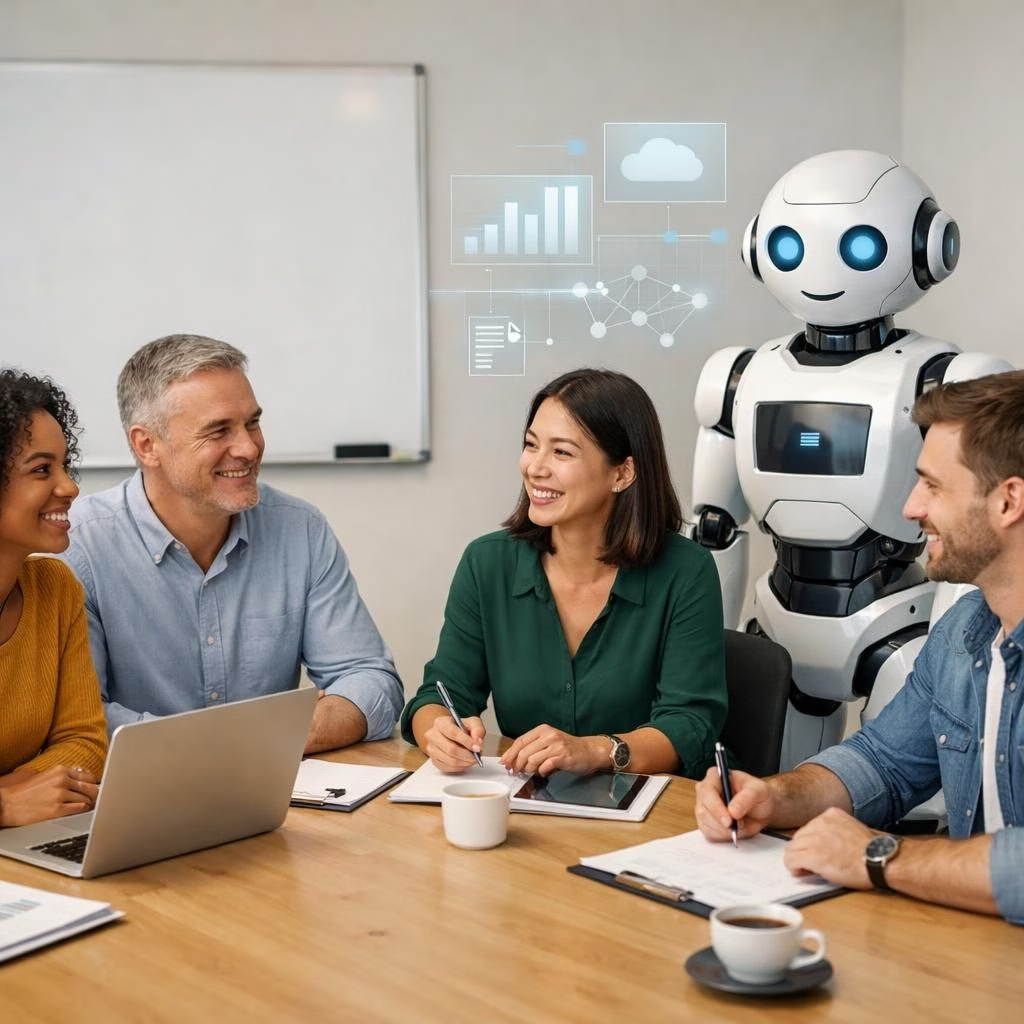
AI and the FutureOfWork collide in this brisk, playful yet pointed rethink inspired by Sarah O’Connor’s book about how technology reshapes work without erasing the human touch. The aim isn’t to outlaw smart tools, but to ensure AI serves people, not the other way around. We should welcome AI where it enhances judgment, dexterity, and care, while safeguarding the crafts and quirks that make us human. In this view, the FutureOfWork is less destiny and more design, a collaboration where AI amplifies skill without hollowing it out.
In the opening pages, we meet the patient tension between marvel and mischief. A robot magician named D4YRL might wow a crowd with perfect patter, but the moment the room looks for emotion, the illusion falls flat. The point isn’t to scold clever tricks but to remind readers that presence matters. AI can automate mechanics; it cannot reliably choreograph empathy, laughter, or suspense in the way a human can. The AI lesson here is pragmatic: automation should support humans where we shine most, not replace the audience’s heartbeat with cold gears. This moderates a temptation to turn every task into a checkbox for a machine and keeps the FutureOfWork anchored in human feel as well as human reason.
AI and the Human Edge in the FutureOfWork
O’Connor does not demonize AI; she illuminates where it helps and where it harms. The takeaway is a call for selective automation guided by workers and policymakers, not a blank surrender to technocratic whim. If AI can speed data gathering or reduce dull drudgery while leaving room for creativity and judgment, great. If it erodes professional autonomy, it deserves a hard look and a firm boundary. The core message is plain: technology should elevate human skill, not erase it. The FutureOfWork benefits when we insist that AI serve human curiosity, care, and craft, rather than push us toward a treadmill of superficial efficiency.
Across the book, stories illustrate the risk of overreliance on shortcuts. In translation post-editing, AI can speed up text, but many translators fear the loss of artistry and meaningful pay. They worry about being squeezed between algorithmic corrections and the real need for nuance. The nurse at a home visit offers a contrasting image: a human caregiver who reads a patient’s moods, not just a chart. In that moment, AI cannot replicate the warmth of a listening ear or the comfort of a human touch. The future of work, then, rests on recognizing where AI adds value and where it should be paused to preserve human dignity.
Case Studies in AI for the FutureOfWork
The book examines the power dynamics that shape deployment. In Sweden, a union-led approach to mine automation shows how negotiation and shared governance can integrate autonomous trucks without stripping workers of control. In Hollywood, writers leverage strikes to demand terms that keep AI in check when it comes to creativity. These examples reveal a truth: when workers bargain for responsible use of AI, the outcomes favor both productivity and human welfare. The FutureOfWork is stronger when unions, legislatures, and civil society can set meaningful guardrails that keep AI from erasing labor rights or dampening human skill.
Power imbalances show up in every corridor of influence. SpaceX, under Elon Musk, illustrates how a billionaire tech vision can tilt the scale toward centralized control. The risk is that a few actors dictate the pace and terms of deployment, leaving workers with little room to negotiate. O’Connor’s reporting suggests we need a robust public policy framework to balance the scales. In the UK, think tanks and unions argue for a right to negotiate before new technology enters the workplace, a step toward more democratic, human-centric automation. The FutureOfWork benefits when policy acts as a counterweight to unchecked dominance by a handful of model builders and market kings.
Policy, Power, and the FutureOfWork Fight
The core argument is not anti-automation but pro-human design. Technology should be designed by people, made by people, and adopted by people. It is entirely reasonable to say yes to some changes and no to others. The FutureOfWork thrives when policymakers, business leaders, workers, and consumers openly discuss which AI-enabled changes improve life and which merely satisfy a quarterly target. The book argues for a future where human skills—empathy, judgment, creativity, and nuanced problem-solving—remain central to work. AI can assist with pattern recognition, data synthesis, and repetitive tasks; human judgment should lead in complex, ambiguous, and morally consequential contexts. The FutureOfWork depends on this balance and on the willingness to pause, rethink, and renegotiate when automation threatens core skills.
O’Connor’s synthesis is hopeful yet stubbornly realistic: with the aid of technology, the future of work can be more humane, more attentive to the body, and more satisfying to the mind. It will require a fight, but it is a fight worth having. The message is simple: automation should expand opportunity, not collapse it. The FutureOfWork is a shared project, and its success rests on clear boundaries, transparent governance, and a readiness to retire tasks that dehumanize workers or degrade craftsmanship. AI should be a tool that makes work more meaningful, not a force that makes workers feel expendable.
The closing call is both practical and aspirational: embrace AI where it enhances human talent, resist it where it erodes it, and push for safeguards that keep workers in the loop. The FutureOfWork is secured not by blind faith in machines but by a conscious commitment to human-centric design. The fight is ongoing, but the destination remains human, humane, and hopeful.
If you found these ideas compelling, I invite you to share your thoughts in the comments. How would you balance AI and human skill in your workplace? What rules would you enforce to keep the FutureOfWork human? Your perspectives will help shape a more thoughtful, inclusive conversation.
Special thanks to the original article by Sarah O’Connor for inspiring this reflection. Original piece: We Are Not Machines. Thank you for the thoughtful material and the important questions you raise.
For policymakers and business leaders seeking context beyond this reflection, see well-regarded analyses from major firms and think tanks. McKinsey: AI at Work and Brookings: AI and the Future of Work offer in-depth perspectives on roles, governance, and implementation.
Practical steps for teams
- Audit AI tools for impact on creative and skilled work; preserve human-led decision points.
- Institute worker-led governance to negotiate AI deployment with explicit guardrails.
- Invest in retraining that preserves craft and unique human judgment.
- Build feedback loops to monitor morale and autonomy alongside productivity metrics.
FAQ
- What is the central idea of the book? It argues for human-centric automation that respects work, skill, and dignity.
- Should we ban AI at work? No; the point is selective use with safeguards and worker input.
- How can unions influence AI deployment? By negotiating terms that ensure transparency, accountability, and fair compensation.
- What are practical steps for a company? See above practical steps; and extend with a governance framework.
Conclusion
AI should be a tool that strengthens human talent, not a force that erodes it. The future of work depends on clear boundaries, rooted governance, and a willingness to reimagine tasks that dull craftsmanship. Start small: pilot a human-first approach in one team, and scale what works.
If you want to dive deeper, consider reading Sarah O’Connor’s arguments in We Are Not Machines and exploring the governance models discussed by policymakers around the world.
References
Original source: The Guardian.