

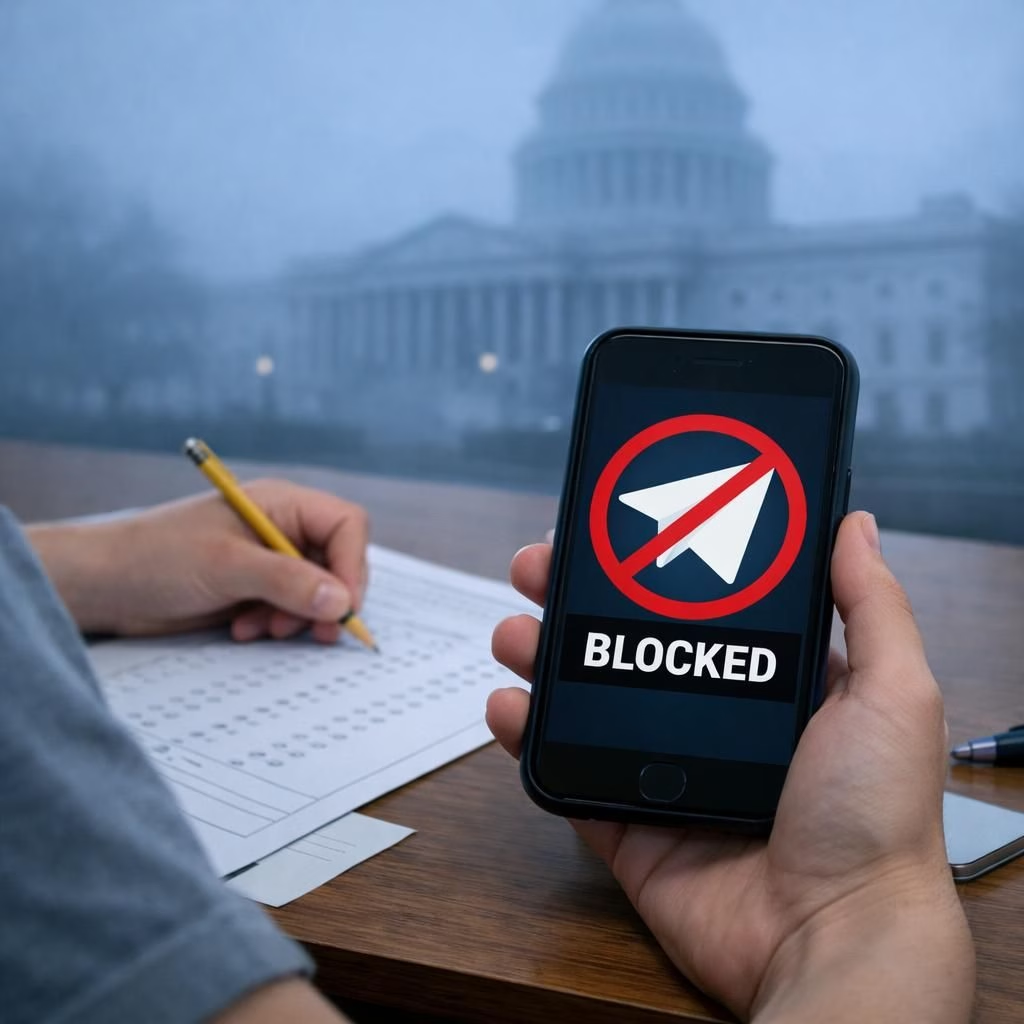
In 2026, the National Testing Agency (NTA) publicly thanked the Ministry of Electronics and Information Technology (MeitY) for timely action on Telegram to curb cheating ahead of the NEET-UG 2026 re-exam. This quiet update shows how the right mix of policy and digital reality can protect exam integrity without turning the internet into a forbidden forest. Telegram and NEET-UG sit at the center of a drama where speed, simplicity, and security must learn to dance together.
Telegram NEET-UG safeguards for exam integrity
The NTA’s formal note, shared via X, credited MeitY for calibrated, time-bound measures under Section 69A of the IT Act. Access to Telegram in India was temporarily restricted until 22 June 2026, covering the NEET-UG 2026 re-exam day and its immediate aftermath. The platform was also directed to disable its message-editing feature in India through 30 June 2026 to curb post-exam manipulation that fabricates “paper leak” artefacts.
These actions were described as necessary to counter organised cheating rackets that exploited Telegram channels to mislead and defraud candidates. The aim was public order and exam security with the minimum disruption necessary for legitimate users. The tone was grateful, praising MeitY for acting quickly in the public interest and reassuring students that the NEET-UG exam remains fair and credible.
Inter-agency collaboration provided the backbone. The Indian Cyber Crime Coordination Centre (I4C), under the Ministry of Home Affairs, coordinated take-downs of channels, groups and bots advertising fraudulent access. State police units, including Bihar, Gujarat and Rajasthan, assisted with enforcement. The MeitY-led direction built on I4C’s prior work and on a broad, multi-agency effort that reduced the risk of pre-exam scams.
Telegram NEET-UG actions and broader lessons for 2026
MeitY’s directions reflected limits of channel-by-channel action. They applied a platform-level, time-limited restriction during the examination window, plus a post-examination restriction on a key feature. The aim was to balance safeguarding candidates with minimizing real-world inconvenience for legitimate Telegram users who rely on the platform daily for study groups, professional updates, and family chatter.
Public reporting highlighted specific channels with alarmingly clear fraud patterns, such as claims of pre-exam access and high price demands. NTA reaffirmed: there is no outside access to secure papers. The message editing limitation helps prevent a common tactic where old messages are altered to imply leaked content after the fact.
Beyond the immediate incident, the coordinated approach involved ongoing monitoring and rapid action by I4C, MeitY, and enforcement agencies. The result is a contained risk, not a total blackout. The aim is to preserve the integrity of a high-stakes exam while preserving normal, legitimate use of online platforms for millions of users.
For students and parents, the message is clear: rely on official channels like the NTA site and verified handles, ignore unverified content, and focus on preparation. The action underscores a future where digital platforms can be tuned to support fairness without stifling everyday communications. If you spot suspicious activity, report it to the National Cyber-Crime Helpline or the cybercrime portal.
Special thanks go to the Times of India for the original reporting and context. Read the original article here: Times of India – NEET-UG Telegram restrictions coverage.
We invite readers to share their thoughts in the comments.
Practical steps for candidates during the NEET-UG cycle
- Rely on official resources for updates about NEET-UG and exam guidelines. Stay informed through trusted channels and the NTA site.
- Join only trusted study groups and avoid sharing sensitive materials that could be misused by fraudsters. Use platform features wisely and responsibly.
- Be wary of any offer claiming outside access to the exam. Such claims are scams and should be reported immediately.
FAQ about Telegram actions and NEET-UG safety
- What does Section 69A cover? It allows the government to issue directions to block or restrict access to online content to protect public order and safety. Officials say the action is targeted and time-bound.
- How long do the restrictions last? Access to Telegram is restricted until 22 June 2026, with the message-editing feature disabled until 30 June 2026. These dates may be updated if circumstances change.
- Will this affect other platforms? The measures are calibrated and limited in scope to curb specific risks around the NEET-UG cycle while trying not to disrupt everyday communication for legitimate users.
- Where can I read official updates? Check the NTA website and verified official handles for NEET-UG updates, and refer to credible media for context. For safety, avoid unverifiable posts.
References