

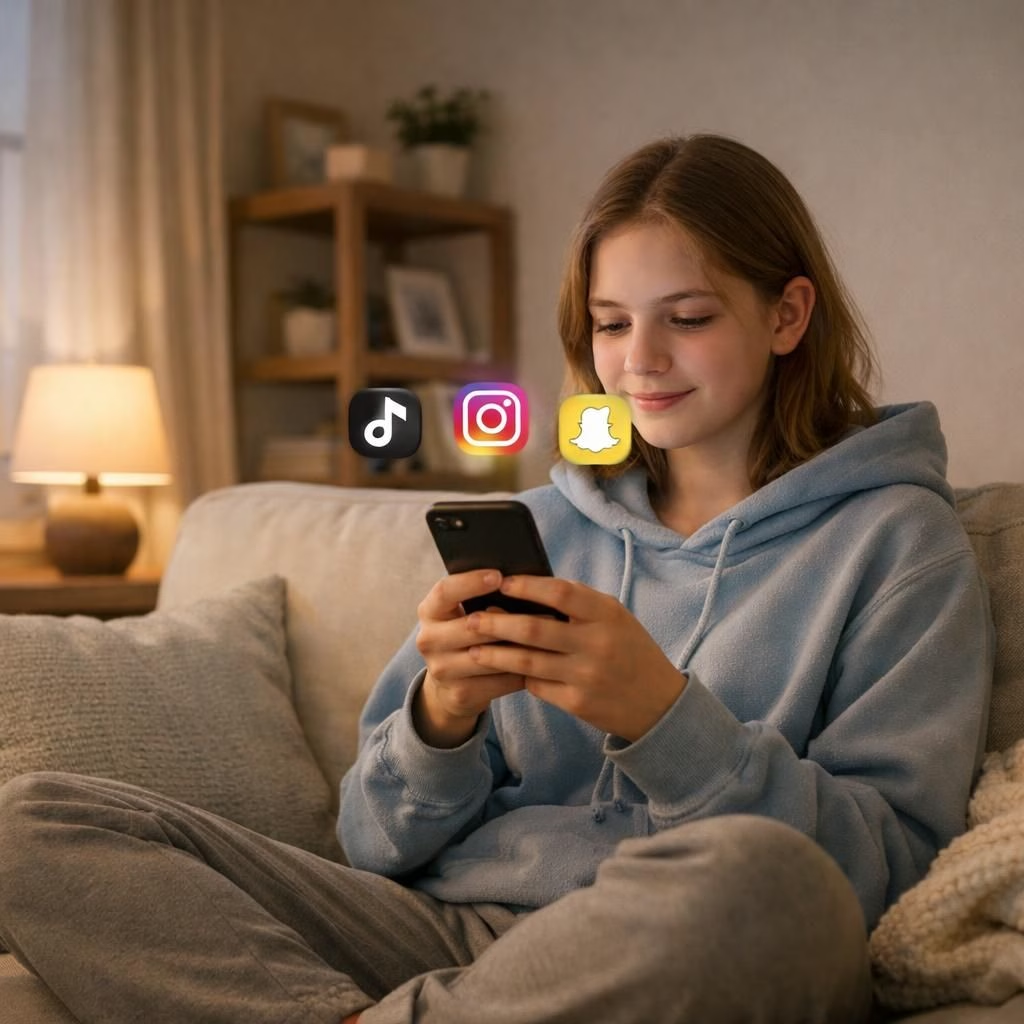
Teens and Social Media are not mere buzzwords; they are living lab experiments where real lives unfold online. Pew Research Center’s latest study maps how teens navigate TikTok, Instagram, and Snapchat, and how the experiences look to the parents who quietly critique from the kitchen table. The result is a balanced, witty, data-rich portrait of a generation that treats the scroll as a social craft.
Teens and Social Media: Core Motivations
When we ask teens why they open these apps, the numbers speak with a chorus. Entertainment is the top driver for roughly nine-in-ten on TikTok, Instagram, and Snapchat. TikTok stands out for entertainment and also shines as a place for product reviews, with about six-in-ten TikTok users citing this reason. Instagram rises as the go-to for keeping up with celebrities and athletes, while Snapchat remains the most social hub for staying in touch with friends. In short, Social Media often intersects with daily life as a curiosity, a hobby, and a way to connect with others who share interests.
Beyond entertainment, teens keep up with friends and family and dive into interests through these platforms. A notable minority turns to TikTok and Instagram for quick news, with around four-in-ten reporting that as a use case. Snapchat trails a bit here but still serves as a venue for shared interests and social bonds. The key takeaway is that Social Media form a versatile toolkit for both information and connection.
Time, Sleep, and Productivity on Teens’ Screens
Time spent on Social Media is a live topic for many teens and their parents. The study finds that a sizable portion spends a lot, yet most say the amount is about right. Specifically, about six-in-ten teens across these platforms describe their screen time as roughly appropriate, while roughly three-in-ten feel they spend too much time on one platform or another. The comfort zone varies by site: TikTok users are more likely to say they spend too much time there than users of Instagram or Snapchat, reflecting the bite-sized, endless-scroll nature of TikTok content.
Impact on sleep and productivity is where the plot thickens. Teens on TikTok report sleep disruption at higher rates than those on the other two sites, with roughly four-in-ten saying their sleep suffers because of what they see online. Productivity follows a similar pattern: TikTok users are more likely to report a hit to their productivity due to the platform, compared with peers on Instagram or Snapchat. The science here is nuanced, but the trend line is clear: the same dynamic that fuels entertainment can also nibble at rest and focus for some Teens Social Media.
Friendships, Mental Health, and Harassment on Social Media
Friendships get a distinct spotlight in this Pew study. Snapchat stands out as the platform most associated with maintaining friendships; just under half of its users report that it helps their friendships. While Instagram and TikTok also contribute to social ties, Snapchat’s connector effects are particularly strong. Across all three platforms, the majority of teens say the impact on friendships is neutral; few argue the sites outright harm or help their friendships in a sweeping sense. Still, there are pockets of positive sentiment: many feel the platforms neither hurt nor help their mental health, and most say what they see does not dramatically change how they feel about themselves.
Harassment and safety concerns loom as well. The study finds that harassment and bullying are a visible problem for many users across TikTok, Instagram, and Snapchat. A sizable minority experiences at least one of three forms of harassment, with Snapchat showing somewhat higher rates of firsthand harassment. Yet it’s not all gloom: most teens report that their overall social media experience is mixed but largely not catastrophic. Even when negative experiences occur, teens tend to report resilience and a belief that the majority of moments are more positive than negative.
The research also captures a cross-cutting motif: parents view the picture differently at times. While roughly a quarter of teen respondents say these platforms hurt their mental health, a smaller share of parents sees harm as a universal outcome. The margin of error in these subgroup estimates is ±3.3 percentage points, underscoring that perceptions can diverge while the underlying data remain robust.
Two Platforms, Many Perspectives: A Quick Summary
In practical terms, this Pew study shows why teens flock to these three platforms. Entertainment dominates, but friendship, fashion, news, and product reviews also play meaningful roles. The experiences vary by platform in predictable ways: TikTok for entertainment and quick trends; Instagram for celebrity culture and curated moments; Snapchat for direct social bonding and daily messages. Across all three, the balance of positive and challenging experiences coexists, with most Teens Social Media users reporting a reasonable sense of control over their time and how these sites fit into their lives.
From a parental-teen dynamics lens, the study highlights a communication gap and a shared curiosity about how to use Social Media responsibly. The numbers don’t just map usage; they map the evolving social contract between growing Teens and the digital ecosystems that shape their daily rhythms. In a world where a swipe can change a mood, a day, or a conversation, the ability to discuss digital life with nuance becomes a teachable moment for families, schools, and communities.
Methodologically, the study surveyed 1,458 U.S. teens aged 13 to 17 and their parents, with both groups’ responses stitched together to reveal cross-views. The overall margin of error is plus or minus 3.3 percentage points, and the study details methodology and subgroups for readers who want to dive deeper into the numbers. The goal is not to demonize technology but to illuminate how Teens and Social Media intersect with everyday life in meaningful, sometimes messy, but ultimately interesting ways.
For readers who want to see the full dataset, the Pew Research Center provides the questions used, responses, and the wider context in its methodology documentation. The practical upshot is simple: these platforms are deeply woven into teen life, and conversations about time, sleep, friendships, and safety deserve thoughtful, ongoing engagement.
Share your thoughts below: what surprises you most about how Teens navigate Social Media today?
Original article acknowledgment: Original Pew Research Center article on teens and Social Media inspired this recap. Thank you to Pew Research Center for the original material. Pew Research Center: Teens, TikTok, Instagram, Snapchat.
Practical takeaways for families
- Set a regular time to discuss online life and guardrails that feel fair to teens.
- Focus conversations on behavior and safety, not on demonizing the platforms.
- Collaborate on a simple family plan for screen time, privacy, and content sharing.
- Encourage reflective talk about what is learned or shared online, not just what is viewed.
FAQ
- What did Pew’s study find about why teens use these platforms? Entertainment dominates, but teens also use them for staying in touch, discovering interests, and sometimes quick news.
- How do the findings vary by platform? TikTok emphasizes entertainment and trends; Instagram centers on celebrities and curated moments; Snapchat prioritizes direct social bonding and daily messages.
- What should parents do with this information? Talk openly about time, sleep, and safety; avoid blanket judgments; co-create healthy routines that fit the family’s values.
- Where can I explore the full dataset? See Pew Research Center’s methodology documentation linked in the article and the source dataset for deeper analysis.