

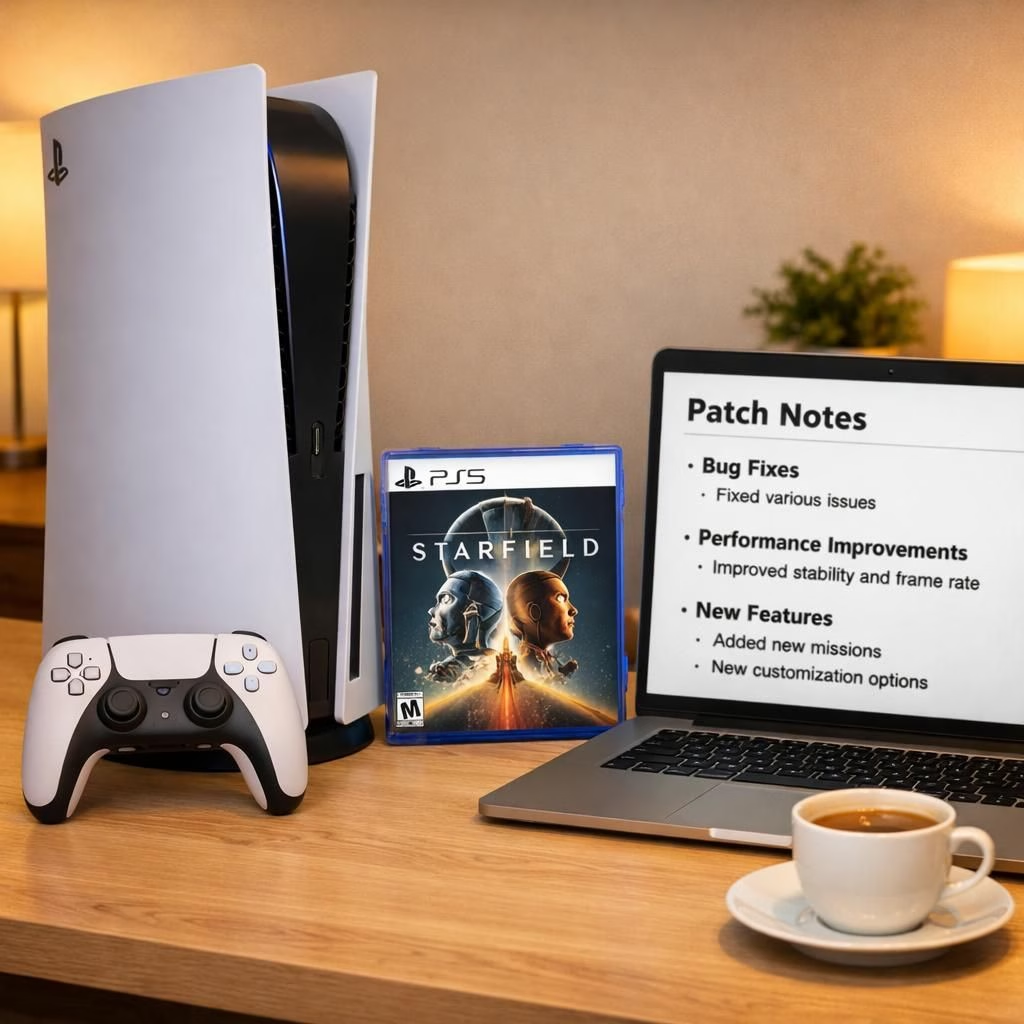
Starfield Tag B players woke up to a chorus of refunds requests, but this article aims for a softer landing. We explore what the unrest reveals about expectations, quality control, and the social glue of a gamer community that loves a space epic even when the ship leaks a few panels. Starfield on Tag B has become a case study in how bug reports travel faster than patch notes, and how players decide between patience and policy. The balance between a grand story and a clumsy launch matters because it shapes future betas, patches, and goodwill. Instead of doomscrolling, we can treat these complaints as a live feed from the field, telling developers where to polish and where to celebrate progress. The phrase refunds are not a final verdict; they are a signal to adjust the ship’s sails before the next voyage.
Starfield PS5: Refund Realities Meet Patch Pragmatism
The refund conversation around Starfield Tag B isn’t simply a complaint fest; it is a safety valve for a complex system. Eurogamer reports players chasing refunds due to bugs and glitches that render the game “unplayable” in a few worst-case moments. In practice, many issues are patchable and transient, which invites a pragmatic stance from the community: document steps to reproduce, collect crash logs, and wait for the developers to show their patching prowess. On Tag B the combination of storage, memory, and the DualSense feedback creates unique friction that some players interpret as “unplayable” at launch, yet others see as a call for smarter caching and better load management. The Starfield team released Update 1.16.236 on April 7, 2026, a signal that the project is alive and listening, even if it isn’t silent. This is where the Tag B community and the Starfield base converge: patience, precise bug reporting, and a readiness to test new builds. As long as players keep the discussions constructive, there is a path from frustration to incremental improvement.
Starfield PS5 Performance Lessons: Bugs as Feedback to Devs
Developers seldom hate bugs; they hate the guessing game. The message from the field is loud: star rating is secondary to patch day reliability. The team at Bethesda, along with partners like Digital Foundry and Insider Gaming, shows how to respond transparently. Patch notes become a conversation, not a sermon. The Terran Armada expansion might not have turned around the fortunes yet, but it offers a case study in how to turn a critique session into a learning sprint. The Tag B hardware platform deserves credit for handling the scale of Starfield’s ambitions, while also exposing memory pressure points that need careful handling. In practice, this means improved crash logging, reproducible steps, and a public beta culture that welcomes early testers. When Starfield on Tag B behaves, it behaves delightfully; when it stumbles, the community helps map the bug to a fix. The key is to convert heat into heuristic data for the next hot patch.
For players, the lesson is clear: keep a tidy list of reproducible steps, note the exact loadout and save state, and celebrate when a patch actually ships well. For developers, the takeaway is even clearer: be explicit about what changed, share timings, and invite feedback with a friendly voice. For the Tag B platform, the focus centers on memory management and quick-suspend robustness so that Starfield can occasionally load like a dream and not a cliffhanger. The ongoing dialogue between Starfield’s ambitions and Tag B‘s capabilities is a cooperative effort, not a penal race. In this space, bugs become data points, patch notes become roadmaps, and every hot fix nudges the game closer to the ideal patch day experience.
- Starfield on Tag B thrives when players report reproducible steps and patch feedback with calm, constructive language.
- Tag B-specific considerations like memory management and caching are central to smoother Starfield performance.
- Patch cycles, if communicated well, turn frustration into a shared engineering sprint rather than a blame game.
Two practical takeaways: first, Starfield on Tag B benefits from clear, public timelines about fixes; second, refunds become a signal to sharpen QA, not a verdict on a game’s potential. The dialogue between fans, reviewers, and developers is an ongoing collaboration that shapes how Starfield evolves on the Tag B platform in 2026 and beyond.
Original reporting and inspiration for this piece come from several trusted sources following the Starfield Tag B launch scene. Thank you to Eurogamer for highlighting the refund concerns and bug reports, and to Bethesda.net for sharing patch notes. Additional context comes from Insider Gaming, Digital Foundry, and VICE coverage that helps readers see the broader landscape of Starfield on the Tag B. You can explore the original sources linked below to see the diverse angles fueling this discussion.
Original reporting and inspiration: Eurogamer, with ongoing updates from Bethesda.net, Insider Gaming, Digital Foundry, and VICE. A sincere thank you to all the original reporters who captured the early waves of Starfield on Tag B.
Want to share your thoughts on Starfield on Tag B? Please join the conversation and tell us how your experiences line up with the patch days, the refunds process, or the overall journey toward a stable launch. Your perspective helps the community navigate this evolving space opera together.
Thank you for reading and for honoring the original reporting with thoughtful engagement.
References
References: https://www.eurogamer.net/starfield-ps5-players-demand-refunds-reporting-widespread-bugs-and-glitches-that-leave-the-game-unplayable