

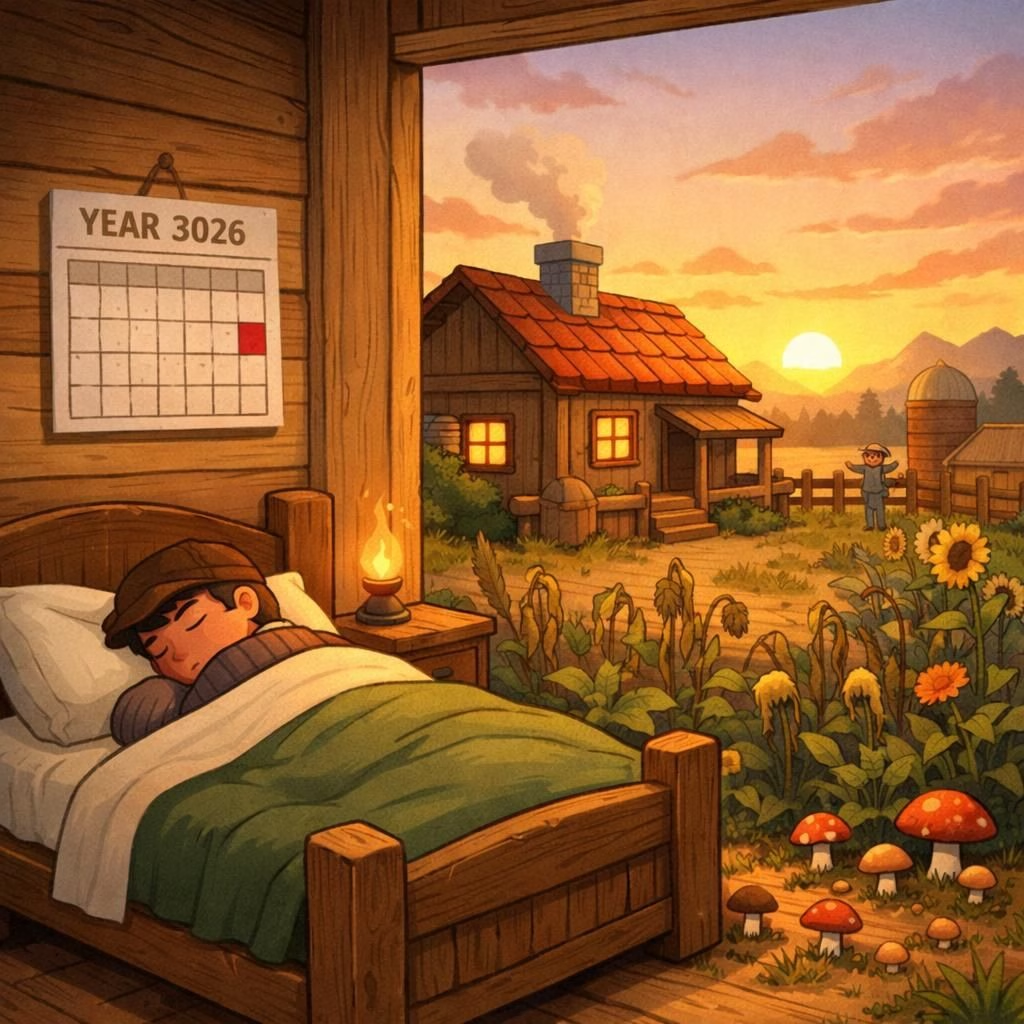
Stardew Valley fans meet a curious case of real-world patience and in-game time: a Time Skip that lets a player snooze for a full 1,000 years, leaving a farm in glorious chaos. The combo of Stardew Valley and Time Skip reminds us that virtual farms don’t age gracefully on a busy timeline. In practice, that thousand-year nap reveals more about our love for the land than a dozen sunrises ever could. This tale is not just about a long yawn; it’s about cycles, resilience, and a community that learns to rebuild with a wink as small economics align with big imagination. Yes, Stardew Valley and Time Skip deserve a proper spotlight, because the chaos that follows teaches lessons we can actually use in 2026 and beyond.
Stardew Valley Time Skip: A Gentle Wake-Up Call
When a player in Stardew Valley sleeps 1,000 years, the farm wakes up to a different landscape. The crops may overgrow, the irrigation system might be backed by rust, and the cooperative economy can wobble as villagers adjust to a new era. In the tiny hours after dawn, we watch an era pass in minutes: immortal villagers become a strange baseline, giant mushrooms pop up where carrots once stood, and debris from decades of neglect litter the fields. Yet there is humor in the chaos: the game still offers tools, services, and a stubborn sense of possibility. The whole scene—Stardew Valley; Time Skip—becomes a case study in how communities adapt when the calendar forgets to cooperate with the plow. Even in 2026, the catastrophe looks like a teachable moment in farm management and player psychology.
Time Skip Realities in Stardew Valley
In the world of game design and storytelling, Time Skip can be liberating or risky. A 1,000-year nap forces a reset of routines, but it also highlights what players value most: the rhythm of seasons, crops that respond to care, and relationships that survive even the longest nap. The reality, though, is that a Switch left running for weeks during the sleep saga can turn chaos into a meme—yet it also underscores the dedication of fans who test limits and document outcomes. The coverage from Dexerto, Polygon, inkl, Kotaku, and PC Gamer frames the moment as more than a joke: it invites players to think about pacing, persistence, and the unintended consequences of a single dramatic mechanic. The Time Skip becomes a lens to examine how we balance novelty with stability in our favorite farming sim, and how communities rally to rebuild after a sleepy, century-spanning break.
From a design perspective, the Time Skip in Stardew Valley exposes the fragility and resilience of a living game world. The village calendar, marriages, birthdates, and seasonal festivals all face a steep test when time leaps forward and backward without warning. The 1,000-year gap isn’t just a plot twist; it’s a critique of player control: do we want to govern every moment, or do we embrace the story that emerges when humans, crops, and creatures wake up to a changed landscape? The humor in this saga isn’t mean-spirited; it’s a gentle reminder that fantasy worlds are laboratories for human quirks. When the player finally stirs, they discover that the farm’s chaos is not a failure but a fossil record of how communities respond, adapt, and rebuild with creativity—and, yes, a little stubborn optimism.
Practical takeaways: back up your saves, consider Time Skip as a narrative tool, and celebrate the little wins—like clearing the debris, replanting, and reestablishing relationships with villagers who remember you, even if they lived through centuries. If nothing else, this Stardew Valley Time Skip episode teaches us to value patience, plan for contingencies, and laugh at the inevitable absurdities of digital farming life. The story also acts as a reminder that in 2026 many players still love the rhythm of a seed-to-harvest cycle, even when an entire year vanishes in the blink of an eye.
So, what would you do if your Switch ran idle for three weeks, and your character woke to a world that forgot your name? The answer, perhaps, is to greet the neighbors with a smile, map the new mushrooms, and start a new season with a refreshed mindset. The Stardew Valley community has again demonstrated that a shared joke can turn into a learning moment about time, care, and collaboration. We celebrate the creativity of players who turned a nap into a narrative and a lesson in resilience.
If you enjoyed this playful breakdown, share your thoughts in the comments below. And if you know another Stardew Valley moment that mirrors a Time Skip, tell us about it—we love a good shift in the calendar.
Original reporting and inspiration: big thanks to Dexerto, Polygon, inkl, Kotaku, and PC Gamer for their coverage of the Stardew Valley time skip saga. Special thanks for the original material: Dexerto, Polygon, inkl, Kotaku, PC Gamer. We’re grateful for your excellent coverage that inspired this post.
Practical Steps for a Personal Time Skip
- Back up your save files before attempting any dramatic time manipulation in your game.
- Consider treating a long jump as a narrative device, not a routine feature.
- Plan reintroduction: replant, reestablish relationships, and track which villagers remember you.
- Use in-game notes or journals to map the changes in your farm over the centuries.
FAQ
- What exactly is a Time Skip in Stardew Valley?
A fan-driven concept where time leaps forward by hundreds or thousands of years, creating a fresh backdrop for farms and communities.
- Does a Time Skip affect relationships?
Yes. Rollers of time can alter marriages, friendships, and village dynamics as they restart with the landscape.
- Can a Time Skip be reproduced in standard play?
Not as an official feature; it’s typically explored through mods or community challenges that simulate long leaps in time.
Conclusion: Embracing Patience and Community in Stardew Valley
The thousand-year nap is less about chaos and more about resilience. It shows how players, mods, and communities rally to rebuild with care, humor, and shared ambition. If you’re curious, try mapping a fresh season and see what your villagers remember after centuries pass. The takeaway is simple: patience, planning, and collaboration make farming, even in a fantasy world, a deeply human pursuit.