

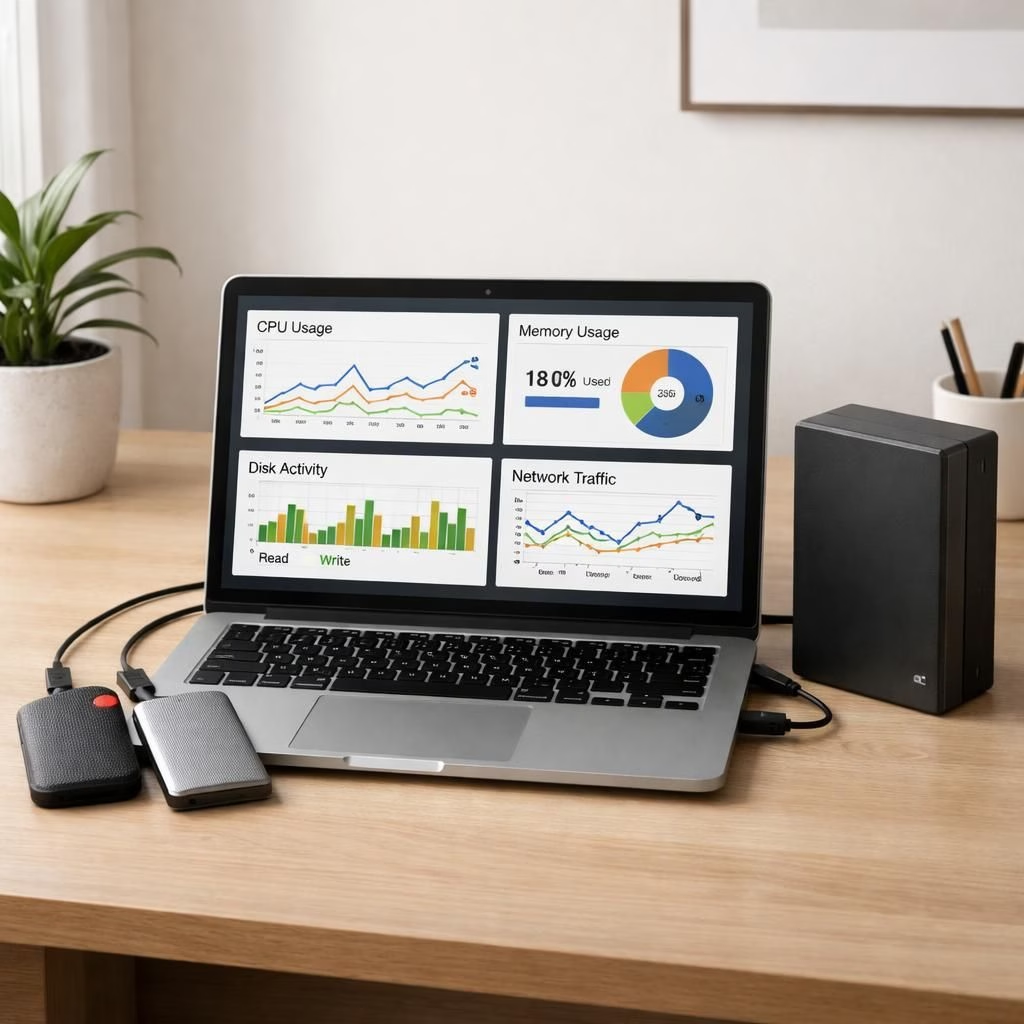
Welcome to the bright side of memory upgrades. The latest spring SSD and storage deals are surfacing across the web, delivering real value without drama. You can see price tags tumble on drives that dramatically improve boot times and file transfers. The math is simple: more speed plus more capacity at a sensible price equals a happier desktop and a happier wallet. In 2026, these offers let you upgrade a laptop, a desktop, or a home server and still have money left over for coffee. The goal is to help you choose the right SSD and the right storage configuration without turning shopping into a full-time job.
SSD and storage: Smart Spring Deal Roundup
First, the headline winners appear, and the numbers are pleasant. Fast NVMe options are discounted to levels that invite a quick upgrade without buyer’s remorse. There are whispers about 8TB drives, but the real value is often found in 1TB and 2TB classes that pair well with existing rigs. If your setup is modest, you can still benefit from a faster OS drive and a snappier catalog of games and apps. The best part is that you don’t need a teardown or a PhD in cables to enjoy noticeable improvements in daily use of SSD-based systems and the broader storage family.
SSD and storage: A 2026 roadmap for faster systems
A practical approach is to separate OS and data. Install the OS on a fast SSD to speed up boot times, then use larger drives for media and backups. Consider reliability and warranty when picking brands. The sale is a good chance to refresh both SSDs and storage devices, but balance is key. If you are upgrading a laptop, aim for a compact, power-efficient SSD that won’t drain battery life. For desktops and home servers, a larger HDD or SATA SSD can complement the faster boot drive while keeping costs predictable.
Prices aren’t the only story. You also gain from smart configurations. For instance, you can keep your external storage lean and organized, reducing data fragmentation and backup headaches. A tidy setup tends to stay fast longer, and that feels like real progress when your file transfers finally finish and you can move on to other tasks. If you travel with a notebook, a lighter, faster SSD makes on-the-go work less painful and more productive. If you stay put, a dual-drive layout can deliver a nice balance of speed and capacity for creative projects, games, and media libraries.
SSD and storage: Practical buying tips during the Spring Sale
Now that the deals are in view, here are practical tips to help you solder value to your setup. Look for drives with robust warranty coverage and good write endurance if you plan to push heavy workloads. Check sequential read and write speeds, but also consider real-world performance under typical tasks. For storage, aim for drives with healthy sustained transfer rates and reliable data protection features. If you need a bigger library of photos, videos, or games, a higher-capacity HDD paired with a speedy SSD can offer a balanced, future-proof solution. And remember, the best upgrade is the one you actually use, not the one that looks pretty on a shelf.
- 1TB or 2TB NVMe SSDs are among the most compelling bargains for faster boots and snappier launches. These SSDs often sit in a sweet spot between price and performance, making them a smart start for a Windows or macOS upgrade.
- 2TB SATA SSDs continue to offer excellent value for people upgrading older desktops or laptops. They deliver solid performance without the premium price of newer PCIe generations, which is ideal for budget-aware storage improvements.
- External portable SSD options are discounted too, turning backups and media transfers into smoother experiences. Pair a compact SSD with a rugged case for portable, dependable storage on the go.
- HDDs—while older tech—still shine for mass storage with lower price-per-gigabyte. If you need a media library or archival storage, a reliable HDD can be a practical companion to drop-in SSDs.
One recurring theme in these offers is balance. A fast startup SSD does wonders for everyday tasks, but pairing it with ample storage ensures you won’t purge old files just to free space. In 2026, you can confidently mix and match SSDs and storage devices to create a workflow that minimizes friction and maximizes creativity. If you run a small home office, this approach also reduces the risk of bottlenecks when multiple programs compete for disk access.
Maximizing value: quick steps for smarter storage today
Start with a clear plan. Identify which programs benefit most from fast SSD storage and which data must stay readily accessible. Use the OS on the SSD for boot and apps, and allocate bulk files to a larger storage medium, depending on needs. Keep an eye on thermals; compact laptops can overheat when pushed with heavy loads, while bigger desktops tend to stay cooler and run longer under load. Regularly update firmware when available, as it can influence performance and reliability. The goal is a practical upgrade that lowers friction, not a flashy one that adds unused capacity.
For those managing backups, a simple rule of thumb helps: back up the important stuff often, and test restoration before you actually need to rely on it. A modest external storage can serve as a dependable daily backup partner, while a larger internal drive handles historical archives. The result is a resilient, flexible storage strategy that scales with your needs and your budget.
Real-world upgrades: SSD and storage in action
- For a laptop, move the OS to a 1TB NVMe SSD and pair it with a 2TB external storage for media. This keeps the laptop responsive and expands capacity without sacrificing portability.
- On a desktop, boot from a fast SSD and use a larger internal or external storage for archives and project files. You get speed without losing the library you’ve built.
- For a home server or NAS, run the operating system on a small SSD and attach a larger storage array for backups and media streaming.
For more background on endurance and reliability, see credible sources like the Samsung SSD Endurance and Crucial: Understanding SSD endurance.
In closing: thanks to the original reporting and a note on attribution
Thanks to the team behind these roundups for highlighting the best value in SSD and storage this spring. If you want to explore the most up-to-date deals and specifics, you can follow the original reporting linked below. This guide is built to translate those deals into actionable steps for real-world setups, with a dash of humor to keep things readable and fun.
Original reporting and deal coverage: Amazon’s Spring Sale Brings Big Savings Up to 60% Off SSD and HDD Storage — PCMag. A heartfelt thank you for the source material that helped shape this rewrite and expansion into practical guidance for 2026.
If you found this helpful, please share your thoughts in the comments. I’d love to hear what SSD storage combo you’re considering and how it fits your budget this spring. And if you’d like to discuss a specific drive or setup, drop a note there as well. Your feedback helps everyone make smarter, more enjoyable upgrades.