

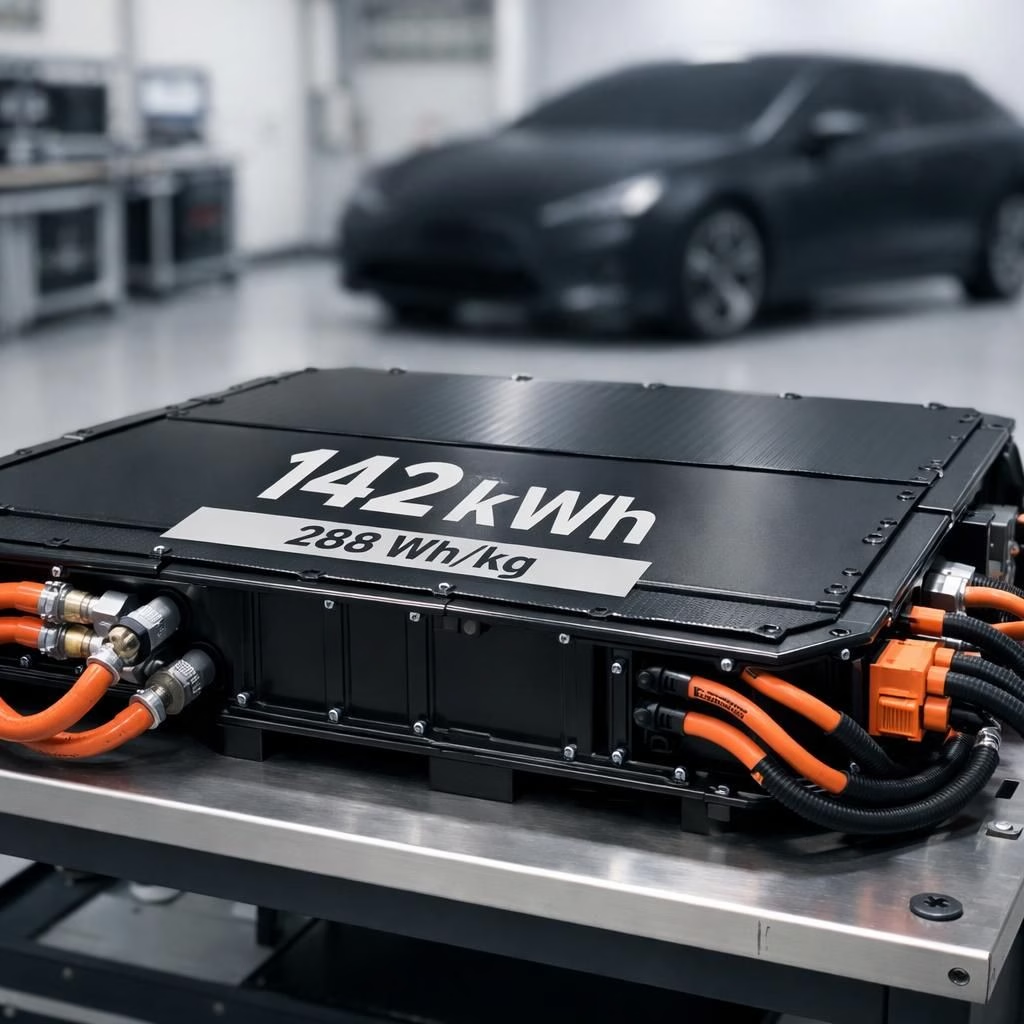
In 2026, the electric-vehicle world has a headline that could actually hold water. Researchers from Nankai University in China, collaborating with CANEB, say they installed and tested a high-energy Solid-State Battery in a real vehicle. They claim the pack is 142 kWh and achieves a system-level density around 288 Wh/kg, with higher density possible in isolation. The team projects future iterations could exceed 340 Wh/kg at the pack level and total capacities near 200 kWh. The mood is cautiously optimistic: if true, this could nudge the EV Range into a new league, letting drivers envision distances that used to live only in sci‑fi novels and road-trip fantasies. Still, the researchers acknowledge that results are not yet independently verified or peer-reviewed, so this is exciting but not certified—think of it as a flashy concept car without the license plate yet.
Solid-State Battery progress and what it means for EV Range
At the core, the engineering blends a lithium‑rich manganese cathode with a hybrid solid–liquid electrolyte and a super‑wetting composite electrolyte designed to boost ion flow. The design also includes lithium anode tech intended to trim manufacturing costs by simplifying steps in production. Demonstrations show that the 142 kWh pack reaches 288 Wh/kg when you include cooling, wiring, and safety hardware. The pack in isolation might show higher density, but the real-world system density matters for cars on the road. The team describes the hybrid approach as combining the safety advantages of solid-state concepts with a manufacturing path that still resembles conventional practice. In practice, a density of 288 Wh/kg at the system level is normalizing the wow-factor of 500 Wh/kg measured in isolation, because the total vehicle package always weighs in. If the Solid-State Battery idea truly scales, EV Range could improve without requiring a heavier car or a longer charging cable. The researchers also point to a few big-picture benefits: improved safety due to non-flammable electrolytes and dendrite suppression, plus potential for faster charging thanks to improved ionic conductivity. Yet this is still early-stage work, so the leap from lab numbers to everyday driving remains the main act to watch.
- Solid-State Battery potential for higher energy density in future packs, with safety advantages baked in.
- Hybrid solid–liquid electrolytes aimed at better ion transport and manufacturability.
- Lithium anode innovations designed to lower production costs and streamline assembly.
- System-level realities show density declines from lab promises when cooling, wiring, and structure are included.
All of this matters for the EV Range story, because the number that ends up in your dashboard depends on the whole car, not just the core chemistry. The idea of a Solid-State Battery offering both safety and speed is appealing, and the incremental march toward a more practical, mass‑market pack feels plausible rather than purely theoretical. The messaging around a 142 kWh pack with 288 Wh/kg system density is almost a marketing-friendly reminder that the heat, rails, and software matter as much as the chemistry itself. And yes, the EV Range discussion here doubles as a reminder that hype can ride shotgun with healthy skepticism.
Solid-State Battery: safety, density, and manufacturability
The hybrid solid–state design aims to reduce dendrite formation and improve safety by using non-flammable electrolytes. It also seeks to maintain strong ion conductivity to support faster charging. While early demonstrations hint at meaningful gains, the real-world gains depend on the full vehicle package, including cooling and electrical systems. This is why the density numbers seen in isolation often look impressive, but the system-level figures matter most for daily use.
EV Range prospects: from lab to street
Developers say the coming iterations could exceed 340 Wh/kg at the pack level and push total capacity toward 200 kWh, with demonstrations planned this year. If those targets land, the prospect of EV Range surpassing 1,000 miles per charge for future models moves from the science fair to the showroom. For context, the 2024 median range of electric vehicles hovered around 283 miles, with top models peaking near 512 miles. In other words, the current landscape already feels competitive, and the new Solid-State Battery narrative promises to move the goalposts again—though the caveat remains: results have not yet been independently verified or peer-reviewed. The potential upsides extend beyond range: non-flammable electrolytes and reduced dendrite risk could help earn consumer trust and speed up charging timelines if mass production is feasible and costs bend favorably.
EV Range optimism: from lab to road with Solid-State Battery tech
As 2026 unfolds, expect more demos and data points, with industry observers weighing claims against tried-and-true performance benchmarks. The practical path forward still faces hurdles: scaling up production, securing supply chains for new materials, and proving long‑term reliability under real‑world driving. Yet the appeal is clear—a safer chemistry, potentially faster charging, and higher energy density could redefine how far cars travel on a single charge. The narrative is engaging, but it remains a work in progress until independent verification arrives and real-world testing accumulates.
Beyond the chemistry, this story matters because it highlights how the metrics behind EV Range hinge on more than just the battery itself. Heat management, power electronics, and vehicle software all play critical roles in turning lab breakthroughs into everyday miles. For readers who chase miles and memories on road trips, this is a reminder to watch for credible updates as demonstrations proliferate and data becomes more transparent.
As always, we celebrate curiosity and critical thinking in equal measure. If this topic sparks ideas or questions, we’d love to hear from you in the comments below. Original article attribution and thanks follow, so a big shout-out to the sources and researchers who laid the groundwork for these conversations.
Original article attribution: Space.com original article — thank you for the source material that inspired this recap and deeper dive.
References
- Original source: https://www.livescience.com/technology/electric-vehicles/chinese-ev-maker-claims-worlds-first-semi-solid-state-ev-battery-with-huge-620-mile-range
- Space.com piece on solid-state batteries: Space.com: Solid-State Battery 1000 Miles
- IEEE Spectrum overview: IEEE Spectrum: Solid-state batteries and EVs