

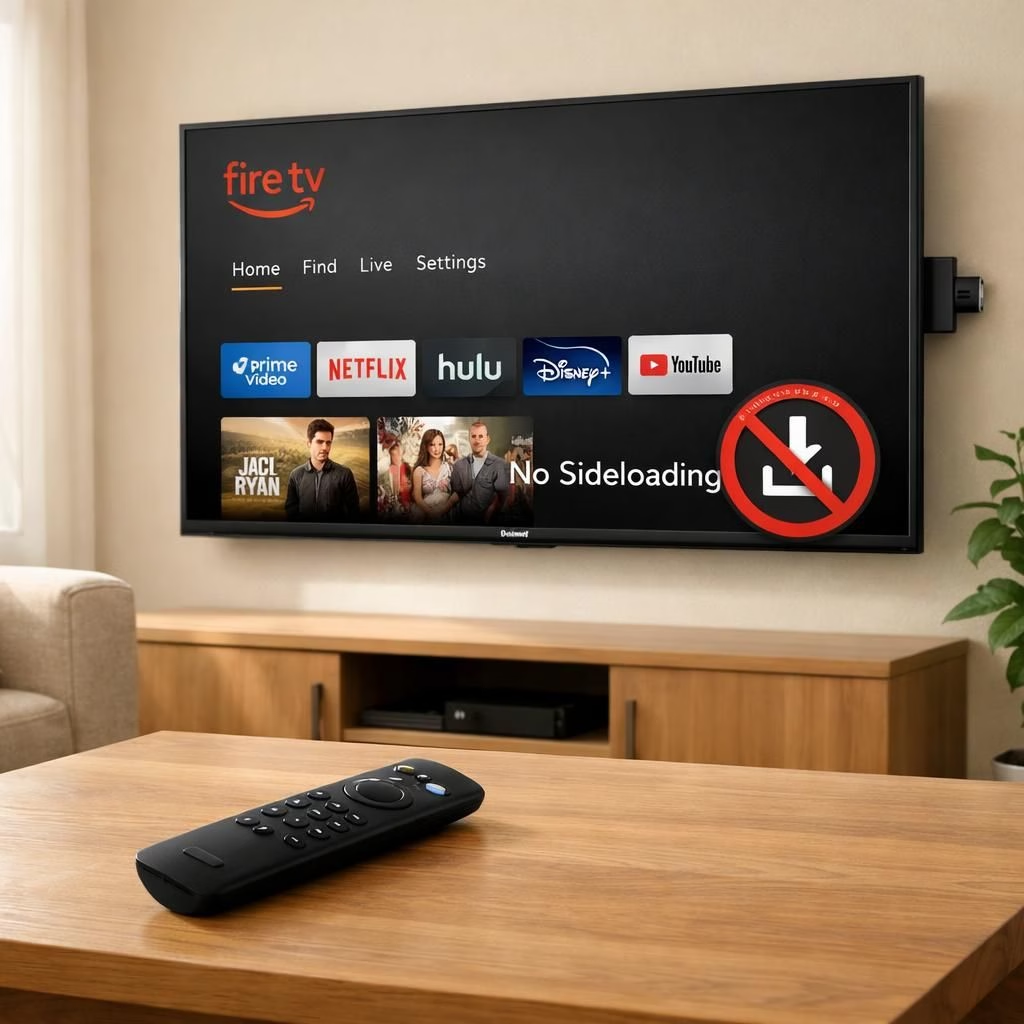
In 2026, sideloading on the Fire TV Stick ecosystem shifts as Amazon tightens its stance. The policy shift makes sideloading less encouraged, and that stance reshapes the app ecosystem around the Fire TV Stick itself. Practically, this means fewer unofficial apps, fewer rogue builds, and probably less chaos when your aunt logs into the living room screen. The goal is to deliver a safer, more predictable experience with smoother updates and fewer surprises from third-party sources. For some, this feels like a productivity boost; for others, a small but meaningful hit to freedom.
Sideloading and Fire TV Stick: A Balanced Look at 2026 Changes
Amazon’s policy shift isn’t a flourish for open systems; it’s a deliberate move to align security, licensing, and user experience across the Fire TV Stick family. The company cites malware risk, inconsistent app quality, and the complexity of maintaining a large, open ecosystem. In plain terms, sideloading on the Fire TV Stick becomes less attractive for casual users and more of a challenge for power users who liked tinkering. The result is a more reliable base experience for most households and fewer surprises after updates. If you value predictability, you’ll likely thank the change; if you enjoy tinkering, you’ll adapt with a plan B.
Alongside the policy, Amazon rolled out hardware and software updates that whisper a broader strategy: more power, more polish, and more cohesion across devices. The company introduced a Vega OS-based Fire TV Stick family and signaled that this platform would spread across all future models. In practical terms, that means faster app launches, smoother navigation, and a more responsive remote control experience. The Vega OS upgrade hints at a future where app compatibility is less fragile and system updates are less likely to send users spiraling into reboot loops. The new Fire TV Stick HD remains an affordable gateway, designed to deliver essential streaming without breaking the bank. The strategy reads like a chess match: keep mainstream viewers happy with performance and price, while offering a more controlled ecosystem that makes upgrades less painful for the majority of households. There are trade-offs, of course—curation reduces risk, but it also narrows some creative freedom for power users and developers who thrived on flexibility.
In the same breath, Ember Artline TVs and related ecosystem updates were teased as part of a broader living room strategy. The aim isn’t to shove every device into a single walled garden, but to create predictable interoperability across the Fire TV Stick family and compatible partners. If your living room strategy includes a TV, a Fire TV Stick, and a handful of smart devices, this shift could translate into fewer hiccups when switching from game night to movie night. It’s not a pure freedom play; it’s a freedom-to-enjoy without friction play, and that’s a win for many families lounging in front of the screen after a long day at work.
How sideloading affects your Fire TV Stick experience
For power users, sideloading has always been a way to push boundaries. It’s how you test new media players, try unfamiliar apps, or experiment with custom skins for the Fire TV Stick experience. The flip side is real: sideloading can expose you to malware, unstable builds, and occasional compatibility headaches after OS updates. The 2026 stance reduces those headaches for most users by reducing the surface area for rogue apps and ensuring a more consistent update experience. That means fewer baffling crashes, fewer subtitle quirks, and fewer apps that stop working after a big OS jump. The trade-off is a common choice many households make for peace of mind and a more seamless, dependable evening of streaming. If you value a calm, reliable Fire TV Stick, you’ll likely feel grateful for the shift; if you prize total tinkering freedom, you’ll still find ways to maintain a DIY vibe with alternative hardware, but you’ll trade some convenience for control.
On the consumer front, the Vega OS upgrade promises snappier menus, quicker search results, and more consistent performance across apps. The Fire TV Stick HD continues to offer a budget-friendly path to high-quality streaming, with essential features that keep family nights rolling without a hitch. The combination of improved OS and affordable hardware broadens the appeal of the Fire TV Stick lineup for households that want simplicity plus solid performance. Think of it as a modernization of the living room: faster wake times, smoother transitions, and fewer head-scratching moments when a show skips or a trailer won’t load. For viewers who don’t need every experimental feature under the sun, this evolution feels like a welcome upgrade rather than a disappointment.
Nevertheless, sideloading isn’t dead as a concept in the broader market. If you crave the exact freedom to load any app you please, you can explore alternatives outside the official Fire TV ecosystem. Some devices built on Android TV or other open platforms offer deeper customization and more aggressive app testing. The key is to choose a device that aligns with your priorities: openness and customization, or reliability and safety. The 2026 updates don’t erase choice; they channel it toward the paths that most families want—ease, safety, and dependable performance during peak viewing hours.
After all, the real question is not whether sideloading exists, but how much risk you’re willing to tolerate for niche apps. For many households, the answer is simple: less risk means more enjoyable evenings. For others, the thrill of experimentation remains a valid hobby—just not a default setting. The Fire TV Stick remains a strong player in the living room, offering strong performance, a streamlined interface, and a family-friendly environment that makes it easier to share streaming time without battle over the remote.
From a market perspective, the 2026 direction reinforces a broader trend: devices that feel approachable to everyone, while keeping a healthy lane for developers who align with platform standards. If your goal is a reliable, easy-to-manage home theater setup, the current lineup—now boosted by Vega OS—offers a compelling balance of speed, stability, and affordability. If you’re a tinkerer at heart, you’ll still find openings to experiment, but you’ll do so with more caution and a clear sense of the trade-offs involved.
In short, the update is less about removing freedom and more about preserving a calm and consistent user experience across millions of households. The path forward combines improved hardware with careful software curation, making the Fire TV Stick a smarter, smoother companion for 2026 and beyond. And if you’re curious about how this all shakes out in real life, you’re not alone in watching the edges of technology shift as living rooms evolve with it.
We’d love to hear your thoughts on Fire TV Stick sideloading versus official app ecosystems in the comments below. Do you prefer the freedom to install any app, or the safety and simplicity of a curated store? Your experiences matter, and this community thrives on your perspective. For further context, Ars Technica’s reporting offers detailed background on how these changes are unfolding.
Original material and gratitude to Ars Technica for the reporting that inspired this article: Ars Technica.
References
Original source: https://arstechnica.com/gadgets/2026/04/amazon-wont-release-fire-sticks-that-support-sideloading-anymore/