

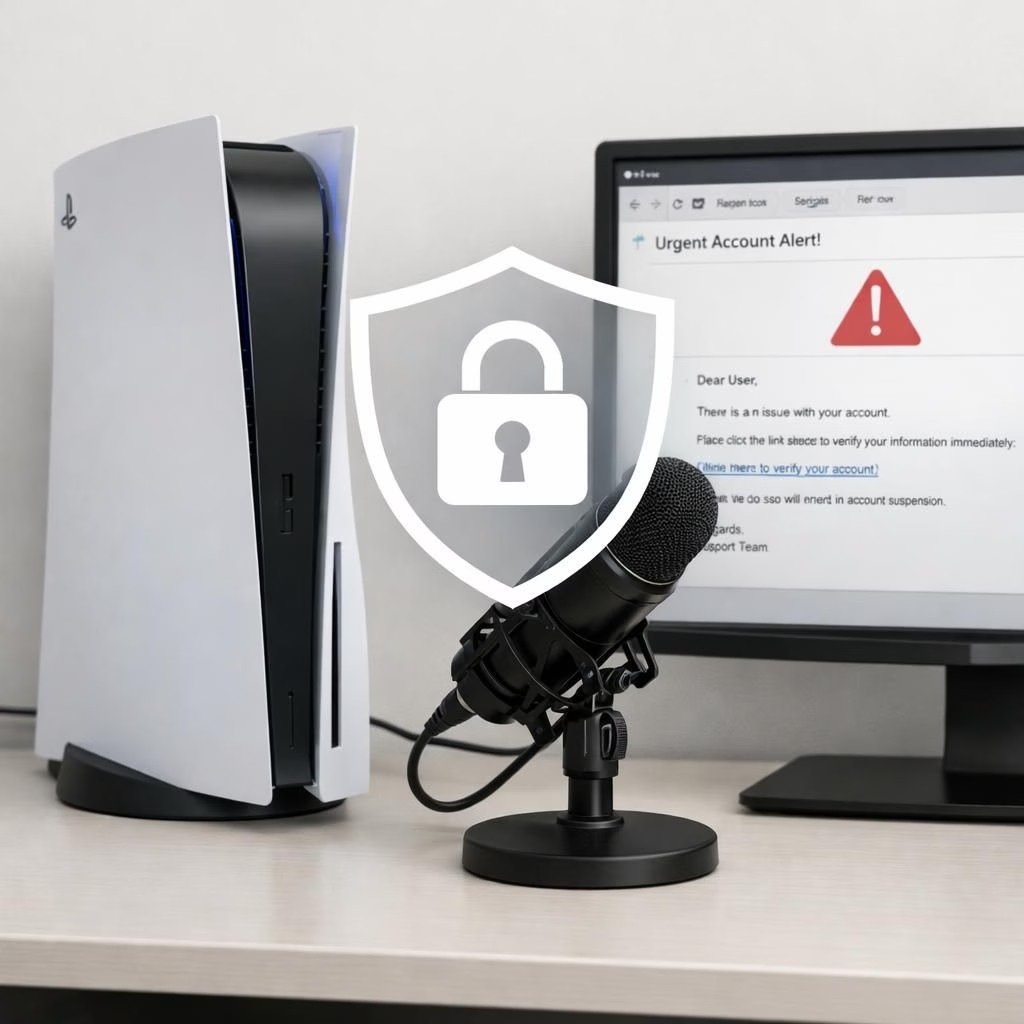
Security and social engineering are no longer abstract concepts. They played out in real time when a prominent PS5 podcaster’s account fell prey to a slick ruse, and this piece examines what happened. It explains why fans and creators should care and offers practical steps to stay one step ahead. The takeaway is simple: the digital stage we perform on deserves strong backstage security.
Security in Action: Lessons from a PS5 Podcaster Hack
The breach began with a message crafted to bait trust. A forged login prompt asked the podcaster to reauthorize an app, and a quick click did the rest. For security, MFA alone isn’t a guarantee; attackers adapt.
If a code arrives at 3 a.m. from an app you didn’t install, it’s time to pause. In this case, the attacker gained limited access at first, then escalated privileges through dangerous moves. The podcaster’s team responded with locks and alerts, but the moment teaches a broader truth: monitor for unusual sessions, review connected apps, and remove stale permissions.
In 2026, the community should adopt a habit of regular security checks as part of the creative workflow. Fans and collaborators can help by reporting odd messages and avoiding rushed approvals—the simplest defense is caution over coffee and a time zone that favors skepticism.
Social Engineering 101: Why the Hooked Line Tricked the Account
social engineering thrives on psychological levers: urgency, flattery, and the fear of missing out.
The attacker leveraged vanity and credibility, presenting as a trusted collaboration or a platform-wide alert.
For creators, this means practicing skepticism with every outreach, even when it sounds official.
When a message asks you to “confirm” permissions or to “wrap up” a sponsorship deal by clicking an unfamiliar link, take a breath, slow down, and verify through a separate channel.
Practical Defenses for 2026 and Beyond
Here’s a practical playbook that blends caution with a dash of humor. It emphasizes that security is a habit, not a single patch. We can all implement these steps in our daily streaming routines, from casual creators to full-time podcast teams.
- Strengthen protections with hardware keys and multi-factor authentication. If you can, use a physical key or an authenticator app with a hardware backup. This reduces the risk of compromised credentials and makes social engineering harder to pull off.
- Use a password manager and unique passwords for every service. The goal is to avoid reused passwords; think of it as a security hygiene ritual that scales with your brand.
- Be vigilant about emails and prompts; verify domains before clicking. Hover, check sender addresses, and never trust urgent-sounding requests from unknown or unexpected sources. This is the core of social engineering deterrence.
- Review connected apps and OAuth tokens regularly. Revoke anything you don’t recognize or no longer need. Auditing permissions keeps you in control and reduces attack surface.
- Keep recovery codes, backup options, and account recovery processes secure. Store backup codes offline in a safe place and update them after security events.
- Educate your team and community; practice phishing simulations. A little training now prevents big headaches later. For creators, consider a quick briefing at the start of every season about security and social engineering awareness.
- Establish an incident response routine; know who to contact. A clear plan minimizes downtime and confusion if something goes wrong.
This is security as daily practice.
In this guide, social engineering is not a buzzword but a practical concern. The aim is to empower readers to protect their own accounts and to support creators who share their passion publicly. The story from Push Square demonstrates that vigilance pays off; with the right steps, a promising channel can recover quickly and continue to engage its audience without compromising trust. Original reporting and context provided by Push Square. Special thanks to Push Square for the original article and thoughtful coverage of this incident.
We hope you found this exploration helpful. If you have personal experiences with security breaches or social engineering tactics, please share your thoughts in the comments below. Your insights help the community learn faster and stay safer online.
FAQ: Quick answers about security and social engineering
- What is social engineering? It is manipulation aimed at tricking people into revealing credentials or granting access.
- How can creators defend against social engineering attempts? Build habits, verify channels, enable strong authentication, and pause on suspicious prompts.
- What can fans do to help? Report suspicious messages and verify sources before engaging.
- Is MFA enough to protect accounts? MFA greatly reduces risk, but layered controls and regular checks are essential.
Takeaway and next steps
Takeaway: Treat security as a creative tool, not a setback. Start with one daily check and build a habit that travels with your brand.
External sources
References
Original source: Push Square.