

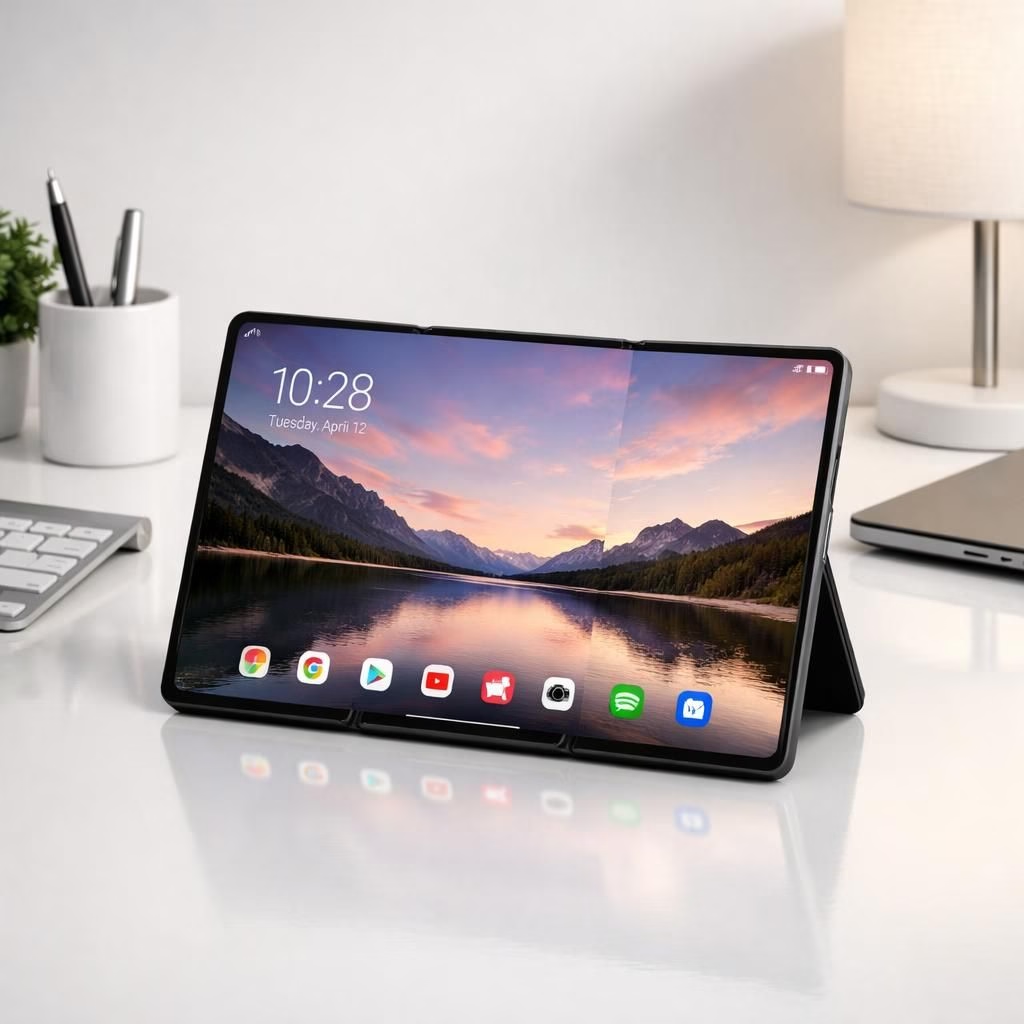
In 2026, Samsung‘s foldable ambitions meet a practical crossroads as the Galaxy Z TriFold exits the market. The move isn’t just a product end; it’s a wink at the gap between engineering bravado and everyday budgeting. The TriFold was an engineering demo with two hinges that could stretch from phone size to a ten-inch tablet. It opened doors to use cases that sounded good on stage but faced real world constraints. This isn’t doom; it’s a practical lesson in manufacturing at the edge of what’s possible.
Samsung launched the TriFold in December 2025 in South Korea and rolled it out to the US in January 2026. The device carried a lofty MSRP of $2,899. Despite the price, orders came in, restocks were teased, and some buyers paid above list on the second-hand market. Yet three months later, the winding-down plan became public. The decision looks like a pragmatic move rather than a signal of failure. The issue wasn’t merely demand; it was a mix of ultra-premium pricing and the rising cost of components. The base model comes with 16GB RAM and 512GB storage—a generous spec for a device that morphs into a tablet, but costly to assemble at scale.
Industry chatter pointed to faster-rising costs for memory and storage, squeezing margins on a flagship that was always aiming for halo status rather than everyday user status. The manufacturer probably wasn’t racking up big profits on the TriFold, even at the sky-high price. Pushing the price higher could have dampened prestige without delivering durable returns. The TriFold stood as a prestige product—an impressive engineering feat that wasn’t designed for mass production. There simply aren’t enough buyers willing to drop nearly three grand on a foldable device, even if it can morph into a tablet. In short, the inventory math didn’t favor the over-ambitious ramp. It’s best to reserve RAM for the Galaxy S26 Ultra, which is reportedly selling briskly at around $1,300, a price point more in line with mainstream demand.
Samsung foldable saga: TriFold bows out
So what does this mean for fans of big foldable devices? The short answer: expect smarter bets and more cross-pollination across the lineup. The TriFold’s two hinges and its unusual aspect ratio pushed the envelope. Some elements may filter down to other foldables, including the possibility of a wider aspect ratio on future models like the Galaxy Z Fold 8. Leadership signaled that a TriFold sequel isn’t off the table in principle, but manufacturing complexity remains the gatekeeper. In essence, the company might save the hinge drama for a future model that can be produced at scale while delivering a premium feel.
Foldable economics and Samsung logistics in 2026
What does this mean for consumers chasing a foldable that doubles as a tablet? The TriFold tale is a reminder to calibrate expectations with the economics of premium tech. The Galaxy S26 Ultra, at a more accessible price, demonstrates that a premium device can still move units when the math lines up. For buyers, it’s a nudge toward patience and discernment when evaluating bold designs. For the maker, it’s a signal to direct resources toward models that balance ambition with manufacturability and reliable supply chains. Bloomberg coverage underlines that line of reasoning; outlets like The Verge have also noted the quick wind-down in several markets.
What about alternatives and foldable promises?
Huawei’s Mate XT Ultimate has been the closest competitor in concept, a foldable tablet that mirrors the TriFold’s ambition. However, its latest version is now a year old and has limited availability outside Asia and the Middle East. Import costs and limited mobile service in some markets make it a less practical substitute. The TriFold absence opens room for other players to push foldables forward, yet the broader challenges of cost, supply, and consumer value remain. Analysts expect the maker to lean on shared components across models to keep costs in check while preserving the foldable experience. Rumors also point to a wider aspect ratio for future devices, with the next generation potentially blending bold design with a more scalable production plan.
Bloomberg captured the timeline and rationale behind the wind-down. While the official word carried caution, the TriFold did deliver a substantial proof of concept: some customers were willing to pay a premium for the experience. For the brand, the takeaway is clear: prestige can coexist with cost discipline, and future foldables should aim for better balance between wow factor and everyday practicality. The rumor mill is alive with talk of a widescreen Galaxy Z Fold 8 this year, which would offer bigger displays without repeating the TriFold’s exact market arc. The path forward likely involves tighter supply chains, smarter pricing, and improvements that bring more people into the fold rather than keep the device exclusive to a handful of enthusiasts.
If you enjoyed this look at the foldable journey, share your thoughts in the comments. Tell us whether you think the TriFold’s bold experiment was worth the cost, or if you prefer smaller, more affordable foldables.
Original reporting and appreciation go to Bloomberg for the original coverage on the Galaxy Z TriFold story: Bloomberg. A special thank you to Bloomberg for the wealth of context and detail that helped shape this article.
Practical takeaways for buyers
- Assess whether a premium design matches your usage patterns; a tablet-like display on the go is nice but not always essential.
- Consider value: the Galaxy S26 Ultra or other mainstream foldables can offer stronger real-world appeal for most users.
- Watch for supply and pricing shifts as components stabilize, and plan for restocks and trade-ins.
- Explore alternatives while keeping expectations realistic about service coverage in your region.
FAQ
- Why did Samsung end sales of the Galaxy Z TriFold so quickly?
- The device was a high-end showcase with a price that limited broad adoption, and rising component costs squeezed margins.
- Will there be a TriFold sequel?
- Not decided yet. The company may pursue hinge tech in other foldables rather than a mass-market TriFold follow-up.
- What should buyers consider instead?
- Look at mainstream foldables or other brands; weigh real-world usage, build quality, and service coverage.