

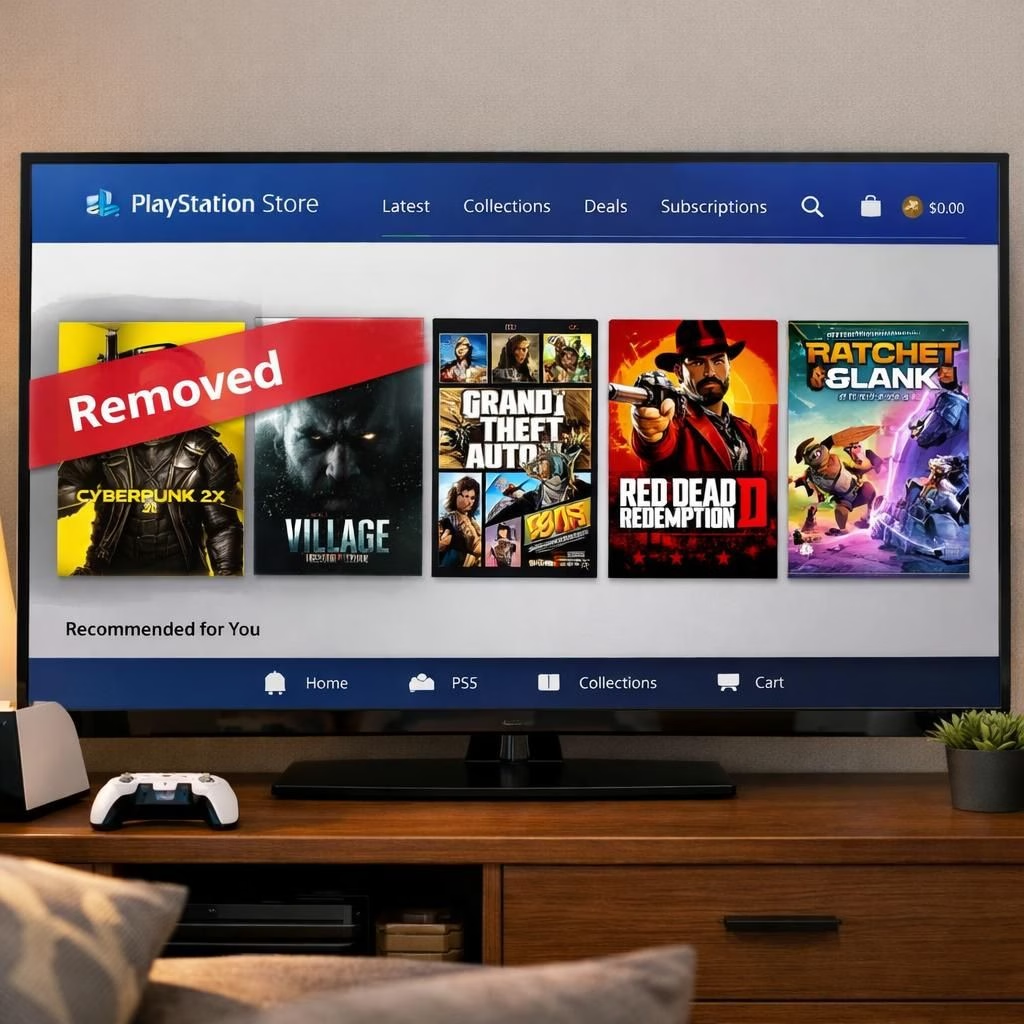
In 2026, Sony aims for a cleaner PS Store, a move that pairs PS Store improvements with a stand against Shovelware. This strategy is designed to help players discover quality titles faster and avoid low-effort releases.
The story isn’t about censorship or drama; it’s about improving daily use. When you open the PS Store, you’ll notice fewer mislabelings and shorter detours. The removal of obviously low-effort games helps the good games rise to the top. This isn’t a spike in exclusivity; it’s a shift toward credibility and clarity. With better tags, clearer descriptions, and more honest previews, players waste less time and spend more time enjoying what matters. The shift also sends a signal to developers: ship polished work, or risk being nudged out by a smarter catalog. The mood among creators is cautiously optimistic, mirroring the pace of practical improvements rather than theatrical stunts.
PS Store cleanup in 2026: a win against Shovelware clutter
Viewers will see delistings that feel deliberate rather than punitive. The process resembles a careful pruning of a garden, not a bulldozer in a data center. For the average player, discovery becomes a friend again. Fewer empty shells in search results mean more room for meaningful, well-built games. The PS Store gains trust as search results align with actual playtime and player experiences. Curation signals improve, and user reviews regain influence in a healthy, balanced way. The term Shovelware may linger in forums, but it sinks lower in the daily routine as better titles take center stage. The overall effect is tangible: a faster, nicer shopping experience that respects both developers’ craft and players’ time.
Developers notice the difference too. The cleanup creates a cleaner competitive field, rewarding those who deliver complete experiences. Metadata becomes more precise, and genres feel more navigable. Sony’s approach combines feedback with data, yielding decisions that feel fair rather than arbitrary. For indie teams, the path to visibility becomes clearer when the storefront rewards quality over sheer quantity. The result is a catalog that respects risk and ambition alike, offering space for creative experiments without drowning them in noise.
PS Store improvements: better metadata, faster discovery
Shovelware concerns aren’t just about the number of titles; they’re about how information is presented. The update aims to align metadata with actual gameplay, aiding players in choosing titles that suit their tastes. Players will appreciate sharper categories, more precise genres, and better-timed previews. As the catalog grows, filters and search signals will help you narrow down choices without sifting through noise. The goal is a smoother, more predictable browsing experience that still leaves room for pleasant surprises.
Publishers respond to this environment with renewed care. A cleaner catalog reduces wasted marketing efforts and increases the signal-to-noise ratio in real terms. Developers who ship solid, complete packages see better visibility and fairer comparisons. Sony’s policy appears to be practical and principled rather than punitive or flashy. The storefront becomes a smarter partner in the gaming journey, supporting both the ambitious indie and the enduring classics. The net effect is a healthier ecosystem where player trust grows and the catalog earns it back, one well-curated update at a time.
Looking ahead, the 2026 cleanup could guide other digital storefronts toward similar improvements. If the approach stays data-informed and community-informed, we may see broader benefits: faster discovery, clearer ratings, and better metadata that actually matches gameplay. The catalog would feel less like a chaotic bazaar and more like a curated festival of playable ideas. Players win when a store respects time and intelligence, and when quality titles have a fair chance to shine in a crowded market. The roadmap should include ongoing refinement, more granular filtering, and transparent status indicators that help you decide what to click with confidence.
Thanks to Eurogamer for the original reporting on the PS Store cleanup, which provided a solid foundation for this positive take on careful curation. Original article: Eurogamer.
We’re curious: what was your experience with the PS Store cleanup in 2026? Do you notice fewer Shovelware titles popping up, or do you think some genuine gems were removed by mistake? Share your thoughts below and join the conversation. PS Store and Shovelware are part of the same ongoing story; your voice helps shape the next chapter.
For readers seeking a broader perspective, industry coverage notes the same trajectory toward cleaner catalogs. The PlayStation Blog has discussed curation initiatives, while Polygon has analyzed the impact of such changes on discoverability and indie visibility. These sources offer helpful context as you explore the updated store.
Practical steps for players
- Use advanced filters to narrow search results by genre, price, and rating.
- Check updated previews and metadata to confirm what you’re buying or downloading.
- Review recent user feedback to gauge long-term enjoyment and replay value.
- Keep an eye on DLC listings and pricing to avoid unexpected add-ons.
FAQ
- What counts as Shovelware in the PS Store? It refers to low-effort games with limited content or poor production values that clutter search results.
- Will delistings affect indie developers? The aim is to boost visibility for polished titles, not to punish small studios. Clear metadata helps players discover worthwhile projects.
- How can I navigate the updated PS Store? Use refined filters, read updated previews, and verify DLC listings to understand what’s included.
Conclusion
A cleaner PS Store benefits players, developers, and the ecosystem as a whole. The aim is smarter discovery, honest metadata, and a catalog that earns trust—one well-curated update at a time. To stay informed, bookmark the PlayStation Blog and follow credible outlets that document the changes in real time.