

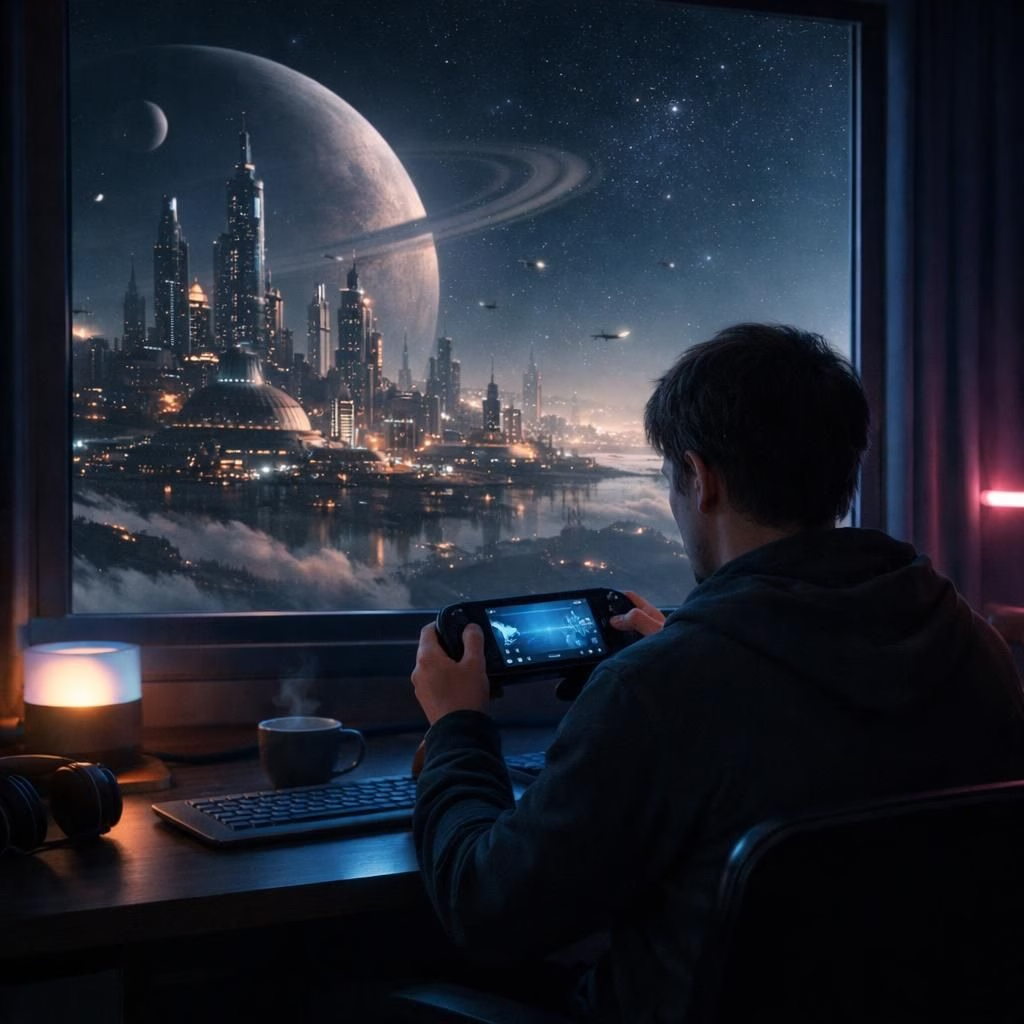
Pragmata, the game that turned heads with its moon-shot ambitions, proves that the future can bloom from the recent past. In gaming, we chase the latest flash, but Pragmata remains a patient reminder: let memory inform imagination. Its mood, its visual poetry, and the curious narrative tension celebrate the idea that progress often wears a vintage coat with a neon zipper. Pragmata invites players to peek through a retro-future lens and find hope in the quirks rather than the polish. The result is not flawless, but it is unmistakably alive, and it makes you smile at the absurd elegance of space-age storytelling.
Pragmata: The past guiding the future
The design universe of Pragmata leans into a philosophy where past ideas seed future innovations. The game’s textures borrow from mid-century science fiction while its motion and pacing push toward modern, cinematic moments. Critics from AV Club observed that this mix creates a space that feels lived-in and thoughtful, not just shiny. IGN applauds the audacity of a story that refuses to explain everything at once, inviting players to fill in blanks with their own curiosity. The overall vibe is one of patient curiosity, a willingness to let a scene linger until its meaning crystallizes.
gaming as a time machine
From there, the conversation widens to how the medium itself evolves when a title leans on retro-futurist muscle. Polygon celebrated Pragmata for shooting for the moon and, yes, sometimes missing the landing, only to land with a bigger, more memorable impact. Polygon highlighted the bold mood and the sense that the game cares about atmosphere as much as action. Game Informer expressed appreciation for moments of clever design that show where a budget is spent: sound design, tactile feedback, and the careful choreography of exploration. Nintendo World Report joined in the praise, weighing Switch 2 potential and noting that Pragmata can still feel grand even on a smaller stage. Taken together, the coverage reads less as a slam on execution and more as a map of ambition that respects craft while inventing its own language.
In practice, Pragmata rewards patient players who enjoy mood boards as much as mission objectives. For gaming experiences, Pragmata rewards patience with mood-first design. The visuals blend glossy futurism with nostalgic cues, creating a world that feels both new and oddly familiar. Its pacing alternates between quiet, contemplative sequences and bursts of otherworldly set pieces. The result is a game that tests how long a player can stay with a scene: not for bravado, but for the chance to notice a tiny detail that makes the entire world feel coherent. This is not a glitchy classic rehash; it is a deliberate, if imperfect, attempt to show what a game can be when it treats its setting as a character in its own right.
For players who look at Pragmata today, 2026 marks a perfect moment to revisit late-era ambitious titles and ask: what should the industry learn? The answer is not to abandon risk but to celebrate thoughtful risk. Pragmata demonstrates that you can chase an aspirational mood while still telling a story that invites participation. The critique is not a verdict of failure; it is a celebration of the idea that bold experiments push the medium forward, even if the path is imperfect. The result is a future-forward experience grounded in a remembered past, something that many readers will find surprisingly comforting in a time of rapid, flash-in-the-pan releases.
Pragmata: Lessons for future game design: The game shows that atmosphere, not just a kill count, can drive engagement; that narrative ambiguity invites player input; and that a strong art direction can compensate for rough edges while still moving the needle for the industry. Designers can borrow from film, architecture, and music to craft spaces that invite linger and reflection. For players, the lesson is to embrace mood boards as maps, not final destinations.
In the broader gaming landscape, we need more titles that try something new and accept that not every experiment will be perfect. Pragmata functions as a case study in risk and in how the community discusses missteps with curiosity and affection. It is the kind of project that keeps the industry honest: we celebrate daring, not just polish. If more studios took these notes, the medium would keep growing with heart, even as it tackles the unknown. And that is cause for optimism as we head into 2026.
Special thanks to the original coverage from AV Club, IGN, Game Informer, Polygon, and Nintendo World Report for their thoughtful takes. Thank you!
Pragmata-inspired design principles
Atmosphere, narrative ambiguity, and art direction matter as much as action. Designers can borrow from film, architecture, and music to craft spaces that invite linger and reflection. For players, mood boards can be maps, not final destinations.
- Atmosphere drives engagement as a core design lever.
- Narrative gaps invite player interpretation and discussion.
- Consistent art direction helps stitch scenes into a coherent world.
Takeaway
Pragmata invites developers and players to prize mood, curiosity, and thoughtful risk. If you’re shaping the next wave of bold titles, start with atmosphere, then invite participation and discovery.
FAQ about Pragmata
- Is Pragmata worth revisiting in 2026? It can be, especially if you value mood-driven design over pure polish.
- How does Pragmata use retro-futurism? It blends mid-century cues with contemporary gamecraft to create a distinctive world.
- What can developers learn from Pragmata? Emphasize atmosphere, allow ambiguity, and let the setting drive meaning as much as mechanics.
In short, Pragmata stands as a bold reminder that the industry grows when it mixes memory with imagination. The future benefits from risk that respects the past, and Pragmata models that balance.