

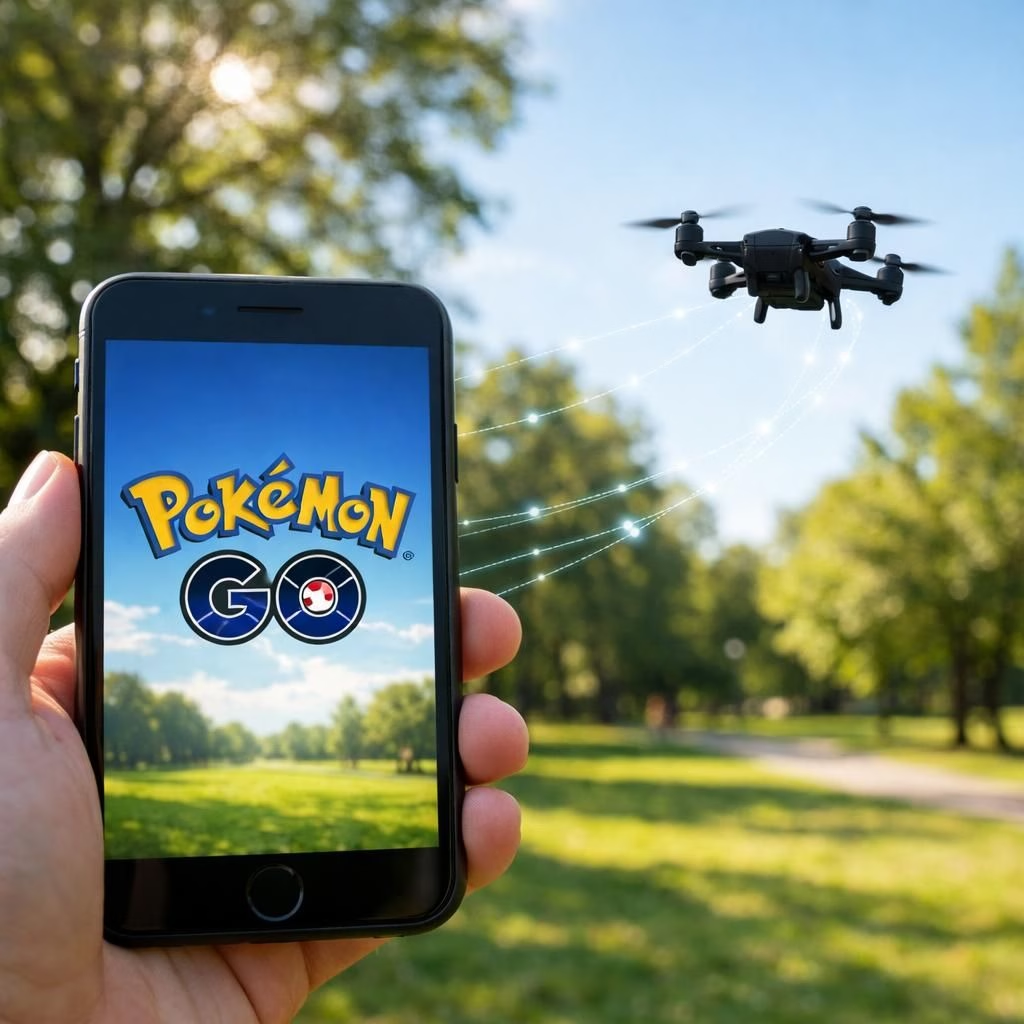
Pokemon Go remains a cultural touchstone for players, and it even catches the eye of drone enthusiasts. Niantic Spatial has pushed back clearly: Pokemon Go data wasn’t shared with a drone company. The truth sits somewhere between sensational headlines and quiet policy pages, and this piece aims to unpack what happened, what didn’t, and why it matters for readers who care about privacy and practical tech.
Pokemon Go and the drone data debate: what the statements actually say
Niantic Spatial, the team behind the Spatial initiative, states plainly that no Pokemon Go data was given to a drone maker. In plain English: the data behind the game remains within Niantic’s ecosystem, governed by privacy options and user consent. The confusion often comes from terms like scans and navigation training. Some outlets highlighted that the same data might be used to train autonomous drone navigation systems, including in drones. In reality there is a spectrum of possibilities, but the official line is clear: there was no direct data sharing from Pokemon Go to a drone company. The headlines may refer to various datasets—crowd-sourced mapping, geospatial points, or navigation cues—that could plausibly inform machines, but that is not the same as handing off Pokemon Go telemetry to a drone firm.
When outlets cite Kotaku, DroneXL, NL Times, Yahoo, and TVP World, they sometimes mix headlines with interpretation. The result is a quilt of claims that can mislead readers who skim rather than read the full disclaimers. The prudent approach is to separate what Niantic Spatial asserts from what others speculate about training data, add context about the privacy policy, and remind readers that scans are not the same as sold data. And yes, we all know that data handling is rarely simple, but it helps to keep it honest.
drone privacy and policy implications for Pokemon Go players
From a privacy perspective, user consent and data minimization apply to Pokemon Go as they do for any modern app. The claim that Pokemon Go data is used to train drone navigation raises legitimate questions about anonymization, opt-out mechanisms, and the balance between aggregated insights and personal identifiers. In practice, architectures often rely on aggregated mapping cues that strip identifiers, but even aggregated data can reveal patterns if misread or taken out of context. This nuance fuels anxiety about drone usage and public safety; readers must rely on official validations and exact wording from policy pages. The coverage across Kotaku, DroneXL, NL Times, Yahoo, and TVP World helps show the spectrum of interpretation, but nuance is easily lost in translation. The key takeaway: the existence of a mapping dataset is not a green light for drone manufacturers to access Pokemon Go data; it is a separate, policy-driven question about open data, consent, and how platforms decide what to share with partners. The best practice for fans and curious readers is to read the primary statements, understand the difference between data used to train navigation and data shared with a partner, and hold both tech companies and media to high standards of accuracy.
What Pokemon Go and drone data rumors really reveal in 2026
Going forward, the real drama will be in official clarifications and policy updates, not in clickbait headlines. Look for Niantic Spatial to publish more precise guidelines about data flows, privacy choices, and the scale of training datasets. Watch how industry players talk about navigation tech that uses crowd-sourced maps; see whether any drone manufacturers publish white papers on training methods that reference publicly available datasets; and check whether there are any public privacy audits of AR platforms. In the meantime, the public should remain informed but skeptical, recognizing that a relationship between Pokemon Go data and drone tech is possible in theory but not proven in practice. The take-home message is simple: always differentiate between speculation and verification, and remember that every dataset has a story, but not every story is a saleable data asset. For fans of Pokemon Go and for developers who care about drone ethics, this is a moment to push for more transparent disclosures, better governance, and a conversation about where mapping data ends and personal privacy begins.
Final thoughts: we live in a world where games, drone tech, and data intersect in surprising ways. You can enjoy AR adventures in your city while hoping that the data behind those adventures stays within boundaries that protect your privacy. That balance is achievable, and it starts with clear statements, credible reporting, and a willingness to separate myth from method.
Share your thoughts in the comments: do you think Pokemon Go data should be used to train non-game navigation systems? How would you feel about drone technology learning from crowd-sourced maps, even if the data is anonymized? Your insights can help steer the conversation toward clarity and accountability, not sensationalism.
Original reporting and thanks to the source material: Kotaku — thank you for the original material.