

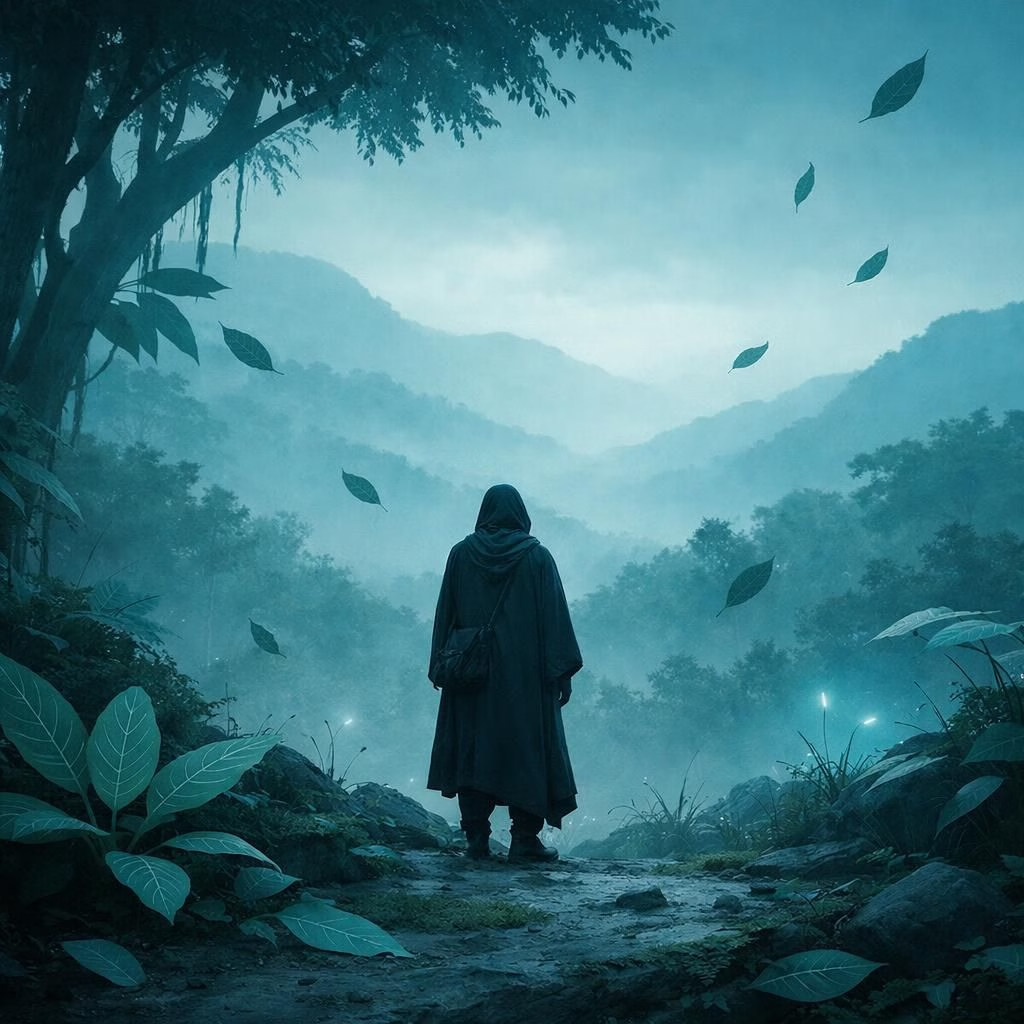
PlanetOfLanaII returns with a cinematic juggling of atmosphere, craft, and the faint scent of leaf dust. This sequel feels like a lovingly curated postcard from Lana’s world. If you adored the original, you’re here for a deeper look at how the leaf motif threads through gameplay philosophy, including how ChildrenOfTheLeaf nods to the forest ecosystem that raised Lana.
PlanetOfLanaII Spotlight: Why PlanetOfLanaII Excels
ChildrenOfTheLeaf in Focus
In this chapter, ChildrenOfTheLeaf helps the forest feel like a character with agency, guiding exploration and discovery.
The visual design is where the magic lands. PlanetOfLanaII delivers a palette that feels both emerald and moonlit, never shouting, always inviting. The camera work leans toward patient wide shots that invite contemplation, while small environmental cues guide you without sermonizing. In this world, the leaf motif is not a gimmick but a language; it helps players read terrain, timing, and intent. ChildrenOfTheLeaf makes the forest feel alive, not just decorative backdrop, and that choice matters for immersion. The game’s designers read the room and respond with restraint, not fanfare, and that restraint pays off in a memorable mood piece.
PlanetOfLanaII consistently avoids flashy gimmicks, choosing instead to layer textures and sound to produce a sense of place. You feel the gravity of a world that has seen better days, yet remains hopeful. The soundtrack breathes with the environment, never overpowering the action. It is a soundtrack that could accompany a peaceful walk through a conservation area and still feel cinematic. The lighting carries emotional weight; it shifts with weather and time, guiding your eyes to stories that exist beyond spoken dialogue. In short, PlanetOfLanaII shows what happens when art direction equals narrative intent.
The pacing deserves credit as well. The game offers long, reflective stretches interspersed with puzzles that tease rather than nag. The design team gives you room to explore, then rewards your curiosity with small, meaningful discoveries. NoobFeed highlighted the elevator puzzles in Chapter Three to illustrate how movement, timing, and environment collaborate to advance narrative beats without shouting hints. The puzzle cadence is thoughtful: no sudden difficulty spikes, just a gentle nudge toward understanding. PlanetOfLanaII respects your time, letting you linger on a moment if you choose, or move on if you crave momentum.
From a critical perspective, the game earns praise not by breaking new ground, but by refining a winning formula. The world feels lived in, with a history that rewards careful observation. The art direction nods to various inspirations without becoming derivative, and that balance is tricky to maintain. Some players will recognize echoes of broader animation styles, yet the game remains undeniably its own thing. The result is a luminous, well-paced experience that rewards patience as a virtue and curiosity as a compass.
Fans of PlanetOfLanaII will notice tonal throughlines that keep the forest’s memory intact, while ChildrenOfTheLeaf will appreciate how the sequel expands the ecological storytelling. The leaf motif returns with new context, yet the core idea stays simple: nature is not a backdrop but a character with agency. The narrative approach is quiet, not cryptic, inviting players to infer meaning rather than spell it out. The game trusts you to fill in blanks with personal interpretation, which often leads to a more lasting impression than explicit exposition would provide.
In terms of accessibility, the game offers hints and adjustable parameters so a broad audience can engage at their own pace. It respects diverse playstyles—some players will savor exploration; others will relish puzzle solving. The design deliberately avoids punitive feedback, preferring encouraging nudges and optional guidance. The result is a title that invites repeated playthroughs without dull rigidity, a quality that elevates it beyond a single-episode experience.
Crucially, the second act deepens Lana’s world without sacrificing its primary mood. The storytelling remains economical, using visuals and sound to suggest history and memory. Critics from outlets like DLCompare.com dubbed this era a strong artistic return that blends homage with originality, and the game earns that praise through its confident execution. The past lingers with Lana’s planet as a tactile presence—the smell of rain on leaves, the way light filters through branches, the soft thrum of distant machinery—stitched together to create a sense of continuity between acts and arcs. It is this continuity that makes the experience feel earned rather than manufactured.
Overall, the play experience favors mood, atmosphere, and thoughtful puzzle design over loud spectacle. It rewards players who take time to listen to the wind and watch how shadows move, while still delivering crisp action when needed. The leaf motif continues to serve as a unifying symbol across environments, puzzles, and discoveries. The result is a cohesive, heartening game that invites you to slow down, observe, and appreciate the craftsmanship behind every frame.
As a closing note, the game’s craft stands as a testament to what smaller studios can achieve with a clear vision. It blends a respectful homage to classic hand-drawn and cinematic inspirations with modern interactivity to forge something new and comforting. If you crave a cinematic indie game that treats your time with care, PlanetOfLanaII and its leafy companion deliver that and more, with warmth and wit intact. The result is a title you’ll remember long after you’ve put the controller down.
Original material courtesy of GameSpot: Planet Of Lana II: Children Of The Leaf Review – A Cinematic Odyssey. Thank you for the original material and the thoughtful reporting that helped inspire this tribute.
Thanks for reading. If you have thoughts, questions, or your own experiences with the leaf-rich world of Lana, I’d love to hear them—please share your thoughts in the comments.