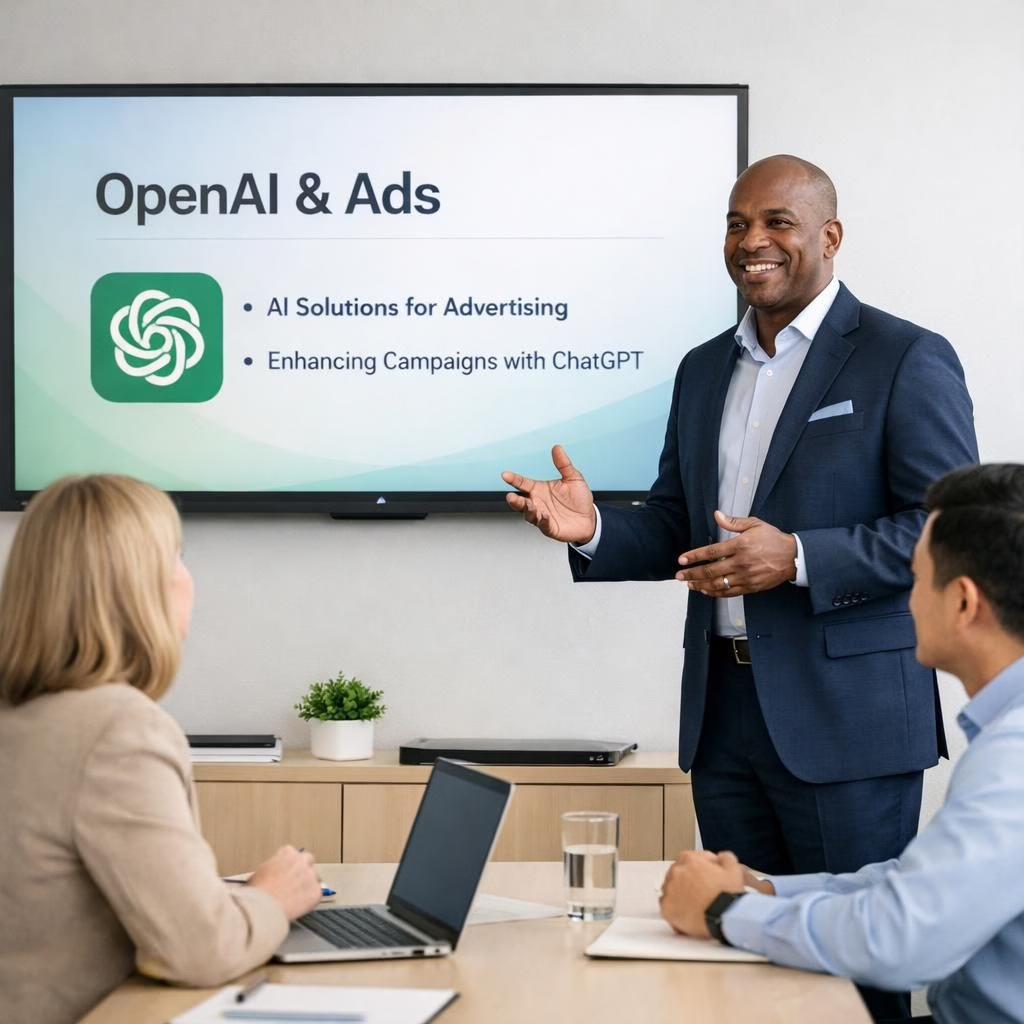
OpenAI is plotting an Ads-friendly future, hiring veteran Dave Dugan from Meta to lead its new global Ads solutions division. This bold move signals OpenAI’s plan to blend Ads into ChatGPT without sacrificing trust, clarity, or user delight.
OpenAI Ads Era: A Bold New Chapter in 2026
Dave Dugan, a long-time Meta veteran who served as Vice President of Global Clients and Agencies, will now steer OpenAI’s global Ads solutions as Vice President. The Wall Street Journal notes that he will report directly to OpenAI’s chief operating officer, Brad Lightcap, a sign that senior leadership takes this shift seriously and fast. This is not a cosmetic tweak; it is a strategic pivot with a plan to monetize the free tier in a way that respects the user journey.
In his LinkedIn post, Dugan framed Ads as a natural extension of the product: a targeted, click-to-complete experience that can finish a task more efficiently. The emphasis is on usefulness and trust, not intrusive disruption. The early vision is to debut Ads that blend with the ChatGPT consumer experience and are governed by clear principles. The alpha testing phase signals OpenAI’s intent to iterate quickly while keeping the interface clean and the results reliable.
Why OpenAI’s Ads Move Matters for Users and Brands
The hiring of Dugan is a deliberate bet. OpenAI needs revenue beyond subscriptions to cover computing and research costs while continuing to push ambitious AI frontiers in 2026. Dugan’s background—connections with major global ad agencies and a track record of delivering results for advertisers—suggests OpenAI wants to attract brand budgets without sacrificing user trust. The company’s posture is clear: Ads will be AI-native, built with OpenAI’s unique technologies, and designed to be additive rather than disruptive.
Former CEO Sam Altman once called advertising a “last resort” for a model like ChatGPT, expressing concern about user trust. The new plan acknowledges that concern but argues that a carefully crafted Ads layer can coexist with a high-quality answer surface. In practice, this means Ads that respect user intent, avoid manipulation, and provide value—such as relevant offers for a task you’re already trying to complete. OpenAI plans to scale quickly, seeking talent that’s excited to build a central piece of the AI economy while maintaining the culture that keeps the brand trusted.
OpenAI Ads in the 2026 Advertising Landscape
The move into Ads reflects a broader trend: free AI services increasingly rely on advertising as a revenue stream to sustain heavy compute and research workloads. With OpenAI’s AI-native approach, the ads are not an afterthought but a core product feature designed to be respectful and useful. The strategy leans on the brand’s credibility and the expectation that AI outputs remain trustworthy. Advertisers stand to gain access to a large, engaged audience, while users benefit from Ads that align with tasks they’re trying to complete and information they actually need.
Key components include: a principled framework for Ads placement, transparency about how ads influence results, and collaborative partnerships with agencies and consultancies to ensure that campaigns are matched to user intent rather than random interruptions. The 2026 horizon includes rapid team scaling, a culture of experimentation, and a mission to keep ads from overshadowing the primary value of AI: accurate, helpful, and safe assistance.
OpenAI Ads: A Practical Look at the 2026 Landscape
In practical terms, OpenAI’s Ads strategy seeks to monetize the free tier without eroding trust. This means smarter targeting that respects privacy choices, non-intrusive placements, and an emphasis on relevance over volume. The approach differentiates itself from traditional platforms by integrating Ads experiences into the chat flow in a way that complements tasks rather than derails them. The emphasis on AI-native design means the ad system will learn from how users interact with ChatGPT, refining itself as it grows.
For brands, this opens a channel where messaging can be contextually aligned with user needs. For users, it offers a pathway to discover relevant services while keeping the core experience intact. The plan also includes a careful governance model to ensure ads do not bias or degrade the quality of answers, addressing Altman’s concerns. The result could be a healthier balance between innovation and monetization—the kind of balance that makes a 2026 roadmap feel both ambitious and doable.
In short, OpenAI is leaning into Ads with a thoughtful, disciplined approach. By hiring Dugan, the company signals that it wants an advertiser’s expertise without surrendering its core promise: reliable, thoughtful AI that users can trust. The journey will require constant iteration, transparent practices, and a dash of humor to keep the process human—and humane. OpenAI’s Ads road map is ambitious, yes, but it’s also grounded in the practical needs of maintaining cutting-edge AI research while building a sustainable business.
If you’re curious about how this unfolds, stay tuned to OpenAI updates in 2026. This is one of those moments where technology, business, and trust converge in a way that could redefine what “Ads” mean in the age of AI.
Share your thoughts below: how do you feel about OpenAI’s Ads move in 2026? Do you think a well-integrated AI-native Ads model can coexist with high-quality answers? Your perspective matters as we watch this experiment unfold.
Original article attribution and thank you: The Wall Street Journal reported on Dave Dugan’s move and the related leadership updates at OpenAI. Thank you to The Wall Street Journal for the reporting that inspired this post and for the primary material that informed this rewrite. Original article: Times of India.