

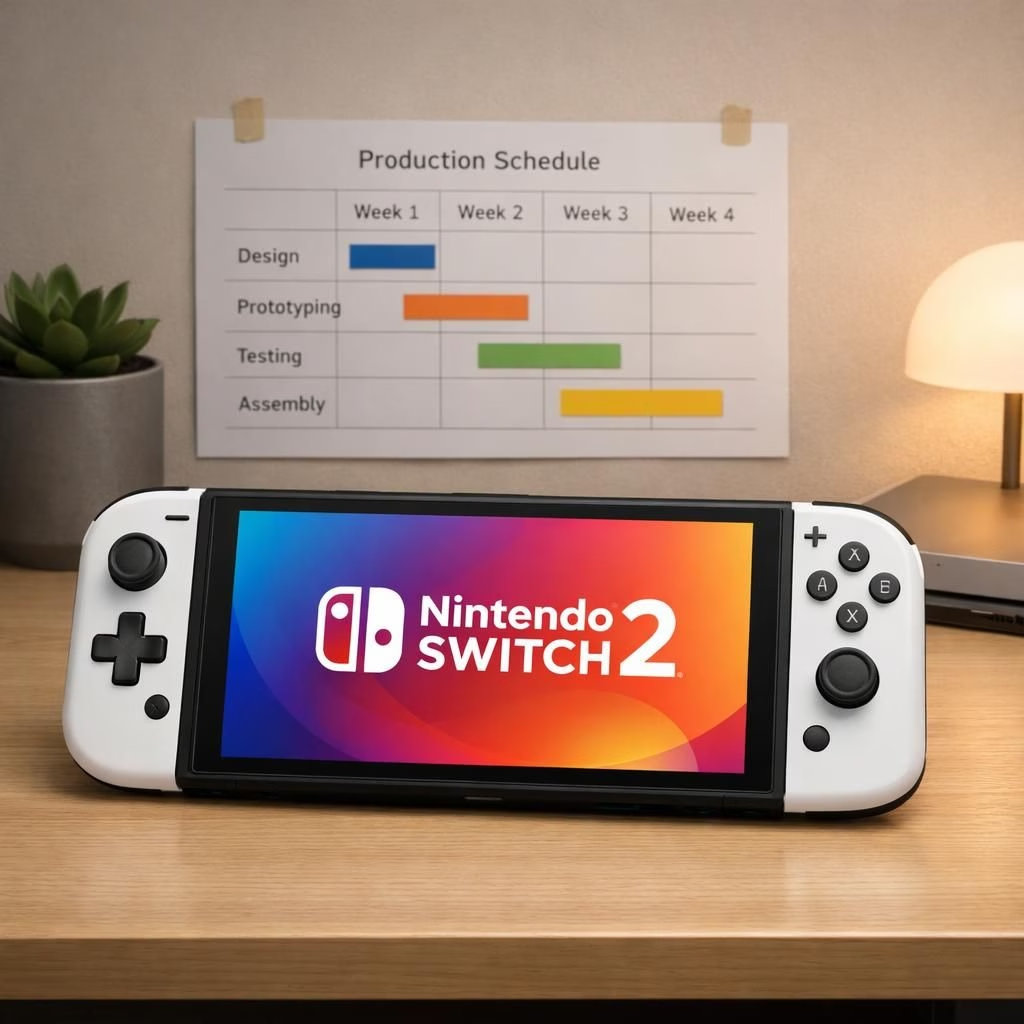
Nintendo Switch 2 production is tightening its belt in 2026 as US demand remains soft, and the chatter around this shift is more grounded than gleeful. The core truth remains: Nintendo isn’t chasing a peak holiday rush; it is aligning output with evolving market signals, a pragmatic move that keeps inventories lean and retailers on a sane cadence. This isn’t a collapse, it’s a calibration—one that suggests the company would rather ship the right number now than risk a warehouse full of regret later. If you like your tech news with a dash of humor and a lot of receipts, you’ll appreciate that the Switch 2 story is less about fireworks and more about forecasting, rhythm, and steady supply-chain discipline.
Nintendo strategy for Switch 2 in a cautious market
In response to softer-than-expected holiday performance, Nintendo appears to have enacted a measured production plan for the Switch 2 in 2026. Bloomberg noted a reduction of roughly 30% in output this quarter, a signal that leadership is prioritizing a balance between available stock and actual consumer demand. GoNintendo and GamesIndustry.biz echoed the sentiment, describing the move as a deliberate correction rather than a panic reaction. Practically speaking, Nintendo is pacing shipments to retailers, tightening inventory turns, and avoiding the costly, end-of-year scramble that leaves partners staring at stale units. This isn’t about giving up; it’s about giving the market what it can absorb, when it can absorb it, with fewer unsold units clinging to the rails.
From a product-management perspective, this shift makes sense. The Switch 2 isn’t just a hardware upgrade; it’s a signal that Nintendo treats its ecosystem as a long game. By tempering forecast accuracy with real-world sales velocity, the company protects developers, retailers, and players alike. The result is a smoother pulse across the year, fewer price-sensitive spikes, and a clearer path for software libraries that ride alongside the hardware, rather than fighting for attention in a crowded media cycle.
Switch 2 ecosystem and long-term value
Beyond quarterly numbers, the cadence reflects a belief in a durable ecosystem. The Switch 2 strategy aims to reward steady software pipelines, creator partnerships, and retailer confidence. That means fewer dramatic swings and more predictable opportunities for bundles, promotions, and cross-platform releases that keep fans engaged throughout the year.
Switch 2 demand signals and Nintendo’s response
Demand signals in 2026 point to a market that appreciates durable hardware and solid games but isn’t swept away by hype alone. The Switch 2, anchored by familiar exclusives and a growing library, still catches interest. Yet the US market showed signs of moderation after a lengthy release window, and that tempered appetite prompted production discipline. Nintendo’s response is not a retreat; it’s an adjustment to a more sustainable rhythm. By spreading shipments, refining forecasts, and gating production with real-time sales data, the company maintains momentum without trading long-term brand value for a single holiday season’s results.
For developers and accessory makers, the new cadence offers predictability. Studios can align launch windows with a steadier supply chain, and retailers can plan promotions without the fear of sudden overstock. Consumers get fewer stockouts in peak times and a more predictable price landscape, which helps everyone plan indulgences rather than panic buys. The net effect is a community that feels listened to and supported, even when the news is not the flashiest. Nintendo and its Switch 2 ecosystem remain a case study in balancing ambition with accountability.
The underlying trend is a reminder that hardware cycles now demand more than a flashy reveal. They require data-driven adjustments, transparent communication with partners, and a willingness to iterate on supply plans as the market matures. Nintendo’s 2026 approach to Switch 2 reflects a shift from “how big can we go” to “how consistently can we perform over time,” a mindset that should resonate with investors, players, and developers who value reliability as much as novelty.
On the retail floor, this translates to better availability at steady prices, more room for compelling software bundles, and fewer last-minute shortages during peak shopping days. For fans who want to see every new feature blasted across social media, the message is still clear: Nintendo intends to deliver meaningful upgrades, but it will do so with a disciplined, stepwise plan that respects the financial and logistical realities of 2026.
There’s also a broader market takeaway: when a creator-company like Nintendo adjusts its production tempo, competitors and partners watch closely. A measured approach can set a precedent for the industry, encouraging more thoughtful release calendars and more strategic investments in both hardware and software ecosystems. The Switch 2, in this light, becomes less about chasing a runaway launch and more about sustaining a vibrant, multi-year ecosystem that rewards patience and planning as much as it rewards spectacle.
From a consumer standpoint, the news offers a balanced picture. If you’re hoping for a quick price drop or a sudden surge of bundles, you might need to temper expectations. If, instead, you value stable availability, strong software support, and a clear roadmap, the 2026 strategy appears to be aligning well with those goals. The result is a more predictable environment for families, gamers, and collectors who are building a library that lasts beyond a single holiday season.
As with any major platform shift, there are questions left to answer. How will the Switch 2 perform in different regions as the year unfolds? Will the cadence of releases keep pace with consumer appetite and developer momentum? What new features or accessories will accompany the mid-year updates? These answers will emerge as 2026 progresses, but the current trajectory suggests a thoughtful, disciplined path forward rather than a sprint to the finish line.
In the meantime, fans can stay engaged by tracking official updates, exploring the growing library of Switch 2 titles, and appreciating the small, incremental improvements that make a modern console feel alive without requiring a blockbuster moment every quarter.
We invite readers to share their thoughts on how production discipline affects your buying decisions, your game library, and your expectations for the Switch 2 in 2026. Do you prefer a steady cadence of releases, or is a spectacular launch window still part of your dream?
Original reporting and insights from Bloomberg, GoNintendo, GamesIndustry.biz, WN Hub, and IXBT.games informed this piece. Thank you to the outlets and journalists who captured the nuanced shift in Nintendo’s production strategy.
Original reporting: Bloomberg: Nintendo to cut Switch 2 production by 30% this quarter after slower-than-expected holiday season sales. Additional context from GoNintendo, GamesIndustry.biz, WN Hub, and IXBT.games helped shape the narrative. Thank you for the original material.
Thank you for reading and engaging with this discussion about the Switch 2 and Nintendo’s 2026 production plan. If you enjoyed this take, please consider sharing your thoughts below.