

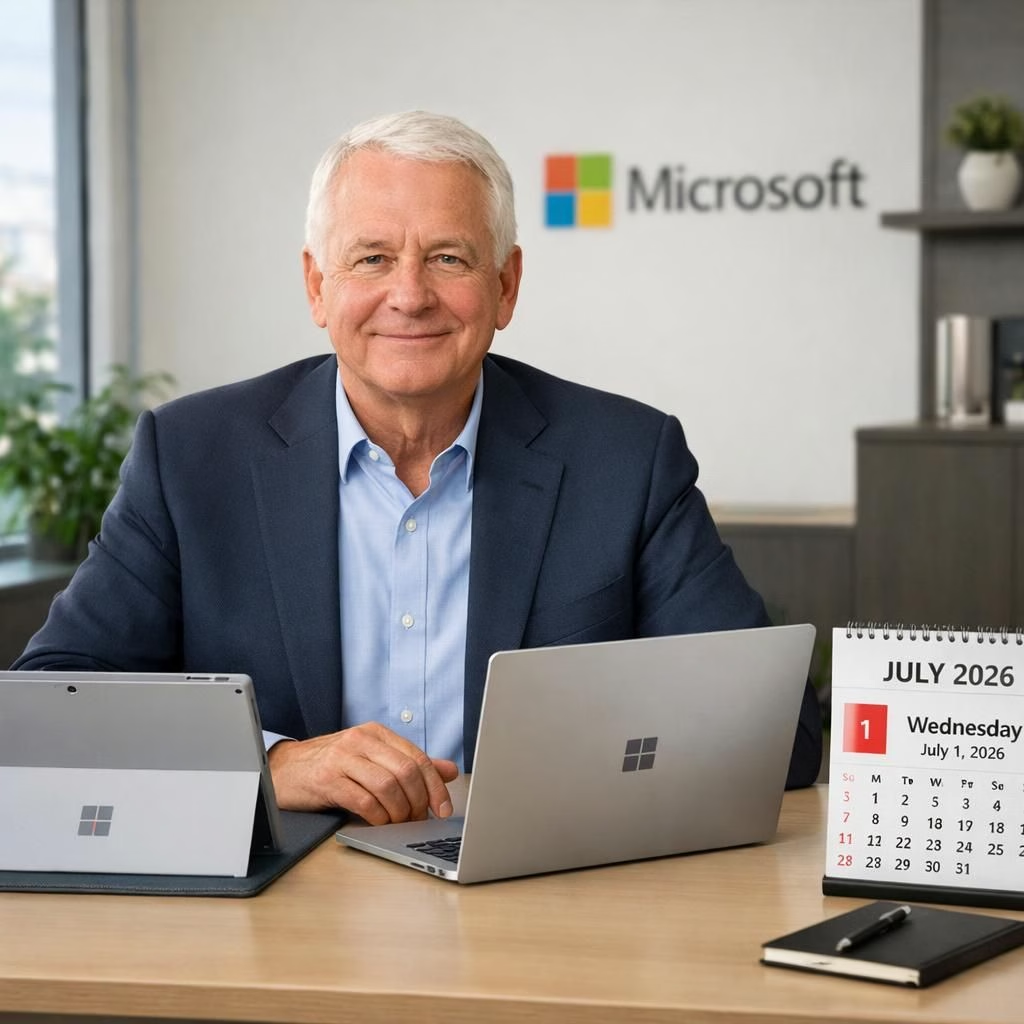
Microsoft Leadership is buzzing as Rajesh Jha announces retirement after 35+ years, handing the Experiences + Devices unit to a fresh cadre of leaders while promising a smooth transition and continued momentum. The move signals a thoughtful handoff rather than a dramatic exit, with Jha staying on as an advisor to ensure a cooperative relay rather than a sprint finish.
In an era where organizational changes can feel as complex as a Windows update, this shift brings clarity. Jha has stewarded a wide span across Windows, Surface hardware, and the Microsoft 365 suite (Word, Teams, Excel, and more). Nadella praised Jha as a constant presence—someone trusted during late-night fixes, critical launches, and everyday customer conversations that move the needle. The memo promises an orderly transition, preserved momentum, and unwavering customer focus.
Microsoft Leadership: Promotions Signal a New Chapter
As Jha steps back, Microsoft Leadership ushers in a wave of promotions designed to stabilize the transition while injecting fresh energy. Jeff Teper rises to EVP, a move many observers describe as a signal that collaboration and platform thinking remain at the core of the company’s future. Sumit Chauhan and Kirk Koenigsbauer advance to President roles, underscoring a push toward broader operational stewardship. Perry Clarke, Charles Lamanna, Pavan Davuluri, and Ryan Roslansky were named EVP direct reports to Satya Nadella, creating a Leadership circle tasked with keeping critical priorities aligned across product, platform, and go-to-market efforts.
These promotions aren’t just titles; they’re a deliberate approach to preserve the rhythm of execution. The Leadership cascade aims to minimize upheaval while preserving momentum that helps customers and partners move quickly. It’s a practical acknowledgment that scale requires both continuity and a healthy dose of fresh perspective. In a company where the pace of change is measured in product releases and strategic bets, having named leaders with direct access to the CEO is a deliberate move to shorten decision cycles and maintain a unified voice for customers.
Leadership in Focus: The Jha Era Ends, The Next Wave Begins
The priorities—SFI, QEI, and Copilot—remain unchanged, a deliberate message that the core bets stay intact. SFI and QEI likely refer to fundamental initiatives that support security, reliability, and user experience, while Copilot continues to be a marquee example of Leadership turning AI ambitions into tangible daily tools. The message is simple: the ship is not changing course; the crew is simply getting better at steering. For customers and partners, this means continued investments in familiar features, better integration across apps, and a steady cadence of improvements that feel practical rather than disruptive.
The timing also sits alongside other Leadership moves in the company. In a related shift, Phil Spencer has stepped back from Gaming leadership, with Asha Sharma rising to CEO of Microsoft Gaming. This broader evolution signals a broader commitment to empower teams with clearer accountability and a more focused strategy for gaming, cloud, and productivity—areas where Microsoft has long aimed to blend performance with a customer-first ethos.
What does this mean for the broader culture at Microsoft? It suggests enduring governance with a lighter touch of new blood where it matters most. The new EVP direct reports to Satya Nadella imply a tighter feedback loop between product priorities and executive oversight. It’s a design choice that supports speed without sacrificing the careful planning that has underpinned the company’s resilience for years. For the workforce, the result should be fewer surprises in day-to-day planning, clearer ownership of outcomes, and a renewed sense that Leadership is actively listening to customers and partners alike.
From a product and customer perspective, the focus remains on execution, cohesion, and incremental but meaningful progress. Copilot’s integration into workflows continues to be a north star, with ongoing enhancements designed to turn AI into a practical assistant rather than a buzzword. SFI and QEI’s ongoing emphasis should translate into stronger security posture, better reliability, and improved user experiences across Windows, Surface, and the Microsoft 365 family. The internal words point to a company that believes in steady improvement over sudden, jarring pivots—an important message in a world that often treats change as a spectator sport.
Beyond the specifics, the Leadership shuffle embodies a broader philosophy: empower capable leaders, keep critical priorities in view, and stay relentlessly customer- and product-focused. It’s a recipe that aligns with the company’s mission to empower every person and organization on the planet, a promise that remains a guiding light for Microsoft Leadership as it moves into 2026 and beyond. The next chapters will reveal how these leaders translate strategy into better experiences for millions of users and countless devices around the world.
To our readers: what are your thoughts on this Leadership transition? Do you expect the new executive team to accelerate or fine-tune Microsoft’s existing strategies? Share your thoughts in the comments below—your perspective helps shape the ongoing conversation about Microsoft Leadership and the direction of the company.
Source: Times of India – Times of India.
Microsoft priorities in the next phase
- Keep core bets on track: SFI, QEI, and Copilot.
- Strengthen integration across Windows, Surface, and Microsoft 365.
- Maintain momentum with clear decision ownership and fewer surprises.
- Ensure customer feedback guides product improvements.
External references
- Microsoft leadership
- Leadership in a changing world (McKinsey)
- Leadership on Harvard Business Review