

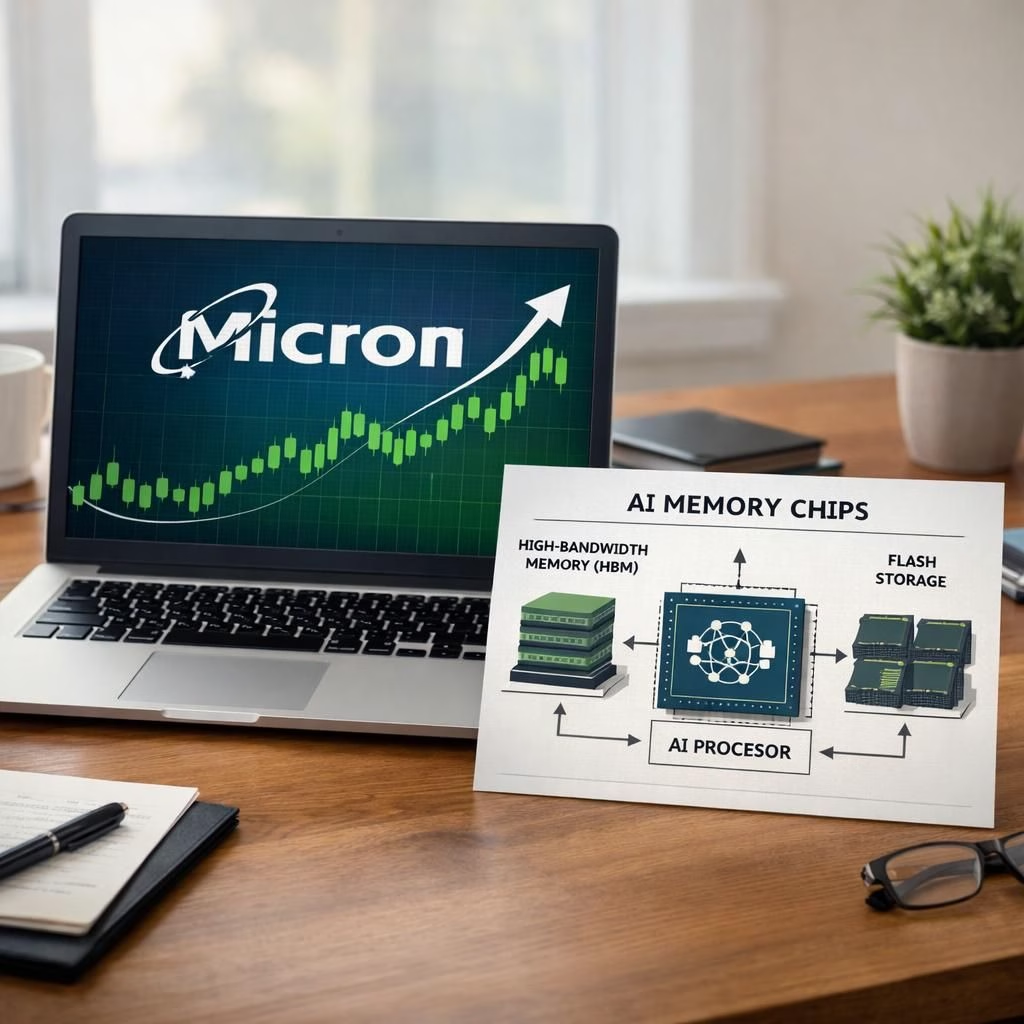
Micron Tag B rode into the headlines today as MU dropped roughly 4.15%, reminding investors that the Tag B highlight remains alive in the real world of capex and cash burn. The day’s move echoed a broader sector note: even in Technology Equipment, where big ideas abound, markets crave clarity on where the next dollar flows. The mood was brisk but not panicked, a sign that the longer-term story still matters even when the tape feels bumpy. In plain terms, Micron’s stock action is a reminder that memory chips, like many tech goods, can be a mood ring — shiny when demand looks strong, cautious when costs rise or guidance tightens.
Micron AI memory in 2026: A stock tale of patience and persistence
In March, Micron reported strong second-quarter fiscal 2026 earnings on March 18 and offered a hopeful third-quarter outlook. The company posted record revenue and earnings per share, driven by robust demand for High Bandwidth Memory (HBM) and other memory products tied to the AI acceleration craze. Yet the market’s focus shifted from the top line to the capital plan. Micron announced capital expenditures exceeding $25 billion for fiscal 2026, with additional increases anticipated for fiscal 2027 to support cleanroom facilities and new fabs that will feed the surging Tag B demand. The headline number triggered worries about short-term cash burn and whether margins could stay elevated if memory prices normalize or if demand softens.
On the technology front, investors tried to quantify the impact of rapidly evolving AI tools. Google’s TurboQuant, a compression algorithm that promises to shrink memory needs for large language models, added another layer of debate. Some analysts believe the long-term implications are modest, while others fear that AI technology might demand less memory than previously assumed. The net effect? A healthy dose of skepticism mixed with curiosity about how much cushion Micron has built into its 2026 and 2027 plans, and how well the company can execute at scale.
Micron AI memory reality check
Summit Insights downgraded Micron from buy to hold around March 19-20, citing the risk that the stock’s outsized rally could invite profit-taking even if fundamentals stay solid. The downgrade added a narrative twist to an otherwise bullish backdrop: a stock that had surged more than 300% in the prior year faced a reality check that markets often deliver in even the most constructive environments. Still, the broader semiconductor landscape remains in a robust growth phase, driven by AI memory and the memory components that power it. Analysts continue to debate whether Micron’s current valuation already reflects baked-in AI upside, but most agree the long-run demand dynamics for memory and digital ICs look favorable through 2026.
From a fundamental angle, Micron’s technology portfolio sits at a crossroads of growth and discipline. The company reported a sizable annual revenue figure and solid profitability within the Technology Equipment space, ranking competitively in both revenue and net income. The mix of HBM and other memory products points to an AI-enabled future where data moves faster and memory remains a critical bottleneck, not a luxury. The tension between big capex commitments and near-term margins is real, but the strategic intent appears clear: build capacity to meet rising AI workloads while navigating pricing dynamics with competitive efficiency.
Micron AI memory dynamics: Capex, capacity, and cautious optimism
The operational math behind the capex plan is the sort of thing that would put a spreadsheet to sleep — if you didn’t love numbers. Micron’s plan to invest over $25 billion in fiscal 2026, and to push more into 2027, aims to scale fabs and cleanrooms to meet surging Tag B demand. In the near term, that investment translates to higher cash burn and more capital-intensive growth, which investors weigh against potential long-run advantages. The risk is clear: oversupply could emerge if demand softens or memory prices normalize more quickly than anticipated. The upside, of course, is a production ramp that could solidify Micron’s position as a preferred supplier for AI memory workloads, especially in high-margin segments like HBM.
Analysts note that the broader AI memory cycle remains a powerful tailwind. The demand for memory and digital ICs is expected to remain strong through 2026, with AI-driven workloads continuing to push the envelope on speed and efficiency. Still, valuation concerns persist, and some investors opt for caution after a rapid rally. The reality is nuanced: Micron could unlock meaningful growth if it executes on capex plans, manages supply chain constraints, and sustains pricing discipline — while being mindful of potential macro shocks that could alter the demand backdrop for memory chips.
From a technical angle, MU’s market signals show a mixed but non-terrifying picture. The MACD (12,26,9) hovered around a neutral line, while RSI at mid-30s suggested the stock was not oversold with extreme urgency, and Williams %R indicated room for momentum to re-emerge if positive catalysts appear. In short, the chart tells a story of patience rather than panic: waiting for evidence that the capex payback and AI memory ramps translate into tangible earnings acceleration.
AI memory demand and supply dynamics in 2026
Supply constraints emerged as a meaningful theme. The midterm outlook suggested Micron could fulfill only about half to two-thirds of customer requirements if demand stays elevated and capacity struggles to keep pace. For rivals, this creates opportunities to win share, while for Micron, it underscores the need to accelerate production without sacrificing margins. The company’s focus on advanced memory technologies, including HBM, aligns with AI memory usage growth in data centers, edge devices, and specialized accelerator stacks. The challenge is to balance aggressive capacity expansion with realistic pricing trajectories, ensuring margins stay resilient as the Tag B market matures.
In this sector, optimism is not blind faith but a calculated bet on execution. The Tag B narrative remains intact: demand for faster, more efficient memory keeps climbing, and Micron is positioned to respond. The real world test is whether capacity can catch demand quickly enough to prevent price erosion, while still delivering meaningful returns to shareholders. The coming quarters will reveal how well Micron translates its ambitious capex plan into sustained cash flow and durable competitive advantage.
As AI continues to expand, there will be opportunities for strategic partnerships, product differentiation, and disciplined capital allocation that mitigates risk while enhancing long-term value. If the company can keep ramping capacity and controlling costs, the 2026-2027 period could mark a solid turning point rather than a mere pause in the AI memory story.
What do you think about the Micron Tag B trajectory in 2026? Share your thoughts in the comments below, and tell us which catalysts you’re watching most closely as memory demand shifts with AI adoption.
References
- Micron: Records revenue and earnings per share (Investors)
- Micron official site
- Reuters Technology News
- Original source: Longbridge: Micron analysis