

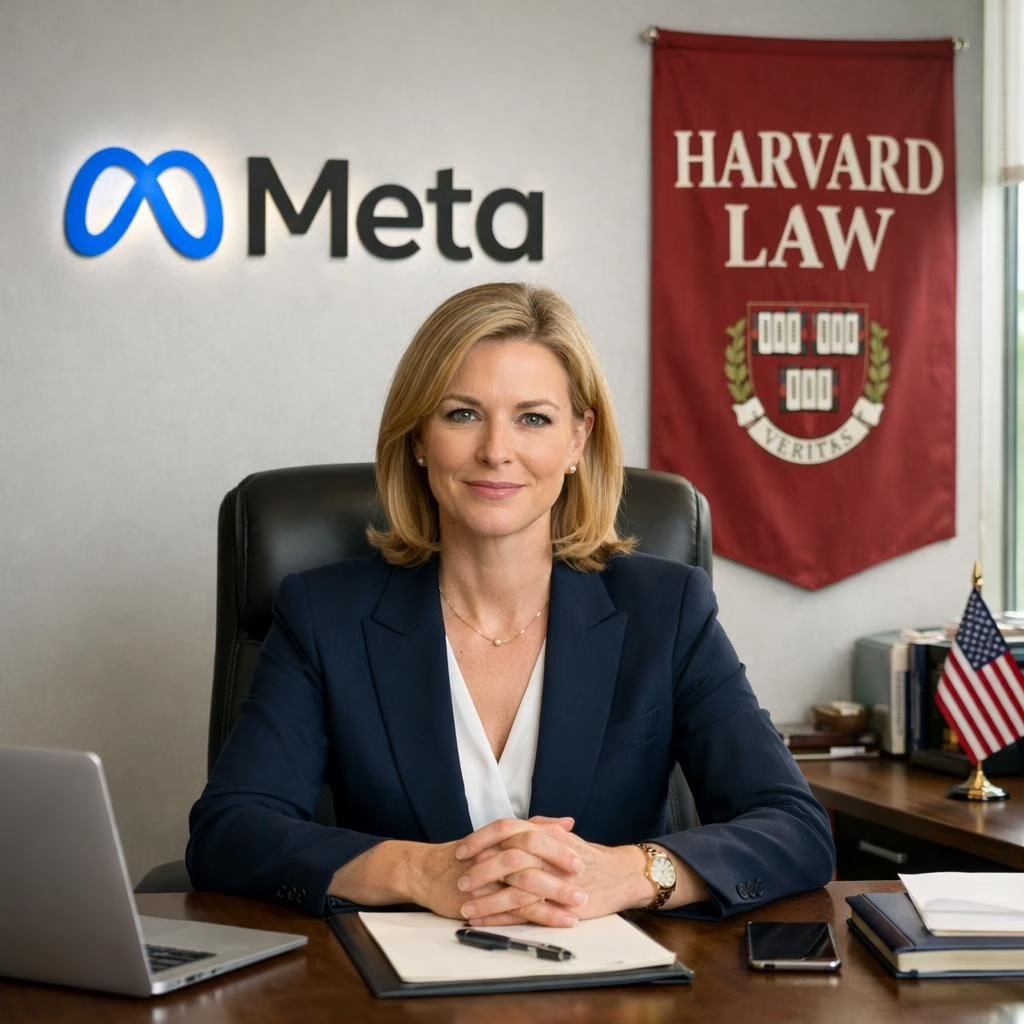
Monika Bickert, a longtime architect of Meta’s content rules for Facebook and Instagram, is stepping away after more than a decade shaping Meta policy for the platform. She will join Harvard Law as a faculty member, bringing a practical, hands-on mindset to the classroom. She will remain at Meta through August to assist with a transition plan led by policy chief Kevin Martin, ensuring a smooth handover for a team used to her steady tempo. This move isn’t a retirement from public life; it’s a shift to the lectern, with a built-in audience of students eager for real-world stories about platform governance.
Meta policy moves from platform to classroom
From the perspective of someone who has watched policy debates unfold behind the scenes, Bickert built a steady career bridging the gap between legal language and practical product rules. At Meta she helped steer decisions about what billions of users can post, what gets flagged, and how fast moderation responds to fast-moving conversations. Her experience as a former federal prosecutor lent a crisp, no-nonsense style to negotiations with product teams and external stakeholders. Meta policy remains a critical thread in those discussions, and the perspective from Harvard Law students and scholars will be informative as the school expands its governance research.
Harvard Law becomes a new classroom for policy work
Harvard Law will gain a practical voice that translates complex moderation decisions into case studies, seminars and policy experiments. Harvard Law will benefit from Bickert’s on-the-ground experience at the center of platform governance, where legal constraints meet engineering constraints, user expectations, and public accountability. She can help students understand how policy choices ripple through product design, data practices, and community standards. The collaboration is not a one-way street; it promises to feed back to Harvard Law with fresh perspectives from scholars who study information flow in modern networks. The public debate over platform safety, transparency and accountability continues to evolve, and the dialogue between academia and the tech sector could become more constructive as a result. In the year ahead, Harvard Law may host guest speakers, simulations and joint research that illuminate the boundaries of responsibility online, all rooted in practical lessons from Meta policy and the realities of operating at scale.
New Mexico recently produced a striking verdict: Meta was ordered to pay $375 million for failing to protect children on Facebook, Instagram and WhatsApp. The judgement focuses on safety failures and the exposure of minors to explicit material and predatory contact. Meta intends to appeal, a move that reflects not stubborn pride but the usual friction between complex platforms, courts and public policy. The ruling is a reminder that the safety project is ongoing and far from resolved, even as leadership transitions unfold. In this moment, the company emphasizes its ongoing commitment to teen safety and to improving how content is moderated and surfaced to younger audiences. The conversation about balancing free expression, user trust, and business interests continues to evolve, and this is exactly the kind of dynamic that makes Harvard Law an important partner in research and education.
Meta policy remains a living topic as the company navigates litigation risk and ongoing public scrutiny, while the move to Harvard Law signals a broader commitment to education, research and practical experimentation that can guide the next generation of leaders. The cross-pollination could yield smarter training for engineers, clearer public explanations and stronger collaborations across disciplines. The rest of 2026 might feel like a launch window for governance experiments, with classrooms doubling as think tanks and policy circles as living labs. The goal is a more thoughtful, measured approach to online safety that respects both users and the people who build the platforms.
Readers will see how theoretical ideas translate into everyday decisions and how policy realities emerge in the classroom and on the ground. We invite readers to share their thoughts in the comments. Your perspectives help illuminate the evolving playbook for platform governance in 2026 and beyond.
References and notes: Reuters coverage and original Times of India linkbacks follow below.
References
- Original Reuters coverage: Monika Bickert leaves Meta for Harvard Law
- Times of India linkback: Times of India article
External sources
FAQ
- Who is Monika Bickert and what did she do at Meta?
She was the long-time head of Meta’s content policy, shaping rules for billions of users on Facebook and Instagram.
- Why is Harvard Law involved in this move?
The school will host a practical classroom for policy work, turning decisions into case studies and research projects.
- What does this mean for Meta’s safety and governance?
It signals ongoing emphasis on safety and governance while leadership evolves, with continued investments in review processes.
- When does she start at Harvard Law?
She starts after completing a transition at Meta, with August serving as the transition month.