

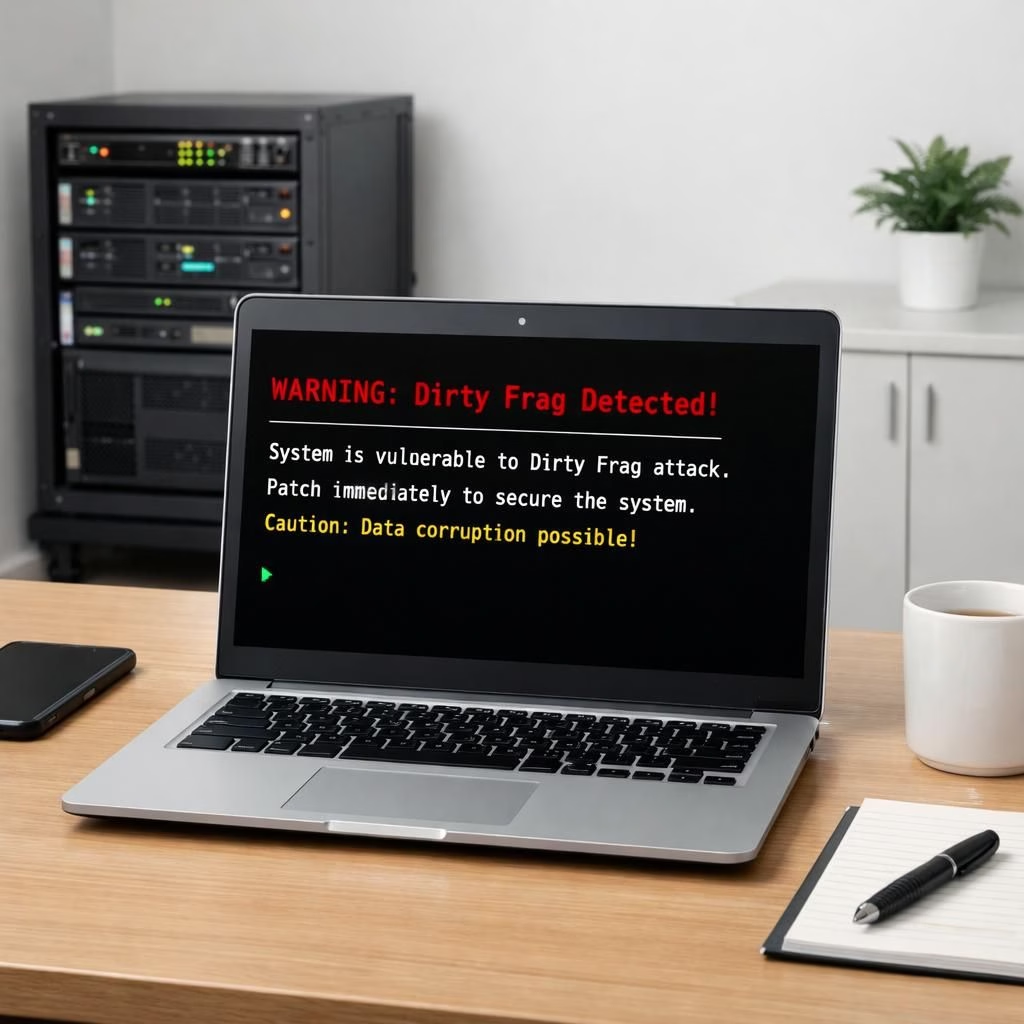
Linux Security teams are waking up to a new reality in 2026: the threat landscape keeps evolving, and this post translates fear into a practical patch plan. The Dirty Frag family targets kernel page caches and can escalate from low-privilege positions to root on many Linux distributions. It’s the sort of topic that prompts a few coffee-fueled sighs, but the fix is accessible, and the playbook is straightforward if you stay organized.
Linux Security: Dirty Frag Deep Dive
In recent weeks researchers have tracked a dangerous duo of kernel flaws, notably CVE-2026-43284 and CVE-2026-43500, that can push an attacker from a modest foothold to full root on Linux systems. The exploit chain hinges on manipulating page caches in memory and uses the frag slot of a sender-side skb to tamper with a read-only cache. The result is fast, precise, and stealthy: attackers can alter critical files and reclaim root access in many setups. An alarming detail is that the exploit code leaked online a few days back and demonstrates reliability across a wide swath of Linux distributions. Experts describe the code as deterministic and unusually quiet, which makes detection harder and urgency higher.
Fortunately, the patch ecosystem has started moving. Debian, AlmaLinux, and Fedora have released fixes, with other distributions following or providing guidance through their official channels. If you run a different distro, the official provider’s page is the best place to confirm a patched kernel version and any required reboot steps. The key message is simple: patch early, patch often, and reboot when asked. The Security community is not interested in a staged rollout when a clean update can close the door on attackers.
Two related items broaden the context. First, Copy Fail—disclosed last week with patch gaps—also targets kernel page caching in a way that complements Dirty Frag, but without the exact same chain. Second, the vulnerability class sits in the same family as Dirty Pipe, a reminder that the kernel has a long memory for similar bugs. The upshot: this is not a one-off blip; it’s a family of weaknesses that favors careful, consistent defense rather than heroic, ad-hoc fixes.
From a defender’s view, the exploit is especially worrying when attackers can reach shared environments. If you run VMs, containers, or multi-tenant servers, the bar for exploitation drops and the temptation to run the chain increases. Security teams should align patch windows with change-management processes and ensure users know when maintenance will occur. Microsoft researchers summarized it well: Dirty Frag introduces multiple kernel attack paths that improve exploitation reliability, reducing the need for perfect timing or fragile conditions. In other words, the risk scales with how you deploy Linux in your environment. For Security teams, the patch cadence matters as part of a broader defense strategy.
On the other side, Wiz researchers noted that hardened container environments—think Kubernetes with strict defaults—are less likely to see breakouts. Still, the risk remains significant for virtual machines or less restricted environments where attackers can maneuver more freely. In today’s mix of cloud workloads and on-prem gear, you’ll want to treat this as a systemic risk rather than a single-vulnerability blip. For Security teams, consider tightening container capabilities and namespace controls as part of ongoing hardening.
Security Best Practices for Linux: Patch and Prevent
The bottom line remains unambiguous: patch now. Patches may require a reboot, but the protection from Dirty Frag outweighs the cost of a short maintenance window. If patching immediately isn’t possible, apply mitigations described by vendor guides and security advisories, then prioritize a staged patch in a test environment before production.
- Install patched kernel versions from your distro (Debian, AlmaLinux, Fedora, and others), then reboot in a controlled window and verify system health after restart.
- Enable and properly configure Security-oriented controls like AppArmor and SELinux where possible. AppArmor can neutralize certain ESP technique variants, and many distributions don’t load rxrpc.ko by default, which helps reduce exposure on some paths.
- Limit exposure of sensitive kernel interfaces and reduce unnecessary services. Linux workloads should run with the most restrictive capabilities, and virtualization settings should minimize broad access to host namespaces.
- Monitor kernel logs and security alerts for unusual page-cache activity, non-linear sk_buff usage, or unexpected demo payloads. Automate watchlists where you can and test patches in staging before rolling out widely.
- Coordinate patching with your change-management process to minimize downtime. Even a brief maintenance window can save days of incident response if an attacker takes advantage of an unpatched host.
As the Dirty Frag story shows, patching is both a technical and procedural matter. The kernel fixes address the root causes, while mitigations reduce the window of opportunity. In practice, combine a fast patch cycle with good configuration hygiene and layered Security so that even if one line of defense fails, others hold the line.
Security: Understanding the Frag Family
Dirty Frag is part of a broader bug family that includes Dirty Pipe and Copy Fail. This time the focus is the frag member of the kernel’s struct sk_buff, not a pipe_buffer, and the exploit uses splice() to plant a read-only page-cache reference into the frag slot. The receiver-side kernel then performs in-place cryptographic operations on that fragment, effectively corrupting the page cache. Any subsequent reads show the attacker’s tampered data, even when the attacker never had write access originally. The two-trick combo of esp/xfrm networking components and RxRPC decryption keys makes the exploit chain more reliable across diverse Linux deployments.
Looking ahead, the combination of patched kernels and sensible configuration will curb the impact. The patch cadence matters because this threat thrives when environments lag behind. If you’re managing Linux machines in 2026, you should plan for routine patching, verify patch applicability across distributions, and maintain a litany of mitigations that can be deployed quickly in case a patch lags. The ongoing emphasis on Security posture remains central to reducing exposure across fleets.
Conclusion: the smart approach is clear—move fast on patches, follow official guidance, and remain vigilant. The threat is real, but so is the capability to defend with disciplined patching and good Security hygiene.
Have thoughts? Share your thoughts in the comments.
FAQ
- What is Dirty Frag? It is a set of kernel-level bugs that can escalate privileges by tampering with page caches and related memory structures. Patch promptly and follow vendor guidance.
- Which systems are most at risk? Multitenant environments, virtual machines, and teams running less-restricted containers or unsegregated host namespaces.
- What should I do first? Apply the latest patched kernels for your distro, reboot if required, and verify system health before returning to production workloads.
- Where can I learn more? Check the external references and official security advisories linked in the References section.