

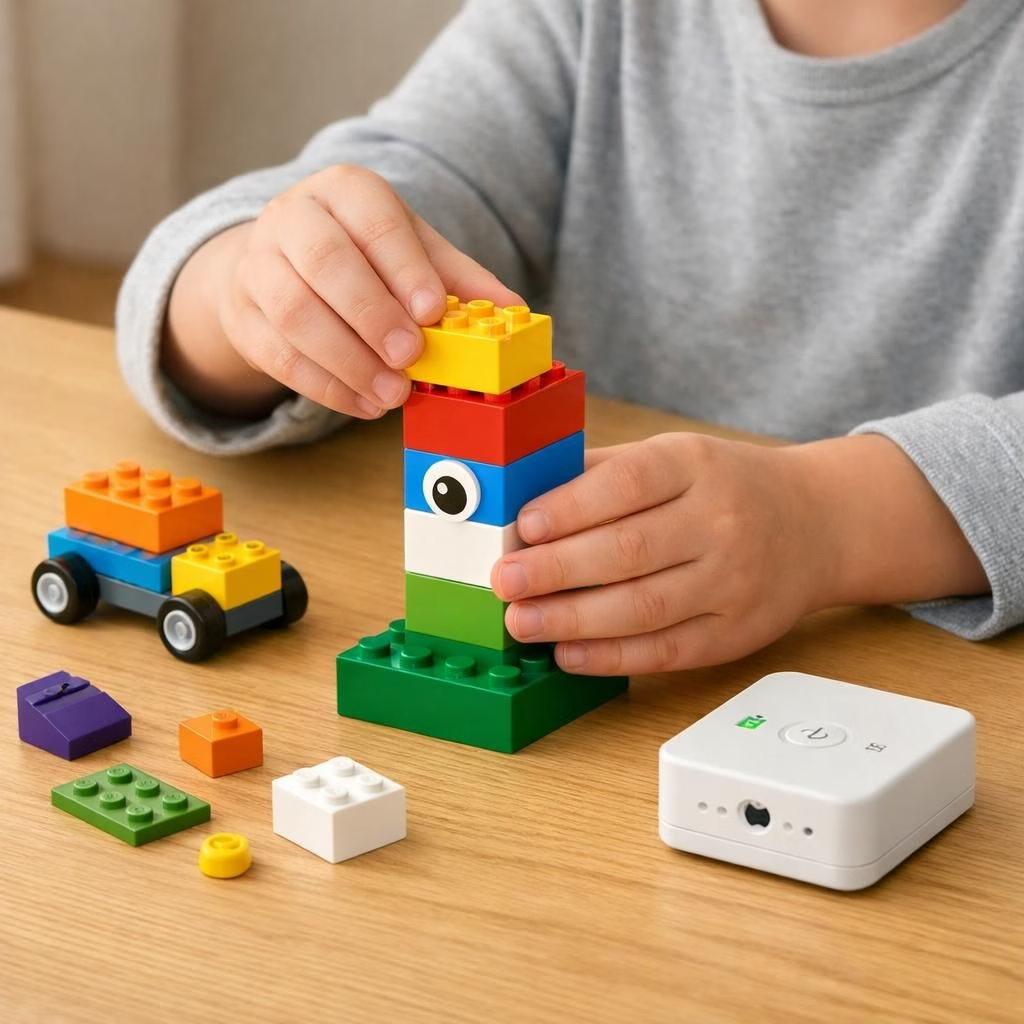
In 2026, Lego keeps selling more than bricks; they sell a story that blends tactile joy with a splash of silicon. The Lego Smart Play Bricks promise a world where hands-on building meets responsive feedback, and the Smart Brick keeps you honest about progress. This piece walks through the promise and the pandemonium with a wink and a practical map for how kids, parents, and enthusiasts actually engage with the product.
Lego Smart Play Bricks meet the Smart Brick reality
Early coverage treated the launch like a loud, shiny spectacle. The Verge captured the moment when the first wave of devices rolled off the line and into playrooms. Gizmodo offered a witty cautionary tale about the sonic character of these blocks, while WIRED dug into the tech-packed core and asked if novelty would outpace learning. Glass Almanac framed the milestone against prior toy-tech experiments, and Brick Fanatics tracked the minifigure lineup along with the partially pre-assembled details with the same keen eye fans bring to patch notes. The practical takeaway for families is simple: the launch is loud, but the payoff hinges on how play becomes practice—how curiosity turns into skills and collaboration, not just collection. Stories from editors and testers remind us that a big reveal is only the start, not the finish line. The Smart Brick buzzed in the conversation as a real-world test of how data can support, but not dictate, play.
Inside the Lego Smart Play Bricks era: the Smart Brick as companion
Durability and safety remain top of mind, but the ecosystem tries to be approachable, not intimidating. Minifigures arrive partially pre-assembled, a small concession to the realities of busy households and grown-up fatigue. The Smart Brick acts as a quiet hub, gathering data on child-led experiments and feeding a gentle loop of feedback. Lego emphasizes that the aim is to spark imagination, not to replace it with an app that dictates every move. This balance—physical hands-on play paired with meaningful, optional digital insight—defines the core appeal. Some critics argue the bricks chatter too much or the apps steal the spotlight; others celebrate a design that invites iteration rather than obedience. The throughline remains consistent: build, test, share, and improve, with play leading toward understanding rather than mere consumption. The result is a product that feels modern without abandoning the tactile joy of stacking, and that is exactly the kind of compromise modern families appreciate.
As families navigate the hybrid experience, the Smart Brick ecosystem offers a narrative that blends engineering curiosity with everyday problem-solving. The product invites kids to experiment with cause and effect, to trace a misstep, and to rebuild with new ideas. The tone stays approachable, the learning outcomes are tangible, and the pace of discovery remains the star of the show. Critics who want to declare the entire concept a gimmick will always find a drumbeat, but the heart of the idea endures: curiosity thrives when tools invite exploration rather than demand allegiance to a single app screen. In the end, this is not a gadget contest; it’s a playground for engineering thinking that grows with a child’s questions and a family’s shared time together.
For parents and educators, the conversation shifts from “Does it work?” to “How can we integrate this into actual play?” The answer is nuanced. Lego has designed a framework that respects different paces of learning and different household tech setups. Some kids run freely with bricks and story, while others lean on the Smart Brick for a nudge of feedback and a window into how their ideas unfold. The key advantage is flexibility: a toy line that can be as simple as a stack of bricks or as complex as a mini project that bridges physical build with digital experimentation. The result is not a one-trick gadget but a platform with room to grow, revise, and adapt to new challenges—exactly the kind of resilience many families want in a 2026 classroom-to-living-room journey.
Community reaction has varied, yet the conversation around how these tools shape collaboration remains consistently constructive. Designers remind us that the ultimate goal is not to replace creativity with automation, but to extend it. When a child tests a new arrangement, or a parent and child brainstorm a series of iterations, the experience becomes a shared learning moment. The product’s ability to scale from a simple starter set to a more ambitious build also mirrors real-world problem solving: start small, learn, then expand with confidence. In this light, the Lego Smart Play Bricks ecosystem earns its keep by turning play into a practice of experimentation and a habit of reflection, not by turning the table into a screen-lit battlefield of constant updates and notifications.
As we assess the broader impact, it’s worth noting how the public conversation around this launch mirrors broader tech toy debates. The Verge, Gizmodo, WIRED, Glass Almanac, and Brick Fanatics each offer a different lens on how the ecosystem evolves—whether through design decisions, user stories, or market performance. Taken together, they sketch a portrait of a product line that is earnest about learning, respectful of parent time, and playful about the occasional chaos of new technology in a living room. The bottom line is straightforward: Lego Smart Play Bricks provide a thoughtful blend of tactile and digital play that can grow with a child’s curiosity without turning playtime into a code-first slog. If you’re seeking a modern toy that invites hands-on discovery with a friendly digital companion, this is a space worth watching.
In closing, Lego’s Smart Play Bricks concept demonstrates what many parents hoped for: tools that encourage iterative thinking, collaboration, and a sense of mastery that emerges from making and testing. The Smart Brick component adds just enough feedback to keep ideas moving, without hijacking the imagination. The result is a product line that respects childhood curiosity and offers a scalable path to more complex projects as kids grow. If your family tries it, let the activity unfold at your own pace and celebrate the small wins—the tiny breakthroughs as well as the big, satisfying stacks of bricks becoming something greater than the sum of their parts.
What do you think about Lego Smart Play Bricks and the Smart Brick approach? Share your thoughts in the comments below, and tell us how you’d use these tools in your own projects.
Special thanks to the original reporting from Gizmodo for the Lego coverage. Original article: Lego’s Smart Play Bricks Sound Awful (Gizmodo). Thank you for the inspiration and the detailed perspective that helped shape this look.
Practical steps for Lego Smart Play Bricks in a busy home
- Start with a small starter set and use the Smart Brick feedback to guide a 20-minute daily session—so play remains light, not overwhelming.
- Rotate roles: the builder, the tester, and the documenter—this is where Lego Smart Play Bricks shines as a collaborative tool.
- Document progress by taking photos or a quick log, then revisit a build to refine it using the Smart Brick cues.
FAQ about Lego Smart Play Bricks
- What is the Smart Brick and why does it matter?
- It’s the sensor-driven hub that provides optional feedback, helping kids reflect on what changed when they adjust a structure.
- Can Lego Smart Play Bricks work without any digital tools?
- Yes. The bricks are designed to be as effective with hands-on builds as with digital prompts, offering flexible learning paths.
- Do I need an app to use these bricks?
- The system is designed to be useful with or without an app, depending on how much digital insight you want to integrate.
External perspectives
For broader context, see coverage from reputable outlets like WIRED and The Verge, plus official LEGO news.