

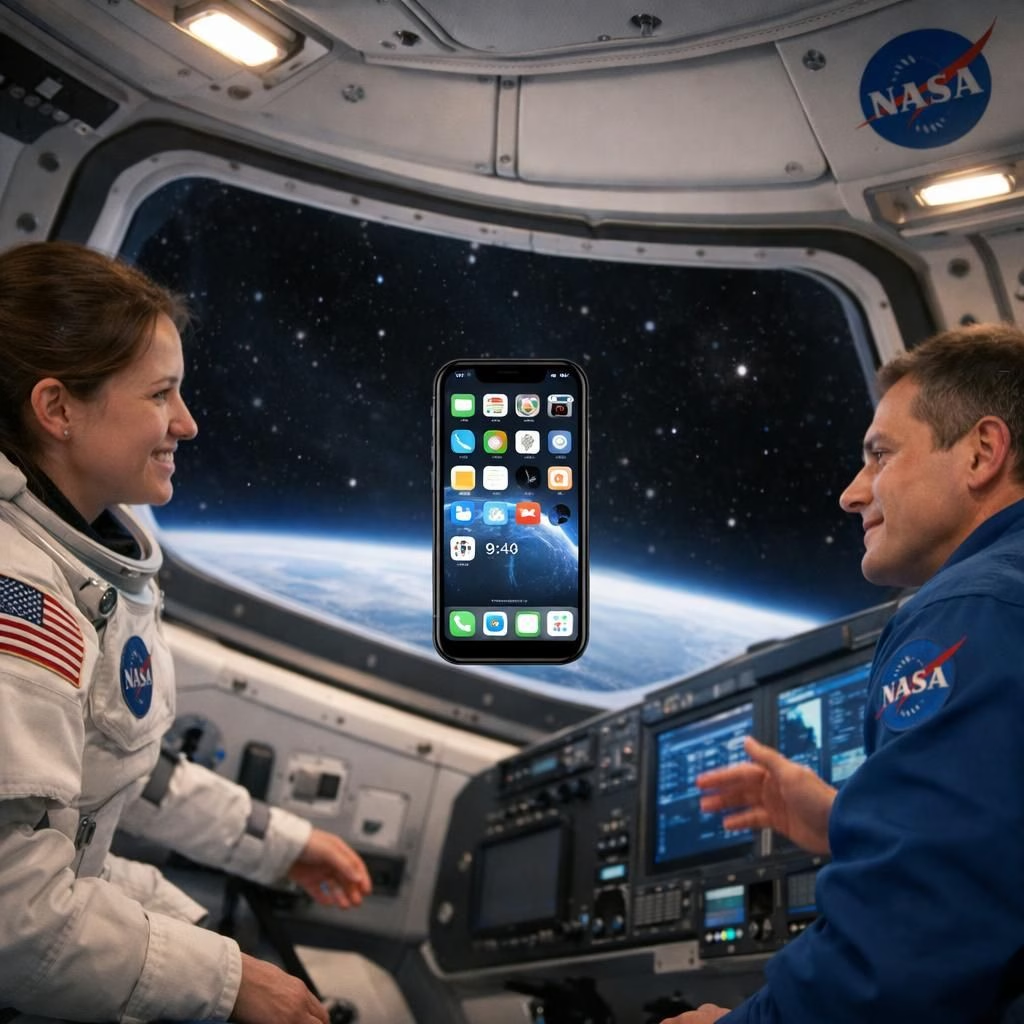
In a moment that feels like a crossover between 1960s tech optimism and 2020s pocket-sized power, iPhoneInSpace and ArtemisII mark a practical turn in spaceflight. About four hours into the mission to the Moon—the first since 1972—a silver iPhone drifted past the cockpit camera, drawing attention from crew and viewers. The device wasn’t there for games or a FaceTime ping; NASA policy kept connectivity off, and the iPhoneInSpace was there to document the experience for families and for later sharing online.
The iPhoneInSpace isn’t the only camera on board. The Orion capsule carries two Nikon D5s and four GoPro Hero 11s, complemented by the iPhoneInSpace units. This mix keeps moments authentic while giving the crew a convenient way to capture intimate views of the upper stage and docking maneuvers. NASA and the astronauts describe it as a balance between tradition and modern hardware, tested under demanding conditions. The ArtemisII crew shows that progress can share the cabin with established equipment, a comforting thought when facing the void and managing flight hardware.
iPhoneInSpace Moments in Orbit
Jared Isaacman, who commented on the initiative in February, framed the move as both practical and inspirational: “We are giving our crews the tools to capture special moments for their families and share inspiring images and video with the world.” The policy clarifies that the phones cannot access the internet or use Bluetooth; the goal is not to stream a concert but to capture credible imagery. The first iPhoneInSpace device was secured in a leg pocket of a flight suit before launch and later freed to float in microgravity, which aligns with the reality of living with Velcro and gravity’s absence. The crew keeps a careful eye on the balance between getting the shot and keeping the mission safe.
Beyond the iPhoneInSpace, the Orion crew uses Nikon D5s and GoPro Hero 11s to broaden the storytelling toolbox. This ensemble demonstrates NASA’s scouting for reliable, redundancy-rich documentation rather than chasing novelty for novelty’s sake. The blend of consumer-adjacent devices with rugged, purpose-built cameras underscores a simple truth: good mission photography isn’t about one gadget; it’s about the right toolkit for the right moment, with ArtemisII taking the big-picture shots.
ArtemisII: Balancing modern devices with mission safety
The hardware approval process for spaceflight is usually four phases and surprisingly thorough. First, a safety panel is introduced to the piece of hardware. Second, potential hazards are identified—think fragile glass, moving parts, or anything that could drift into a critical system. Third, a mitigation plan is laid out, addressing each hazard with rigorous controls. Fourth, the plan is proven under test conditions that simulate the orbital environment. The process exists to protect the crew and the spacecraft, and it’s earned NASA a reputation for conscientious engineering rather than reckless experimentation. One memorable note from Niederwieser is the Velcro hypothesis: in microgravity, you attach things everywhere, even the pen’s cap, to keep chaos at bay. The result is a workspace where even a smartphone finds a home in a pocket, strapped to a surface, or tethered by thoughtful design.
In this context, the iPhoneInSpace is not slapped onto a launch manifest as a consumer gimmick. It’s treated as a piece of hardware that has to prove its reliability. The team recognizes that microgravity changes how devices behave, and the NASA safety culture responds with methodical caution rather than bravado. The goal is to enable meaningful documentation while maintaining the highest safety standards. The ArtemisII crew, the ground team, and the safety reviewers collaborate to ensure the phone’s presence benefits science and storytelling without compromising the mission’s core objectives.
Apple has stated it wasn’t involved in NASA’s formal approval process for Artemis II hardware. The iPhoneInSpace simply earned qualification for extended use in orbit and beyond, demonstrating that consumer tech can survive the rigors of space flight when properly vetted. This is not merely a wink to modernity; it’s a deliberate step toward integrating familiar tools into the demanding environment of space exploration. Spaceflight history already includes iPhone missions—Inspiration4 in 2021 used an iPhone to photograph Earth, and STS-135 in 2011 carried iPhone 4s for experimentation. ArtemisII stands as a milestone in that ongoing integration, showing how accessible devices can accompany bold exploration with appropriate safeguards.
From a human perspective, this approach to hardware demonstrates a philosophy: enable curiosity, maintain discipline. The iPhoneInSpace isn’t a replacement for specialized cameras; it’s a companion that documents personal, family-facing moments alongside mission-critical imagery. The juxtaposition of a phone with official space hardware reflects a broader trend—space exploration remains deeply human, even as it grows more technically sophisticated. ArtemisII’s narrative is as much about storytelling as it is about precision, and in that sense, ArtemisII becomes a bridge between the crew’s lived experience and the public’s imagination.
Looking back, space history has always included moments where consumer tech made its own little leap: an iPhone photographing Earth on Inspiration4, two iPhone 4s aboard STS-135, and now iPhoneInSpace alongside high-end sensors on ArtemisII. The pattern isn’t about gadgetry for gadgetry’s sake; it’s about enabling meaningful, verifiable documentation that respects safety while inviting people back home to feel like they’re part of the journey. ArtemisII keeps the focus on exploration, but it also invites the world to witness it in more intimate, accessible ways through iPhoneInSpace and friends.
Have thoughts? Share your ideas and reactions below. How do you feel about mixing consumer tech with spaceflight, the role of iPhoneInSpace in chronicling missions, and how ArtemisII shapes public engagement with science? Your comments help illuminate the human side of space exploration.
Original article: Our thanks to NASA for the original reporting that informed this recap. For the original material and more context, visit NASA’s coverage here: NASA.gov.
Practical takeaways: documenting space missions responsibly
- Use consumer devices to capture moments that matter, but keep critical operations separate from personal photos or video.
- Pair phones with rugged cameras for a complete storytelling toolkit that survives microgravity and launch vibrations.
- Follow safety guidelines and avoid streaming or internet access to protect the mission’s integrity.
Frequently Asked Questions
- Can consumer smartphones operate in space without internet access?
Yes. In Artemis II, phones are isolated from internet connectivity and Bluetooth to prevent interference while still enabling photos and video capture for later sharing.
- Why mix iPhones with Nikon D5s and GoPro cameras?
The combination provides both intimate, human-scale imagery and broad, mission-wide coverage that supports NASA’s storytelling goals.
- What does this say about the future of spaceflight hardware?
It signals a shift toward integrating familiar consumer tech with rigorous safety processes, expanding who can share the journey while preserving safety.
Conclusion: a human-centered path forward
The Artemis II mission shows that exploration remains fundamentally human. A smartphone can sit beside high-end sensors without replacing them, offering a personal lens on the voyage while NASA maintains strict safety standards. The story of iPhoneInSpace is a reminder that progress in spaceflight can be both practical and inspirational, inviting the public to witness discovery in intimate, accessible ways.