

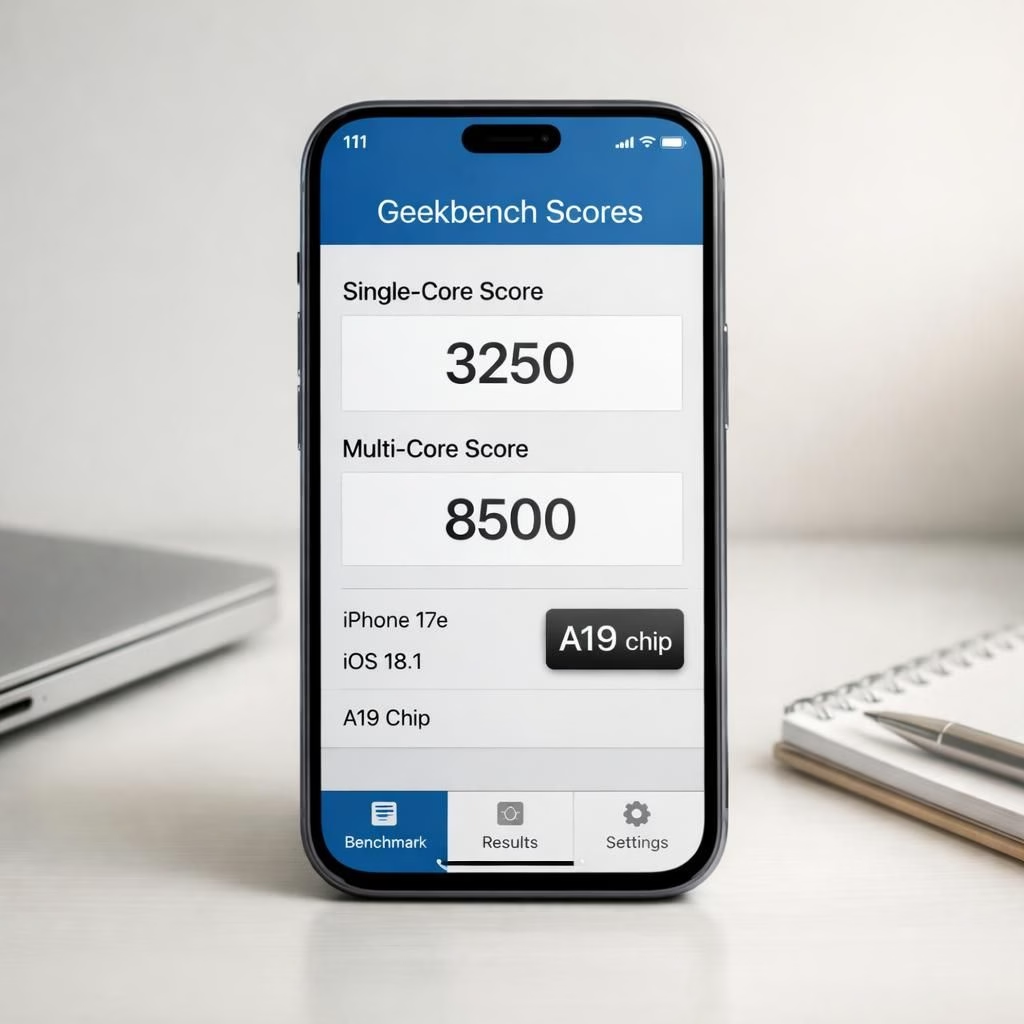
The iPhone 17e just surfaced in Geekbench 6, revealing the A19 chip’s balance of power and efficiency. In everyday use, the iPhone 17e largely mirrors its bigger iPhone 17 sibling on multi-core CPU tasks, while the A19 chip quietly handles efficiency and smooth operation. If you love the numbers, the iPhone 17e’s Geekbench profile shows a healthy balance of speed and restraint.
iPhone 17e: CPU performance and daily usability
On the CPU front, the iPhone 17e posted a multi-core score around 9,241, a hair under the iPhone 17’s 9,249. That’s the kind of gap that makes a competitive desktop keyboard sigh with relief: almost indistinguishable in day-to-day tasks, but with slightly different headroom for bursts. The iPhone 17e keeps up with the standard model because the A19 chip is the real workhorse here, and it knows when to flex and when to nap.
Graphics are where the trade-off shows: the iPhone 17e ships with a 4-core GPU, compared with the iPhone 17’s 5-core GPU. In Geekbench Metal tests, the gap lands in the 31,000 to 31,500 range for the iPhone 17e, versus roughly 37,000 for the iPhone 17. The delta sounds chunky on paper, but most users are unlikely to notice a dramatic difference in most games or photo apps. If you’re a power user, you’ll notice the nuance during longer 3D tasks; for the rest of us, a smooth experience remains the default.
By the way, the previous generation, the iPhone 16e with an A19 chip, also carried a 4-core GPU. The new lineup still keeps that compact GPU core count for efficiency, but it pairs it with the A19 chip and MagSafe improvements for a more modern feel. The design stays familiar, which is exactly the point: comfort with a little extra zing.
A19 chip: efficiency and connectivity
A19 chip: features beyond speed and base storage
The iPhone 17e is built on the same chassis as the iPhone 16e, but the A19 chip brings a few notable enhancements. In 2026, you get MagSafe for magnetic wireless charging and magnetic accessories, plus Apple’s second-generation C1X modem for faster 5G connectivity and better reliability in crowded areas. The base storage isn’t playing games either; the device now starts with 256GB in the U.S., a practical upgrade for apps, media, and capture duty.
Pre-orders for the iPhone 17e began March 4, and Apple’s launch on March 11 brought the device to shelves and carriers alike. The battery of features aligns with a modern expectation: you get more room for apps, smoother downloads, and a more confident hand-off between Wi‑Fi and cellular networks. The A19 chip contributes to smoother multitasking without ballooning power use, which makes the iPhone 17e a useful upgrade for those who like speed with a calm vibe.
When you compare to the iPhone 17, the performance delta isn’t a cliff but a gentle hill: CPU tasks run well on the iPhone 17e, while the GPU isn’t the absolute leader in mobile graphics, the overall package remains balanced. And yes, we love a phone that keeps things simple: you get a familiar design, robust performance, and a clear value proposition with a starting price around $599 in the U.S., which mirrors the 16e’s entry point but with more capability built in.
At this point in time, the iPhone 17e’s value proposition is clear: you’re getting a refined chip, thoughtful battery and thermal design, and a user experience that avoids flash-in-the-pan gimmicks. The device trades a tiny ounce of top-end graphics headroom for a rounded package that feels engineered for real life—apps open quickly, navigation is smooth, and media streaming stays consistent across tasks. If you’re curious about the exact numbers behind the scenes, you’ll appreciate the close alignment with the iPhone 17’s performance, with a few small but meaningful differences in GPU specialization and storage policy.
To round this up with a practical note: the iPhone 17e sits in that comfortable niche where speed meets everyday reliability. The iPhone 17e is not loud about itself; it coordinates tasks with the A19 chip, keeping heat in check and performance steady. The device trades a tiny ounce of top-end graphics headroom for a balanced package that feels crafted for real life in 2026.
Original article: Thanks to Geekbench for the benchmarks and context—read the source for the raw numbers and comparisons: Geekbench official site. Thank you for the original material that made this write-up possible.
Would you like to share your thoughts on the iPhone 17e? Please post your comments below and tell us how you would use this device in daily life.
For broader context on benchmark trends, you may also find this analysis helpful: OnePlus 15R benchmark insights.
If you’d like to see how Apple’s A19 chip fits into the wider lineup, this piece offers additional perspective: Apple’s A19 lineup coverage.
For official context on MagSafe features, see Apple’s MagSafe overview: MagSafe on Apple.
Practical takeaways
- CPU performance on the iPhone 17e is very close to the iPhone 17, with subtle differences in bursts and sustained workloads.
- The 4-core GPU means a slight dip in peak graphics throughput, but everyday gaming and apps remain smooth for most users.
- 256GB base storage in the US adds room for apps and media right out of the box.
- MagSafe and the second-generation C1X modem contribute to better charging and faster 5G in dense areas.
FAQ
- How close is the iPhone 17e to the iPhone 17 in real-life use?
In routine tasks, the performance is nearly indistinguishable, with subtle differences in bursts and sustained workloads.
- Will the 4-core GPU noticeably impact gaming?
For most games, the difference is modest; power users may notice slower frame rates on long, graphically intensive sessions.
- Is 256GB base storage US-only?
In the US, yes; other regions may vary by carrier and configuration.
- Where can I learn more about the A19 chip?
We’ve linked to related coverage in this piece and you can also explore MacRumors’ benchmark summaries.