

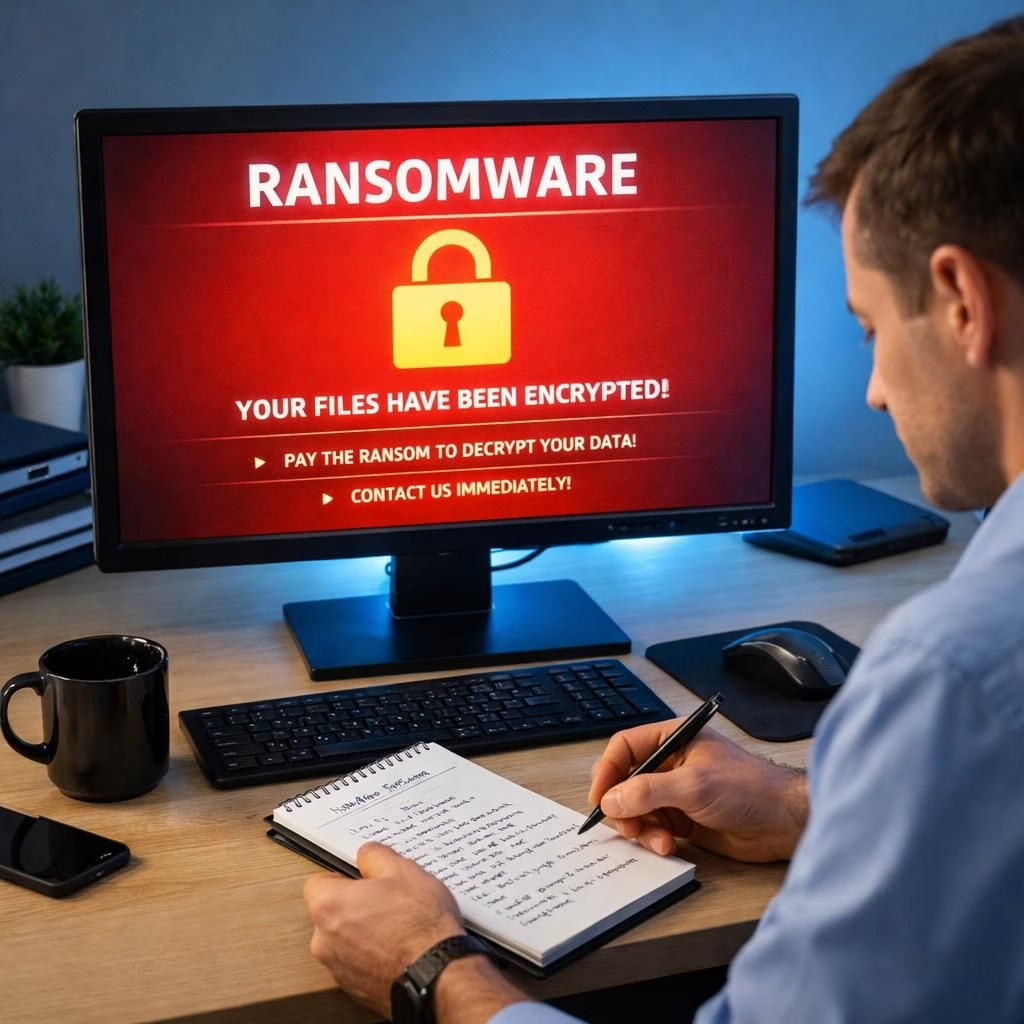
GTA 6 fans and security observers woke to news: a ransomware incident at Rockstar Games has ripple effects across developers and players. The incident isn’t just about a hack; it’s a modern case study in incident response and transparent communication around a high-profile release. For anyone watching the industry, the core takeaway is that even a studio with massive production momentum can be knocked offline, and speed in containment matters more than a flawless press statement.
The breach followed a familiar ransomware pattern: foothold, lateral movement, data exfiltration, and a loud post-intrusion negotiation. Rockstar Games reportedly faced access to GTA 6 source code, internal docs, and possibly personnel emails. The company responded with standard playbooks: activate crisis communications, isolate affected networks, preserve forensic data, and keep stakeholders informed. The core skill on display isn’t brute force but disciplined, iterative response that buys time for defenders to understand scope and for leadership to communicate with candor. The broader ecosystem—publishers, developers, players—feels ripple effects quickly, even if the attacker’s ultimate aim remains unsettled in early reports.
Hacks like this carry a simple math: a breach disrupts operations; a ransom demand provides leverage; and public interest multiplies the impact. The GTA 6 scenario shows how threat actors leverage both encryption and data exposure to pressure victims. In some cases, attackers threaten to publish gameplay assets, test builds, or confidential communications to push a negotiated outcome. Rockstar Games has historically prioritized protecting creative work and user trust, so the priority here is to minimize downtime and keep a clear line of dialogue with fans and partners. The practical upshot for GTA 6 teams and for Rockstar Games staff is vigilance: review access controls, inspect backups, and rehearse response playbooks so a single incident does not cascade into weeks of uncertainty.
GTA 6 and Rockstar Games: The Ransomware Reality Check
Consider the anatomy of the breach. A seasoned attacker looks for the path of least resistance—phishing, stolen credentials, or misconfigured remote access—that allows footholds to escalate. From there, they map the network, pick off high-value assets, and exfiltrate data before locking screens or staging a public reveal. The GTA 6 environment, with its complex development pipelines, is precisely the kind of playground where even a small misconfig from a QA server can become a major headache. Rockstar Games, aware of downtime risk, quickly enacted containment measures, preserved evidence for forensics, and notified internal teams and critical partners. The goal is to shrink blast radius, reduce data exposure, and preserve as much of the development timeline as possible. The GTA 6 narrative, while dramatic, ultimately highlights the value of layered defense and clear ownership during an incident.
GTA 6, Rockstar Games: Data, Demands, and Defense Lessons
In many ransomware events, attackers attach a ransom note, a data-leak site, and a countdown. The GTA 6 thread adds a twist: stolen data may be withheld if a payment is made, but there is no guarantee of discretion even with payment. Rockstar Games must weigh public disclosure against the risk of heightened pressure if data remains private. The industry now expects transparent status updates, even as facts evolve. For fans, the key is to avoid rumor and rely on official channels for confirmations rather than chasing every online post.
From a defense perspective, the GTA 6 / Rockstar Games incident serves as a practical primer on resilience. The core lessons include enforcing strong MFA for all accounts with access to development environments, implementing network segmentation so critical assets don’t sit behind one long hallway, maintaining immutable, offline backups that survive even a hostile exfiltration attempt, deploying EDR and monitoring for unusual data movement, and conducting tabletop exercises that simulate a ransomware day with a GTA 6 asset angle. The aim isn’t fearmongering but building muscle memory for real-world incidents. In the end, Rockstar Games and GTA 6 can emerge stronger by turning a breach into a structured, repeatable response engine rather than a chaotic event.

In the end, the story is less about drama and more about a masterclass in managing a complex breach at scale. The technology behind the attack is well understood by security teams: initial access, lateral movement, data exfiltration, and ransomware execution sometimes followed by public disclosure. The GTA 6 case reinforces that preparedness, not panic, wins the day. For players, it means a commitment to security hygiene from their side too: protect personal accounts, be cautious with links, and stay informed through official channels about GTA 6 updates and Rockstar Games announcements. The takeaway is simple: invest in defense, practice response, and maintain trust through transparency and speed.
Original reporting and appreciation: Special thanks to Mashable for the initial coverage of the ShinyHunters action against Rockstar Games and the GTA 6 context. Read the original article here: Mashable article. We also acknowledge the coverage from BBC, The Guardian, and CNET for the broader narrative that informed this synthesis.
If you have thoughts about how the GTA 6 / Rockstar Games incident was handled, or ideas for stronger defenses in development studios, please share your thoughts in the comments. Your insights help shape practical cybersecurity awareness for readers and studios alike.
GTA 6 defense checklist
- Enforce strong MFA for all accounts with access to development environments.
- Implement network segmentation so critical assets do not sit behind one long hallway.
- Maintain immutable, offline backups that survive even a hostile exfiltration attempt.
- Deploy EDR and monitor for unusual data movement patterns.
- Conduct tabletop exercises that simulate a ransomware day and include a GTA 6 asset angle.
FAQ about the GTA 6 breach
- What happened in the GTA 6 / Rockstar Games incident?
- A ransomware incident led to data exposure and negotiations. The attacker claimed access to GTA 6 assets, while Rockstar Games focused on containment and transparent updates through official channels.
- What does this mean for GTA 6’s release timeline?
- There may be temporary delays in development or testing, but the priority is to protect assets and preserve the schedule through robust containment and backups.
- Should players change passwords or take extra precautions?
- Yes. Use unique passwords, enable MFA, and follow official Rockstar announcements for guidance on security hygiene and potential credential-related warnings.
- What can studios do to prevent a repeat in the future?
- Adopt a defense-in-depth approach: MFA, segmentation, offline backups, continuous monitoring, regular drills, and an established, transparent communication plan.
References
- Mashable — original coverage
- BBC — technology coverage
- The Guardian — technology coverage
- CNET — coverage and context