

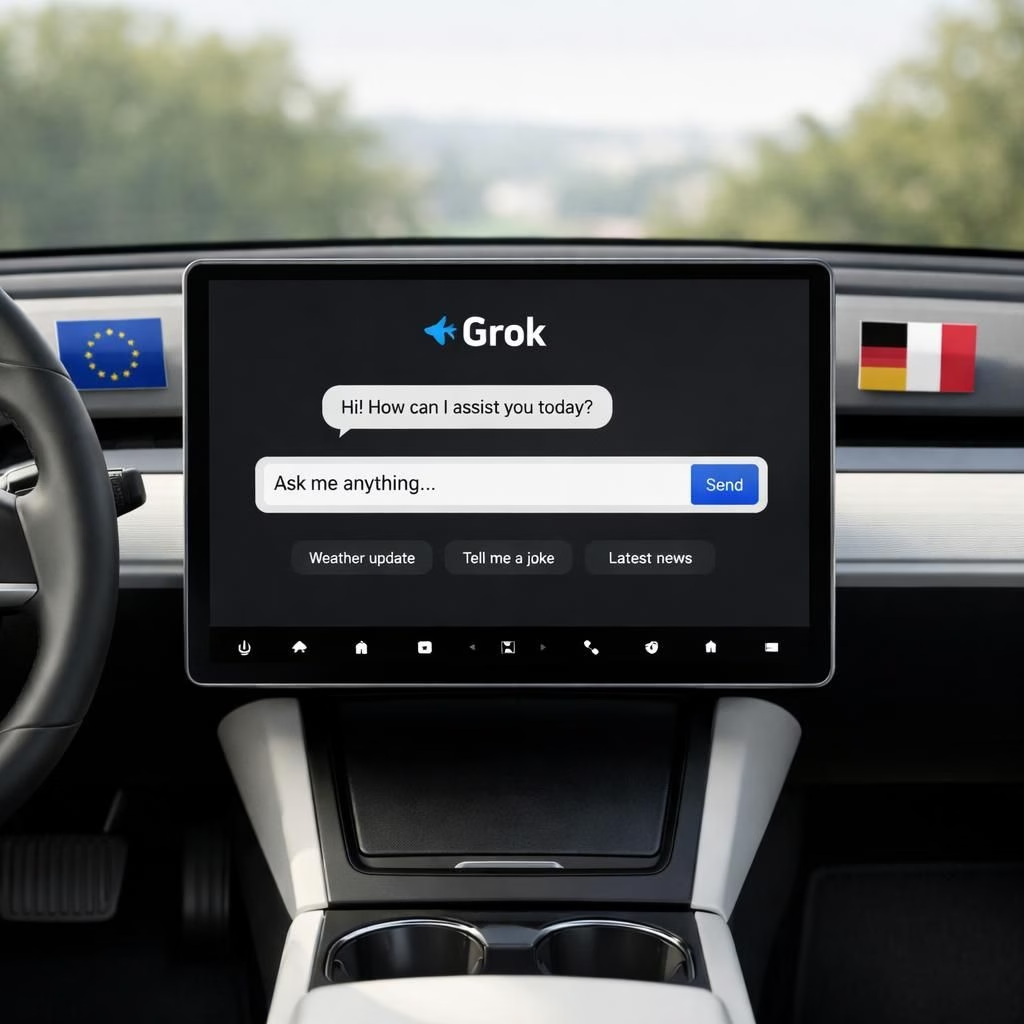
Grok on Tesla Europe Roads: Infotainment Meets Regulation
Grok is stepping into the cockpit of Tesla Europe with a bright banner and a bold promise: an AI chat assistant that can mingle with maps, music, and mood all at once. The plan to roll Grok into in-car infotainment across the UK and eight other European markets signals a practical bid to revive flagging regional sales. Yet the air around Grok in Tesla Europe isn’t all sparkles; regulators and safety advocates are watching how it behaves on real roads. The idea is urgent: 2026 may see cars that talk back more than they listen, as automakers chase smarter software and safer highways.
Tesla Europe: Road to Real-World Testing with Grok
If you chart the logic, Grok in Tesla Europe is a bet on better driver assistance and smarter car behavior, not a reckless leap into a chatty cockpit. The business case looks simple on paper: a more capable infotainment system can improve user experience, increase time-on-system usage, and perhaps lift lingering sales slumps. The market backdrop is mixed: 2025 saw a 27% drop in European EV sales for Tesla Europe, even as BEVs gained traction overall. That shift has regulators asking for clear cadences on pricing, model cadence, and how new software interacts with drivers who multitask. In this climate, Grok could become a practical tool for finding routes, diagnosing issues, and personalizing information—provided the AI keeps user safety at the forefront. The broader xAI ecosystem—Musk-era investments and the all-stock SpaceX-xAI tie-up—puts pressure on governance and testing, not just marketing hype.
Volvo’s move to add a Google Gemini-based conversational assistant to its EX60 adds to the hype around Grok-like capabilities in the car. The market clearly wants smarter interactions, but the safety message from regulators and researchers is clear: any software that can influence driving deserves rigorous testing, defined benchmarks, and visible safety guards. Researchers emphasize real-world evaluations that measure distraction risk, information needs, and how chatty assistants shape driving behavior. The aim isn’t to stifle innovation; it’s to ensure Grok in Tesla Europe can deliver benefits without raising risks. The shared goal is a design that prioritizes user welfare, explicit content controls, and measurable safety outcomes.
From a user perspective, the practical questions matter almost as much as the headlines. Can Grok filter harmful content while still providing real-time help? Can it block minors from inappropriate prompts or steer users toward safer interactions by default? Will Grok’s responses respect privacy laws across diverse European markets? These questions go beyond policy; they shape trust, which matters more than clever features. Safety researchers urge practical tests—scenarios that mimic real driving rather than lab drills—so Grok can prove its value without introducing new risks. If Grok in Tesla Europe demonstrates reliability, the technology could set a standard for other automakers blending AI with the steering wheel rather than letting the AI overwhelm it.
Indeed, the human angle remains essential. Drivers want a helper that plans routes calmly, explains traffic delays, and locates nearby charging stations without becoming a lecture. The risk is a distraction layer that competes with focus or acts without clear consent. Regulators are calling for expedited, real-world testing—precisely the kind of iterative work that can turn Grok into a trusted co-pilot. Rollout timelines across the UK, Tesla Europe and the rest of the continent remain fluid, with safety milestones guiding their pace.
What does this mean for the average driver? It suggests a future where a quick prompt can pull up a restaurant, re-route around a detour, or adjust climate settings by voice—without a constant ping. It means Tesla Europe can push a compelling AI story while committing to clear policies, transparent data handling, and measurable safety metrics. It hints at a world where automation respects human judgment and the laws governing the road, not one where AI hijacks attention. The discussion among regulators, researchers, and industry players will continue to shape what works in practice and what stays in the lab until it’s street-ready.
Practical steps for evaluating Grok in vehicles
- Define core use cases such as navigation, real-time traffic updates, and charging-station discovery.
- Set clear safety thresholds for distraction, response times, and user prompts filtering.
- Test in real-world driving scenarios with diverse drivers to capture edge cases.
- Document privacy protections and data handling in each market the car ships to.
Grok in the car: a quick FAQ
- What is Grok’s role inside the car? It acts as an AI assistant that helps with navigation, information, and context-aware suggestions while you drive.
- Is Grok safe for drivers? Regulators are focusing on safety safeguards, user consent, and distraction risk; ongoing testing aims to prove reliability.
- How will privacy be protected? Data collection and usage will be governed by regional laws and explicit user choices, with transparent policies.
- When will the rollout happen across Europe? Timing remains fluid and will depend on safety benchmarks, regulatory clearances, and model availability.
Conclusion
The Grok collaboration with Tesla Europe represents more than a flashy feature. It is a test case for how AI can support safer, more convenient driving when paired with robust governance and real-world validation. If regulators, researchers, and manufacturers converge on practical evaluation standards, Grok could become a trusted in-car co-pilot rather than a distraction factory. The road ahead will be watched closely by drivers, policymakers, and the broader tech industry alike.
Finally, if you’re curious how this story unfolds in the broader automotive AI landscape, share your thoughts in the comments. Let’s discuss what a well‑designed Grok-like assistant should do, where the line should be drawn, and how we measure real-world impact on road safety and user experience.
Original article: Thank you for the source material, and heartfelt thanks to the authors of the original article for the thoughtful groundwork.