

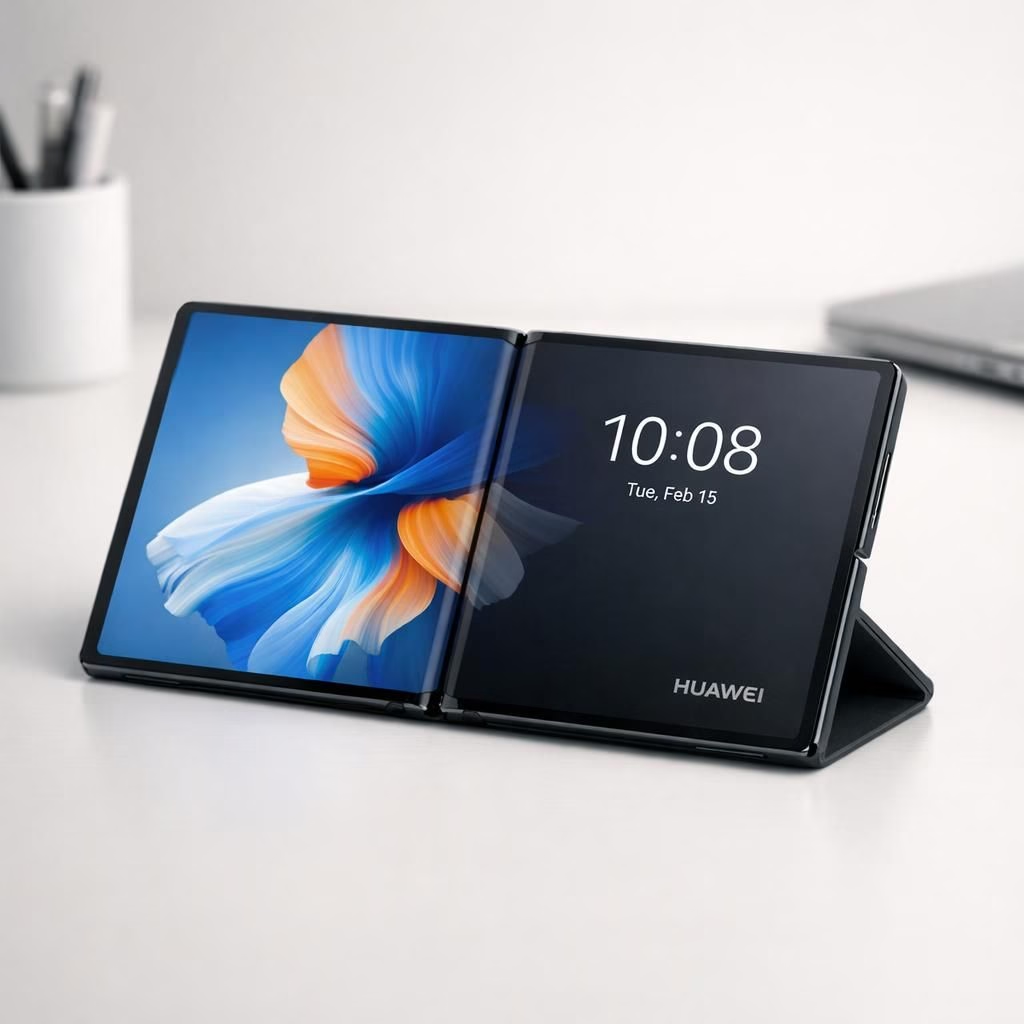
foldable Huawei leads the charge into a playful, practical era where the screen unspools like a polite origami and your pocket finally forgives you for the extra hinge. Yes, the headlines say Huawei beats Apple and Samsung with a new wide foldable, and yes, the foldable flagships are ready to stroll into the living room with more charm than a glossy press release. This is tech-news with a wink: the foldable future is becoming a tangible gadget you can actually use without a toolkit of adapters.
foldable Huawei: A Practical Look at the Wide Foldable Era
The brand’s wide design aims to blend the productivity of a tablet with the pocketability of a phone. The hinge engineering emphasizes durability and a crease-free inner display, built to survive daily life from coffee spills to bustling meetings. For users who crave big-screen productivity, this form factor unlocks new multitasking workflows and creative use cases, without needing a backpack-sized gadget. The Verge’s reporting makes a simple point: this isn’t vapor; it’s the real-world implication of sustained investment in flexible displays, where hardware reviews treat a hinge as a feature rather than a novelty. In practice, manufacturers are learning that software must support a sturdy, flexible display without sacrificing battery life or resilience.
tech-news Spin: Foldable Huawei’s Quiet Revolution
Industry chatter around this shift focuses on the optics of launch timing, supply chains, and consumer appetite. Huawei and other players are chasing larger display experiences inside a familiar pocket. The messaging is pragmatic: more screen real estate can boost productivity, but it also invites new software habits. This is not a gimmick; it is a step toward tangible, everyday advantages that tech enthusiasts can show off at coffee shops without breaking a sweat.
As the era of these wide designs expands, we can anticipate more devices pushing the envelope and more brands learning from the early movers about durability and usability. The weekly tech cycles will crown new flagship stories, but the real test is how these devices fit into real life—commute, kitchen, and conference room. If you’re curious about how all this folds into your daily routines, you are not alone: the excitement around this shift is genuine and measured, a sign that tech can be both practical and entertaining. This moment is a tech-news marker for those who track user experience and product design. Please share your thoughts in the comments below. Original article: The Verge — thank you to The Verge for the original reporting and inspiration. For broader context on Huawei developments, explore the related reads.
Practical steps for everyday foldables
- Experiment with a two-app workflow to maximize the wide display’s productivity potential.
- Use a slim protective case to preserve the hinge and crease area during daily use.
- Keep the device charged for long sessions away from a power outlet when traveling.
FAQ
- Q: What makes foldable designs practical for daily life?
A: They blend screen real estate with pocketability, enabling multitasking in a single device. - Q: Are these devices durable enough for everyday wear?
A: Hinge design and crease-resilience are priorities, but use a protective case and avoid rough handling. - Q: When will more models reach mainstream markets?
A: Release timing varies by region; expect continued rollout over the coming year.
Conclusion
In short, the wide foldable era is moving from novelty to daily tool for many users. If you value portability plus screen real estate, this class of devices could redefine how you work and play. Stay tuned for hands-on results as more players refine durability and software polish.