

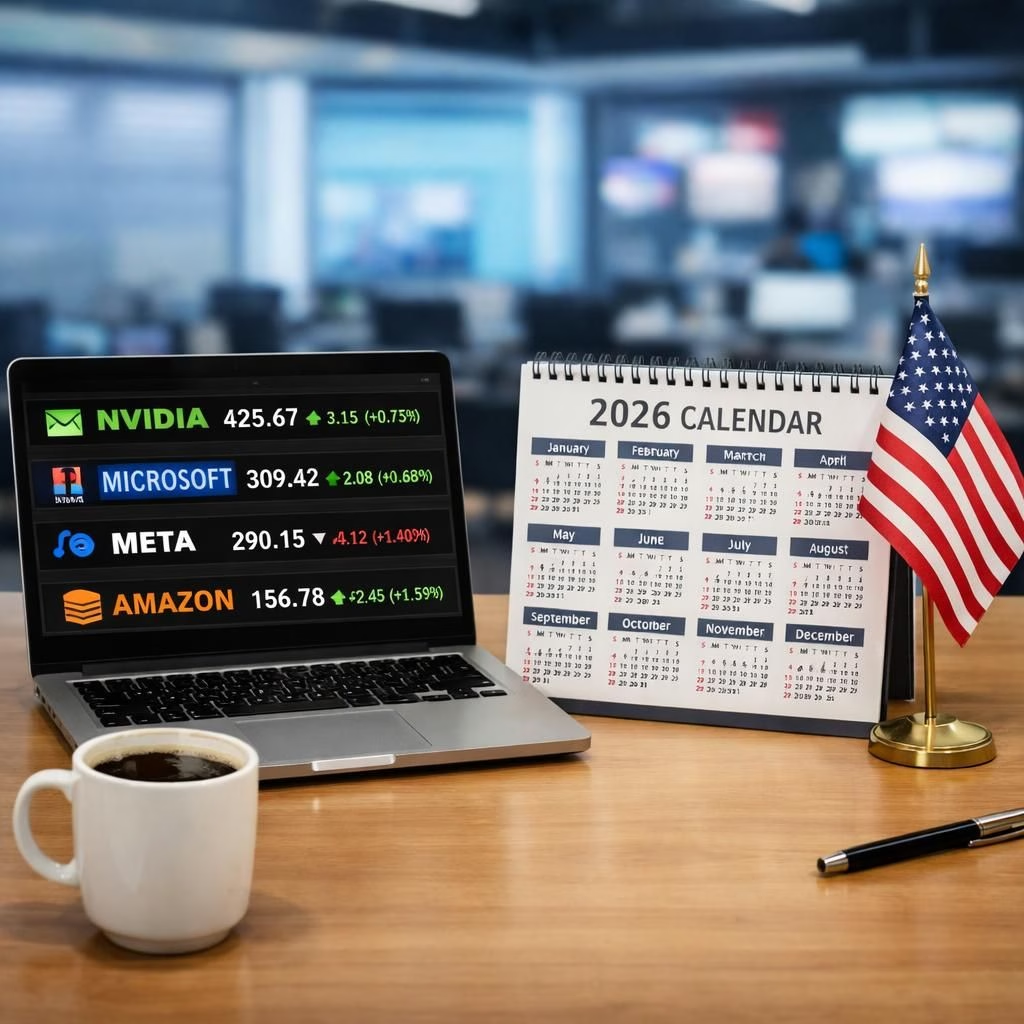
Finance and ethics collide in this brisk, accessible look at the latest Trump disclosure. Reuters reports the 113-page filing shows Trump or his advisers executed more than 3,700 stock trades in Q1 2026, with a broad value range of $220 million to $750 million. Four technology names dominate the activity: Microsoft, Meta, Amazon, and Nvidia. The White House frames the holdings as part of a discretionary trust overseen by Trump’s children, and the administration says there are no conflicts of interest. Yet the scale invites careful reading of how finance moves may intersect with policy timing. The filing lists transactions in bands rather than exact figures, and February 10 stands out as the busiest day: Nvidia purchases between $1 million and $5 million, while Microsoft, Meta, and Amazon were sold in the same band, along with a large exit from the Vanguard Dividend Appreciation ETF. Across the quarter, 36 trades fell in the $1 million-to-$5 million range.
finance snapshot: big tech bets and quarterly totals
The Nvidia move on February 10 is a focal point for discussion. Timing aligns with a major Nvidia processing-power deal with Meta reported shortly after. Earlier Nvidia purchases in January occurred about a week before Commerce Department sign-offs to export certain Nvidia chips to China. An AMD position formed on January 6, aligning with the same export-approval arc. Palantir began building a stake on that date as well, weeks before a Homeland Security contract tied to mass deportation work. Axon purchases on February 10 preceded ICE’s $220 million five-year Tasers order. These patterns show how finance moves can align with policy signals, though they are not proof of improper influence. The focus on these names highlights how markets respond to regulatory signals and the perceived paths of national policy.
ethics check: disclosures, trust, and accountability
On the ethics front, the White House emphasizes the separation between personal holdings and official duties. Spokespeople say the investments sit in a discretionary trust overseen by Trump’s children, and that neither Trump nor his family makes individual investment calls. The Trump Organization stresses the trades flow through third-party institutions, with no direct selection by Trump. Still, history offers caution: presidents from George H. W. Bush to Bill Clinton used blind trusts to avoid scrutiny. The filing was late in Q1, and a penalty of $200 was paid for each late disclosure. The episode underscores the tension between strict legal compliance and broader public trust. In a fast-moving information environment, ethics conversations often hinge on perception as much as on law.
For readers seeking practical takeaways, the lesson is twofold: commit to transparent reporting, and recognize that clarity matters as much as accuracy. The bands used in the filing may deliver broad strokes, but they can invite questions about precision. Finance moves and ethics considerations intersect in a landscape where market signals can mirror political signals, and vice versa. The ongoing conversation is less about crossing every ‘t’ and more about building confidence that checks and balances are in place to keep public service aligned with the public good.
What do you think about this 2026 disclosure? Share your thoughts in the comments below; your perspectives help illuminate the debate about governance, markets, and accountability. Original article: Reuters coverage. Thank you to Reuters for the original material that informed this rewrite. Original source: Reuters coverage.
Practical finance and ethics steps
- Track how policy developments coincide with market moves to better understand potential conflicts in governance.
- Review the wording of disclosures and the bands used, noting how they affect transparency in ethics.
- Consult official ethics guidance (for example, the Office of Government Ethics) for context about blind or discretionary trusts.
FAQ
- Q: Did Trump violate any trading rules?
A: The disclosure itself does not prove a violation; it shows late filings and a penalty. Legal conclusions require thorough review. - Q: What is a discretionary trust in this context?
A: It is a trust arrangement where investment decisions are managed by independent trustees, not by the president personally. - Q: Why are stock disclosures important?
A: They promote transparency and help guard against conflicts of interest, though timing and interpretation matter. - Q: Are there penalties for late disclosures?
A: Yes, penalties were assessed in this case, reflecting compliance rules for timely reporting.
References