

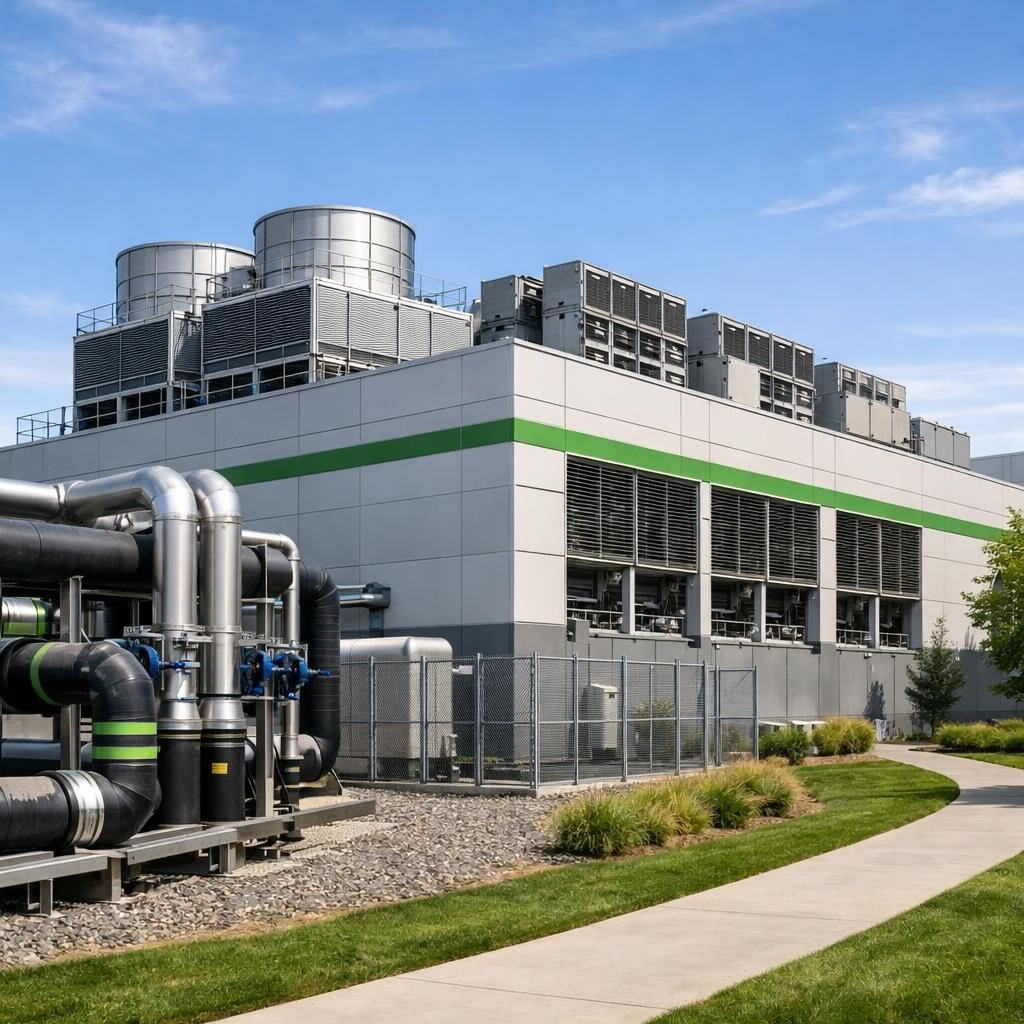
Data centers have become a testing ground for how large tech firms balance growth with accountability. In recent coverage, data centers and environmental transparency are back in the headlines as the US debate over where and how multi‑billion projects sit with local communities intensifies.
Reuters’ briefing ties together projects paused after local pushback with investors demanding site‑level water usage and energy data, highlighting how data centers must justify growth to communities.
The big four — Amazon, Microsoft, Meta, Google — face questions about how fast data centers capacity grows while water resources and grids in host communities are stressed, and investors want clearer climate metrics and accountability.
data centers and environmental transparency in the 2026 landscape
Reuters notes that multibillion‑dollar bets have been paused or canceled as residents push back and regulators demand more rigorous disclosures. Investors argue that site‑level visibility is essential to gauge operational risk and to plan for replenishment of scarce water supplies as data centers grow. The conversation is shifting from pledges to checks, and environmental transparency sits at the center of this change.
Investors push for site-level data on water usage and energy in data centers
Trillium Asset Management has filed a climate‑resolution with Alphabet, seeking clarity on how Alphabet will meet its climate targets amid rising energy needs. Green Century Capital Management is weighing an Nvidia‑related climate resolution as the AI wave continues. The Reuters report notes Google emissions rose by about 51% from 2020 to 2024, despite a pledge to cut them by 2030. The data points show why investors demand more detail. Closed‑loop cooling systems have reduced water usage for some players, but disclosures remain inconsistent across the four giants. environmental transparency remains uneven across disclosures.
Water usage data are inconsistent: Mordor Intelligence estimates North American data centers used nearly 1 trillion liters in 2025, a figure that alarms local leaders and ratepayers. Meta, Google, Amazon and Microsoft have introduced closed‑loop cooling in some facilities, yet water usage reporting lags for owned sites, leased space, and under‑construction projects. Google’s 2025 report covers both owned and leased sites but omits third‑party facilities; Amazon and Microsoft report total water usage without site‑by‑site breakdowns. A spokesperson from Amazon says they are increasingly disclosing site‑level water usage and are investing in efficiency, new energy sources, and reducing water draw.
Industry observers stress that site‑level data helps identify operational risks and the real impact on local water supplies. Jason Qi, lead technology analyst at Calvert Research, cautions that without granular data, communities cannot assess risk, nor can they trust that plans to replenish water will work in practice. environmental transparency remains a central governance issue. A Microsoft spokesperson said sustainability is a core value and that the company is accelerating solutions for long‑term impact. A Google spokesperson declined to comment, and Meta did not respond to a request for comment. Dan Diorio, vice‑president of the Data Center Coalition, notes that transparency and early engagement can ease fears and build trust with ratepayers.
Looking ahead to 2026, the data centers ecosystem will likely demand more consistent metrics, better external verification, and clearer governance around climate targets. If investors continue to press for site‑level disclosures on water usage and energy intensity, tech giants may accelerate improvements in cooling, leakage prevention, and water replenishment strategies. The industry can turn scrutiny into a productivity boost, as open data can reduce reputational risk and help cities plan for growth without sacrificing resources.
We invite you to share your thoughts in the comments below.
Special thanks to Reuters for the original reporting and context. For the full coverage, visit Reuters coverage.
Practical steps for companies and communities
- Publish site-level metrics: disclose water use, energy intensity, and cooling methods by site to improve risk assessment.
- Increase external verification: engage third-party audits for climate targets and water replenishment plans.
- Enhance community engagement: share timelines, potential resource impacts, and steps to mitigate effects on ratepayers.
- In data centers, invest in efficiency: accelerate cooling innovations and pursue diversified energy sources to reduce water draw.
FAQ
- Why is site-level data important? It helps communities and investors understand a facility’s real impact on local resources and grid reliability.
- What counts as environmental transparency? Clear disclosure of water, energy, cooling methods, and governance around targets and replenishment efforts.
- Are there standard metrics? Industry groups and regulators are pushing for consistent, independently verified metrics, but standards vary by region and company.