

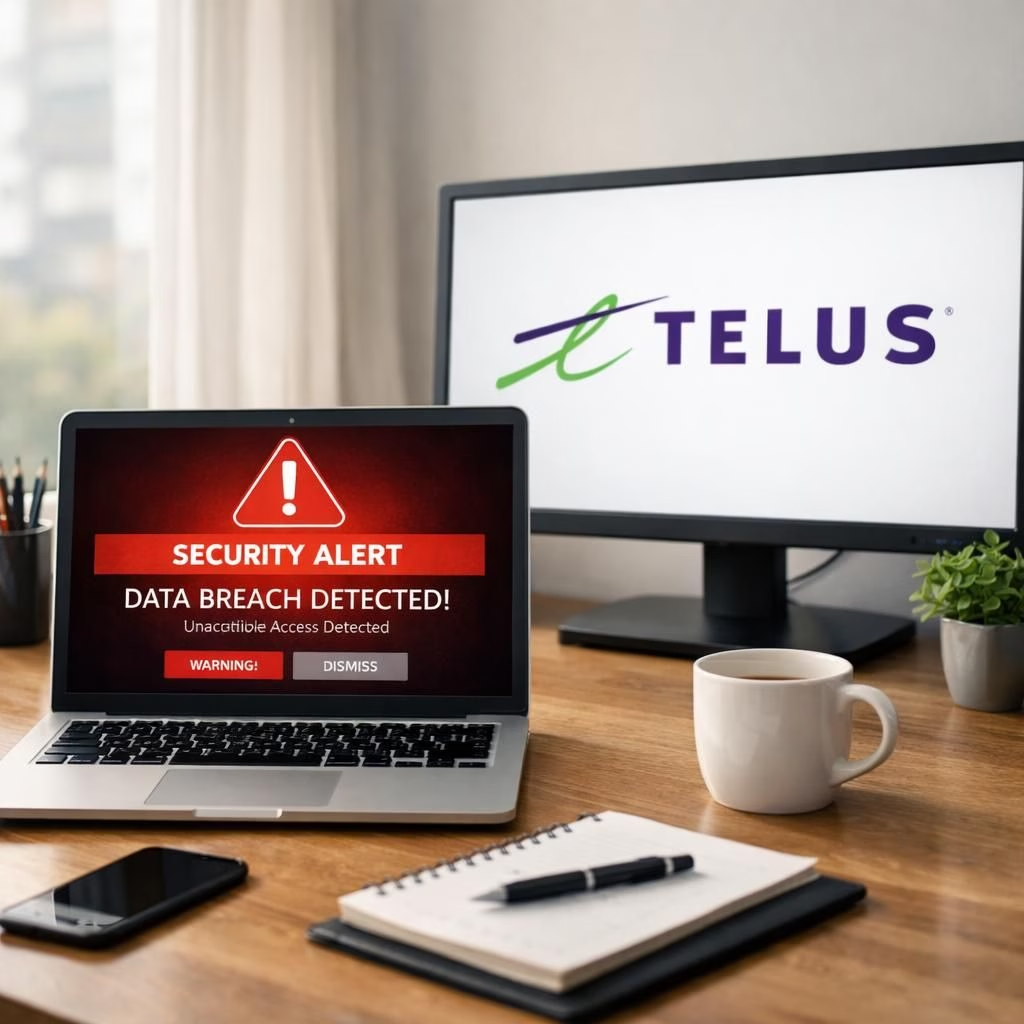
In 2026, Telus — a leading player in Canadian telecommunications — disclosed unauthorized access to a subset of its systems. This breach, as claimed by the hacker group ShinyHunters, reportedly involved 700 terabytes of data. Telus says it is actively investigating, with the full scope and impact still under development. This moment spotlights cybersecurity and telecommunications alike: one breach can test defenses, response plans, and customer trust. It’s a reminder that in a connected world, resilience is not a solo sport.
cybersecurity lessons from Telus
Detection matters; the faster you notice, the less data slips away. Telus’s experience underlines robust monitoring, rapid containment, and clear playbooks. In cybersecurity terms, reduce dwell time and improve door control. telecommunications firms must embrace zero-trust, least-privilege access, and MFA. Training and tabletop exercises matter as much as tools. Threats evolve daily, so speed and culture trump sheer gadgetry.
Experts emphasize that sustained cybersecurity maturity hinges on people and processes, not just technology.
telecommunications resilience in incident response
For the telecommunications sector, resilience means clear communication and vendor collaboration. Interconnections between retail portals and carrier links create both risk and opportunity. Robust encryption, network segmentation, and backups save time and reassure users. Telus’s case remains under review, yet the telecommunications sector stays hopeful. Investing in detection, response playbooks, and people pays dividends in confidence. The goal is to keep the lights on and learn from the tale ShinyHunters tells.
Original Reuters coverage: Reuters article — thank you for the reporting.
What do you think? Share your thoughts in the comments.
For broader context, industry moves shaping the security conversation include EU clears Google’s Wiz cybersecurity deal, Mesh Security raises, and coverage of major data breaches Massive data breach coverage.
Practical steps for organizations
- Build a formal incident-response plan with defined roles and runbooks.
- Adopt zero-trust access and enforce MFA across all platforms.
- Regularly train staff with tabletop exercises and phishing simulations.
- Segment networks, encrypt data at rest and in transit for telecommunications environments, and ensure reliable backups.
- Establish continuous monitoring to shorten dwell time and speed containment.
FAQ
- What happened at Telus? A breach reportedly exposed as much as 700 terabytes of data, with ShinyHunters claiming the theft. Telus says it is investigating and the scope remains under review.
- What should customers do to stay safe? Update devices, enable MFA, watch for phishing attempts, and review account activity.
- What does this mean for the industry? It underscores the need for robust incident response, zero-trust strategies, and continuous monitoring across telecommunications ecosystems.
Conclusion
Breaches like this test both technology and people. For operators and customers alike, the takeaways are clear: invest in detection, response playbooks, and a culture that prioritizes security. The goal is resilience that benefits everyone in the chain.