

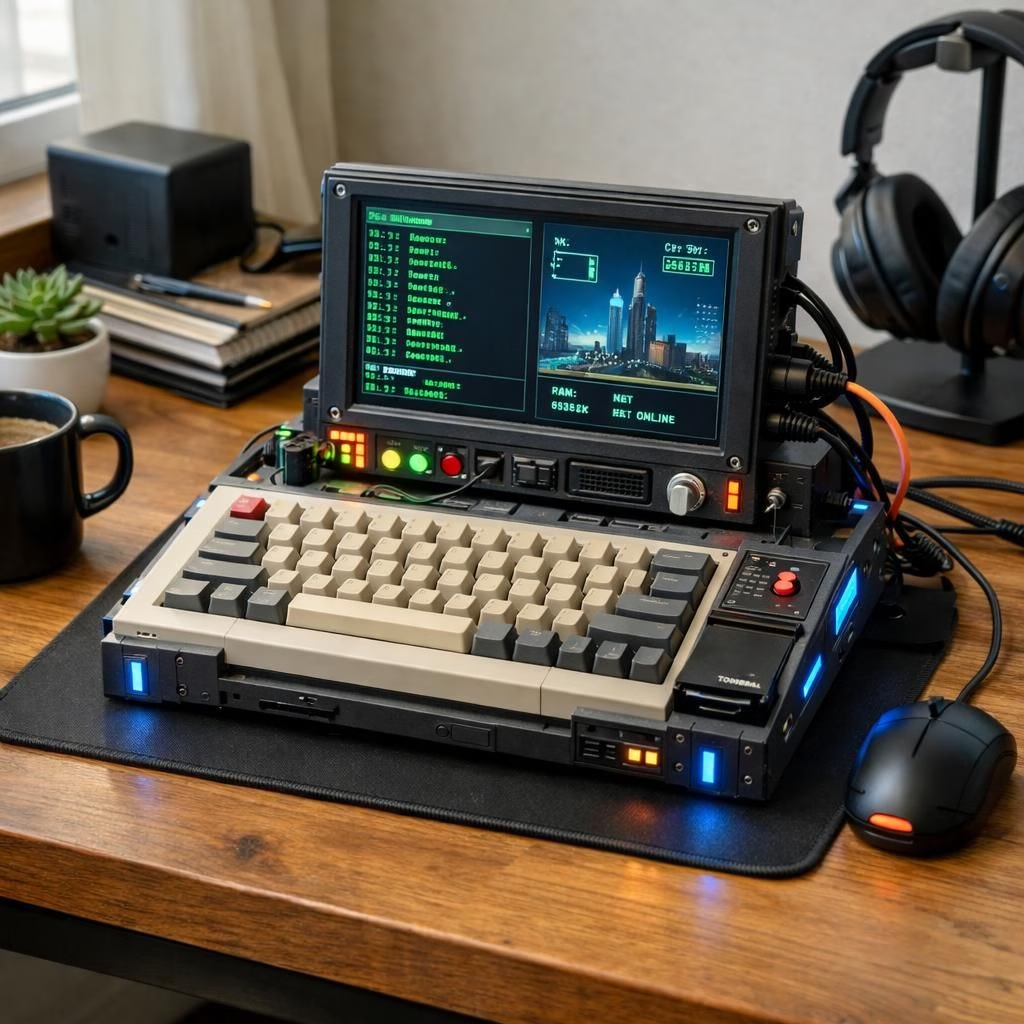
Cyberdeck dreams aren’t museum curiosities anymore. This TechDIY movement puts privacy-minded hardware into dorm rooms, kitchens, and coworking spaces, turning DIY projects into practical tools, learning aids, and a bit of whimsy. Cyberdeck kits emerge from repurposed parts and open software, yielding retro-futurist workstations that respect your data.
Cyberdeck roots and the TechDIY ethos
In the earliest mornings of hacking, a cyberdeck meant a portable terminal that shrugged at surveillance while surfacing curious software tricks. The impulse remained simple: build something that works, and keep your information yours. The TechDIY ethos—hands-on learning, open circuits, and shared knowledge—pushed builders to swap expensive buys for clever, cheaper components. By 2026, the Cyberdeck movement has evolved from a niche curiosity into a learning platform, a design philosophy, and a way to demonstrate that privacy and play can co-exist.
Hands-on guide to a safe TechDIY Cyberdeck build
First decide your purpose. Are you after a portable coding rig, a private chat device, or a tiny server you can carry to a cafe? Framing this clearly keeps you focused, and it keeps the Cyberdeck costs honest. When you set goals, the TechDIY path stays accessible. Next assemble a hardware kit you can trust: a compact SBC (single-board computer) or a mini PC, a reliable power source, a small display, a keyboard you won’t hate after a week, and a sturdy case. The trick is to repurpose what you already own or can borrow from friends, making Cyberdeck building a social project as much as a technical one.
Software choices matter as much as hardware. Start with a minimal, privacy-respecting OS and a few open-source tools that you actually use. The TechDIY principle here is to avoid bloat and to keep your attack surface slim. A secure container workflow, encrypted messaging, and offline-first habits help your Cyberdeck stay useful in 2026 and beyond.
TechDIY ethics and practical tips for a Cyberdeck
Keep the system lean. Replace proprietary services with local, open alternatives whenever possible. Back up regularly, but avoid over-reliance on cloud sighs of relief. If you must connect to a public network, use a trusted VPN and a firewall. The Cyberdeck thrives on control: you decide what data leaves your desk and when. The TechDIY mindset is about learning through doing, not about chasing the latest gadget.
Why Cyberdeck shines in the AI era: a TechDIY perspective
AI tools promise power, but they also promise data leakage, tracking, and feature creep. A Cyberdeck built with careful design choices gives you a sandbox where you test AI ideas without handing over your entire life to a clever algorithm. The TechDIY approach invites you to run models locally, prototype small applications, and share insights with peers. In 2026, the Cyberdeck remains a symbol that privacy, curiosity, and craft can coexist with modern AI.
Community matters. You will learn faster by watching a neighbor’s build, reading a forum thread, or following a YouTube sequence about safe wiring, power management, and software setup. The TechDIY world loves to iterate: every mistake becomes a lesson, every finished device a badge of perseverance. A Cyberdeck project gets better when you collaborate, document, and celebrate small wins with your circle.
Safety first, style second. A well-ventilated case, quiet cooling, and clean cable management prevent overheat issues that ruin a long night of tinkering. The Cyberdeck thrives when users treat their hardware with care and track their own progress, not their followers’ expectations. The TechDIY community keeps the vibe friendly, practical, and a little bit playful.
Getting started at home is surprisingly approachable. Start with a weekend build, then expand as your skills grow. If you want, you can document your steps as you go and publish them for others to learn. The goal is to create a portable, privacy-preserving workspace that matches your needs, not a flashy gadget that drains your budget. A well-planned Cyberdeck becomes a private lab, a travel companion, and a conversation starter all in one.
Every journey deserves a little guidance. If you’re curious about where to begin, try joining a local maker group or an online TechDIY circle. Share your progress, ask questions, and collect small victories along the way. Cyberdeck craft is a spectrum—from a simple single-board rig to a full-blown portable workstation. The key is to keep learning and stay curious, no matter how many LEDs you wire up.
To close, a friendly reminder: the path of Cyberdeck and TechDIY is a quiet rebellion. It’s about curiosity, privacy, craft, and shared knowledge. If you’re up for it, tell us about your own build, your preferences, and the hurdles you faced. Please share your thoughts in the comments section below; your experience could spark inspiration for someone else starting a similar journey.
Original source inspiration: TechCrunch article ‘Cyberdecks are having a moment, rejecting big tech surveillance with style and substance’. Thank you to TechCrunch for the original concept and inspiration. Read more at TechCrunch.
Practical steps for a Cyberdeck build TechDIY
- Define your goal: portable coding rig, private chat device, or a tiny carry-anywhere server.
- Choose a compact SBC or mini PC, plus a reliable power source and a small display.
- Pick a keyboard you enjoy typing on and a chassis that fits your mobility needs.
- Install a privacy-first OS and essential open-source tools to avoid bloat.
- Incorporate a secure container workflow and offline-first habits for resilience.
FAQ
- What is a cyberdeck?
- A portable computing setup designed for privacy, experimentation, and flexible workflows, often built from off-the-shelf hardware and open-source software.
- Do I need advanced hardware skills?
- Not necessarily. Start with a simple kit, follow tutorials, and learn by doing. Community help is common in TechDIY circles.
- How can I keep my data safe on public networks?
- Use a trusted VPN, enable a firewall, and keep software up to date. Practice offline-first habits where possible.
Conclusion
The journey with Cyberdeck and TechDIY is a quiet rebellion that favors privacy, curiosity, and craft. Start small, document your steps, and share what you learn to inspire others on a similar path.
References
- TechCrunch: Cyberdecks are having a moment, rejecting big tech surveillance with style and substance
- Electronic Frontier Foundation — Privacy basics
- Privacy International