

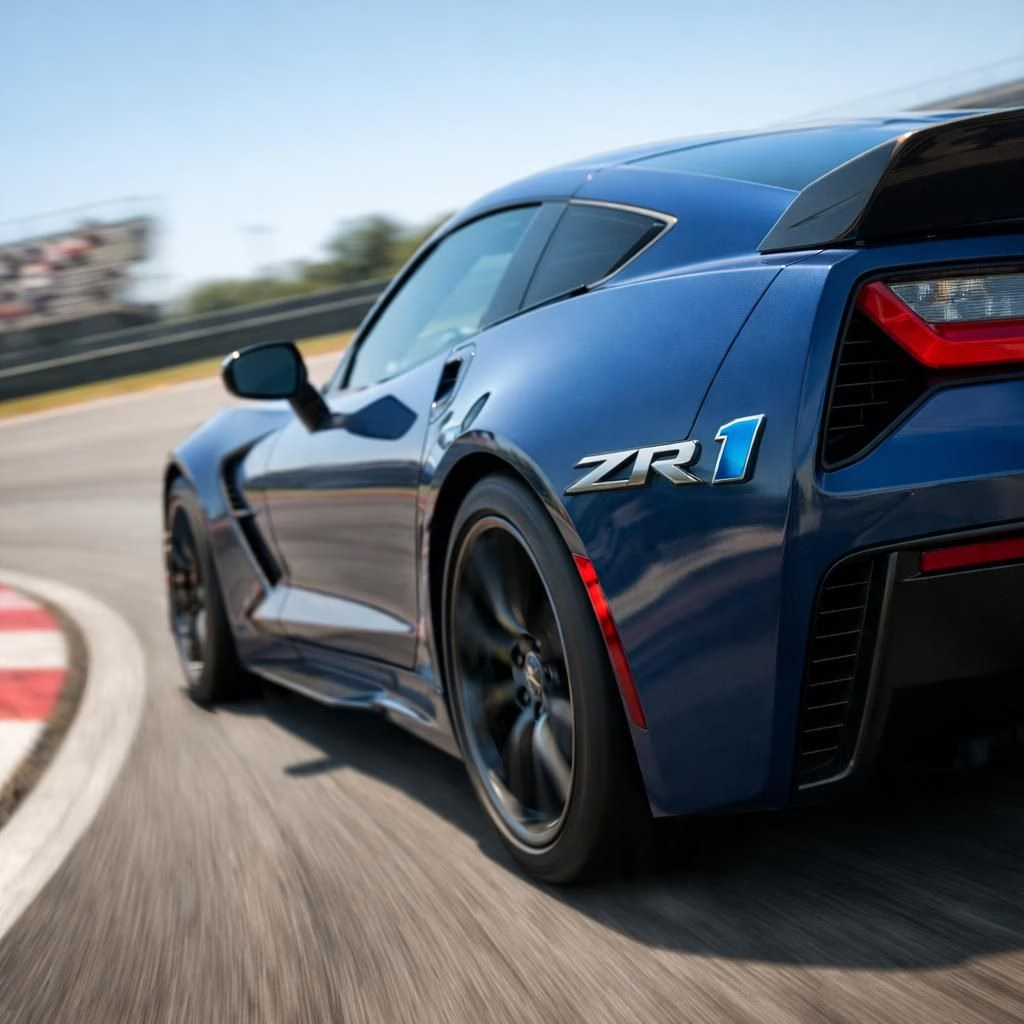
Car lovers and data nerds alike watched with bated breath as the Corvette ZR1 blazed into new territory, chasing the race world’s favorite metric: Lightning Lap speed. On a sunlit track, the ZR1 edged out the McLaren Senna by 0.7 seconds, a margin that sounds small until you realize it was enough to make a stopwatch sigh with respect. In plain language: this is a victory for the American horsepower crowd and a polite nudge to the rest of the hypercar circus.
While headlines captured the headline, the ZR1’s triumph sits at the intersection of raw power and patient engineering. This isn’t a one-lap miracle; it’s a demonstration of what happens when a vehicle’s core design goals—stability, grip, straight-line speed, and balanced handling—are tuned with intention. And yes, the ZR1’s noise was part of the show. The engine roared in triumph, a reminder that performance can be loud, precise, and oddly musical when tuned by people who know their way around a bore and a supercharger.

Car Spotlight: Corvette ZR1 Nails Lightning Lap Benchmark
The numbers tell a neat story. The Lightning Lap benchmark, widely cited by major automotive outlets, has a history of exposing the best tuning combos, and the ZR1 didn’t disappoint. The ZR1’s 5.2-liter V8 (supercharged, of course) paired with a chassis tuned for grip and a transmission tuned for speed delivered a lap time that turned a few heads and confirmed what enthusiasts already suspected: big American V8s can still win on a proper track. The aero elements are modest in appearance but effective in practice, reducing drag just enough to keep the front end planted while allowing the rears to bite down without twitching at the exit. This isn’t just brute force; it’s a balanced equation that rewards precision and preparation.
On the stopwatch, the ZR1 beat the McLaren Senna by 0.7 seconds on the Lightning Lap benchmark—an edge that may look small on a screen but translates to a feeling you can hear as the machine exits a turn with confidence. The Senna is a formidable opponent, crafted for corner speed and ultimate featherweight agility. The ZR1 didn’t copy that playbook; it wrote a hybrid script that leaned into torque, stability, and a willingness to use the track’s grip to its advantage. Enthusiasts know these nuances are where the true stories live: the numbers are important, but the engineering choices behind them are what sustain them over many laps and many weather days.
Lightning Lap Dynamics: Why the ZR1 Was Faster This Day
Lightning Lap isn’t just a single dash of speed; it’s a composite test that rewards a car’s ability to manage heat, tires, steering feel, and throttle response under race-like load. The ZR1’s speed advantage came from a combination of aero balance, tire management, and a drivetrain that communicates clearly to the driver. It isn’t magic; it’s a careful choreography: the machine stays planted through the curves, the power is available where it matters, and the brakes offer confident feedback as entry speeds climb. The result is a lap that feels effortless, even when the clock is biting at the margins.
For the crowd, this result is both a confirmation and a tease. It confirms that the big-name American muscle can compete at the highest level of track performance, not just straight-line speed. It teases the rest of the industry to push their own limits and to rethink weight distribution, aerodynamics, and cooling in a more integrated way. Lightning Lap fans will tell you the delta isn’t only about power; it’s about how well the machine communicates, how predictable it remains under load, and how tire health holds up under pressure. In other words, it’s about the marriage of engineering discipline and driving courage, a synergy that makes each lap feel like a tiny victory parade inside the cockpit.
There’s also a pragmatic lesson for enthusiasts and professionals: the ZR1 isn’t just a novelty act. It demonstrates that modern performance machines can blend high-speed stability with meaningful corner speed, and that a proper tune can unlock value across a whole track session. The result is a machine that doesn’t just chase time; it invites a discussion about how to build a more capable machine that can be enjoyed by the everyday driver on weekends and the professional on race days alike. Lightning Lap results are rarely a door to the future, but they are often a doorway to what the next generation of performance cars might strive for.
Some observers will call this a validation of big-displacement, high-torque design philosophy. Others will view it as a reminder that the road-to-track transition is about calibration, not bravado. Either way, the ZR1 has earned its place in the conversation, and it’s a perfect poster car for anyone who believes that speed can be elegant if it’s well engineered. Lightning Lap fans will note the delta with curiosity, and they’ll be right to do so; tomorrow’s track-day hero may learn from today’s lessons, especially when a machine like this demonstrates what disciplined tuning can achieve.
As we close the chapter on this particular Lightning Lap, the takeaway is simple: the Corvette ZR1 has proven that American performance engineering continues to surprise, delight, and challenge the status quo. The lap was a showcase, the machine behaved, and the clock was kind enough to record it with clean digits. If you’re keeping score at home, this is the kind of story that makes a gearhead grin and a journalist sigh with reluctant admiration. Without a doubt, this moment gives the ZR1 a bright badge on the sleeve of high-performance history.
Lightning Lap devotees will tell you the delta is part science, part theater, and part timing. The ZR1’s achievement is a reminder that perseverance and smart engineering can push boundaries without the need for hyperbole. For fans of the sport and the mechanical arts alike, this is exactly the kind of result that invites a deeper dive into the why behind the numbers.
To our readers: what do you think this means for the future of performance machines in 2026 and beyond? Share your thoughts in the comments and join the discussion about how this result shapes your expectations for the next generation of track-ready machines.
Special thanks to Jalopnik for the coverage that sparked this conversation and to Car and Driver for the Lightning Lap framework that helps us quantify these moments. Original article link: Original Jalopnik coverage. Your thoughtful engagement keeps the conversation alive and evolving.
Thank you for reading, and if you enjoyed this take, feel free to share the article with fellow car enthusiasts who love a good blend of humor, engineering insight, and a dash of sarcasm about the horsepower era.
Note: If you want to see the image that inspired this post, it’s described in the prompt and filename below for DALL·E 3 generation and attribution.
Image prompt: A clean, realistic photo-style image of a Chevrolet Corvette ZR1 on a sunlit race track, slight motion blur to imply speed, focusing on the car badge, with minimal crowd in the background.
Image filename: car_lightning_lap_corvette_zr1.jpg
References and attribution
- Special thanks to Jalopnik for the original coverage and to Car and Driver for the Lightning Lap framework used for context in this article. Original Jalopnik link: https://www.jalopnik.com/2109419/chevy-corvette-zr1-sets-car-and-driver-lightning-lap-record/