

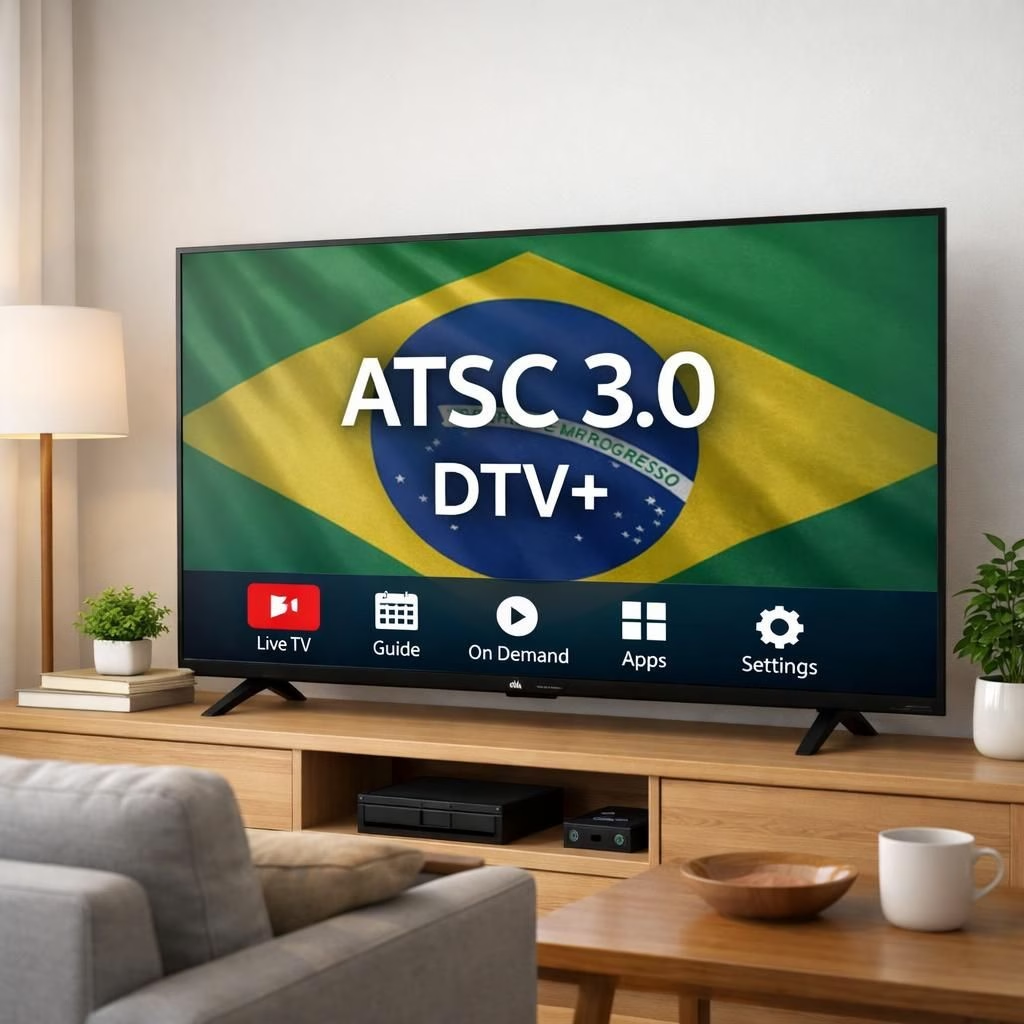
Brazil officially embraces the physical layer of ATSC 3.0 for its DTV+ platform — also known as TV 3.0 — signaling practical optimism about international uptake of the U.S.-built standard that blends broadcast with internet protocol. The plan includes pilot tests timed to ride the spotlight of the 2026 FIFA World Cup, turning a sporting event into a live test bed for transmission efficiency, reliability, and user delight. A diverse, multinational panel — including Brazil, India, South Korea, and the Caribbean — discussed rollout timing, regulatory measures, and how TV 3.0 could outplay streaming in the living room, at least on a well-tuned afternoon. FCC officials stressed broadcasters’ public-interest commitments, a nod to responsibilities that go beyond edge-case features and into everyday access for viewers.
ATSC 3.0 and DTV+ — A Friendly Copenhagen of Tech and Touchscreens
Regulatory proposals in Brazil include a dedicated DTV+ button on remote controls and placing the main DTV+ app at the top of TV interfaces. This is the Providence of TV in action: simplify, prioritize, and make the user journey feel almost inevitable. ATSC 3.0 brings the underlying technology, but the aim is practical: preserve free-to-air value while unlocking the rich potential of TV 3.0 through a smooth, app-first experience. In a country where over 212 million people live and about 80% watch over-the-air television, moving toward TV 3.0 is framed as a dignity-and-access upgrade as much as a tech upgrade. The narrative is not about flashy features alone; it’s about making the right choices so families can choose TV 3.0 without asking IT for permission.
ATSC 3.0 Momentum: Practical Outcomes Across Regions
ATSC 3.0 acts as the bedrock for DTV+ in Brazil, yet the conversation is about momentum that travels beyond borders. The Caribbean, India, and North America are watching Brazil’s progress with a mix of curiosity and competitive good humor. FCC Commissioner Olivia Trusty framed the discussion around the public-interest commitments broadcasters must maintain as technology evolves. Her remarks underscored that ATSC 3.0 deployments should continue to expand access, protect consumer interests, and adapt to a changing media ecosystem. The message: with the right policies, broadcasters can thrive while offering robust, affordable options that blend the best of broadcast and online delivery, keeping the public front and center as TV 3.0 grows.
Brazil’s Minister of Communications, Frederico de Siqueira Filho, emphasized that broadcasting is more than media or entertainment — it’s a pillar of democracy and social inclusion. He highlighted that free-to-air television remains the universal service across regions and income levels. As the country steps into the TV 3.0 era, the objective is to preserve these core values while unlocking new capabilities. TV 3.0, in this telling, becomes a bridge between universal access and modern interactivity, a bridge that Brazil intends to build with care and a dash of Brazilian optimism for the future of TV 3.0.
Octavio Pieranti, a regulator at ANATEL, outlined concrete measures designed to ensure TV 3.0 enjoys equal footing with streaming services on new smart TVs. The package includes the remote button dedicated to DTV+ and positioning the main DTV+ app prominently in setup menus. Such rules are framed as a new kind of consumer-friendly governance, one that keeps the interface intuitive while inviting innovation. ATSC President Madeleine Noland praised Brazil’s progress as remarkable, noting momentum across the Caribbean, India, and North America. In a world where technology evolves rapidly, this cross-regional exchange helps shape a future where TV 3.0 isn’t a niche but a mainstream option for everyday viewing. The broader story is one of systems thinking: how to weave broadcast reliability with internet flexibility, so that TV 3.0 feels like a natural upgrade rather than a distant upgrade.
Industry voices and regulators alike recognize that a World Cup window is a powerful catalyst. The 2026 tournament offers a practical stress test for TV 3.0 workflows, from signal robustness to the user interface choreography at the point of sale. The hope is that fans will notice fewer dropouts, quicker channel changes, and more streaming-integrated features without losing the feel of live, local broadcasting. This is a chance to prove that ATSC 3.0 and DTV+ can coexist with streaming in a way that feels seamless and valuable, not like a forced upgrade dressed up as a revolution. TV 3.0 could become a catalyst for smarter, more resilient smart TVs that handle both broadcast and internet content with equal aplomb.
The Practicalities: Remotes, Interfaces, and the Frictionless Experience
Beyond the rhetoric, the practical steps are clearer. The DTV+ remote button is small but symbolic, a promise that power users and casual viewers alike won’t hunt through menus to find the thing they want. The top-app placement means the DTV+ ecosystem loads quickly, an acknowledgment that user patience is a scarce luxury in a world of rapid refresh rates and endless streaming catalogs. These choices aren’t just about branding; they’re about real-world usability and inclusion for households that rely on OTA signals and minimal setup. TV 3.0 is not just a tech stack; it’s a user experience project with symbolic and practical implications alike. The approach in Brazil aims to show that ATSC 3.0 can be as welcoming as it is technically capable, with DTV+ acting as a doorway to a broader information ecosystem, enriched by IP-based delivery but anchored by robust broadcast reliability.
As global discussions continue, the shared takeaway is that TV 3.0 represents a recalibration of how we think about television. It’s not about replacing streaming but about blending the strengths of both worlds. ATSC 3.0 offers resilience and multicast efficiency; DTV+ delivers rich interactivity and app-centric experiences; TV 3.0 ties them together into a coherent, accessible platform. In Brazil, the story is especially meaningful because it is played out at a scale that matters: a country with a deep commitment to universal access and a population that already spends a lot of time in front of the TV. The World Cup 2026 timeline is not just a deadline; it’s a chance to show that TV 3.0 can deliver a better, more inclusive viewing experience without sacrificing the simplicity that families expect from their televisions.
Ultimately, this is about more than a single standard or a single market. It’s a case study in how regulators, industry, and the public can collaborate to move toward a more connected, more reliable, and more enjoyable television future. The TV 3.0 pathway is not a fad; it’s a deliberate, thoughtful journey toward a shared technology future where ATSC 3.0 and DTV+ are the backbone, and where the practical benefits reach every living room with equal clarity.
If you’re curious about how this story unfolds in daily life, feel free to share your thoughts in the comments once you’ve had a chance to read through. We’d love to hear your experiences with ATSC 3.0, DTV+, and TV 3.0 in your region.
Original article reference and thanks: Special thanks to the original material for the groundwork and context of this update. You can review the source and author materials here: Original article and author bios.