

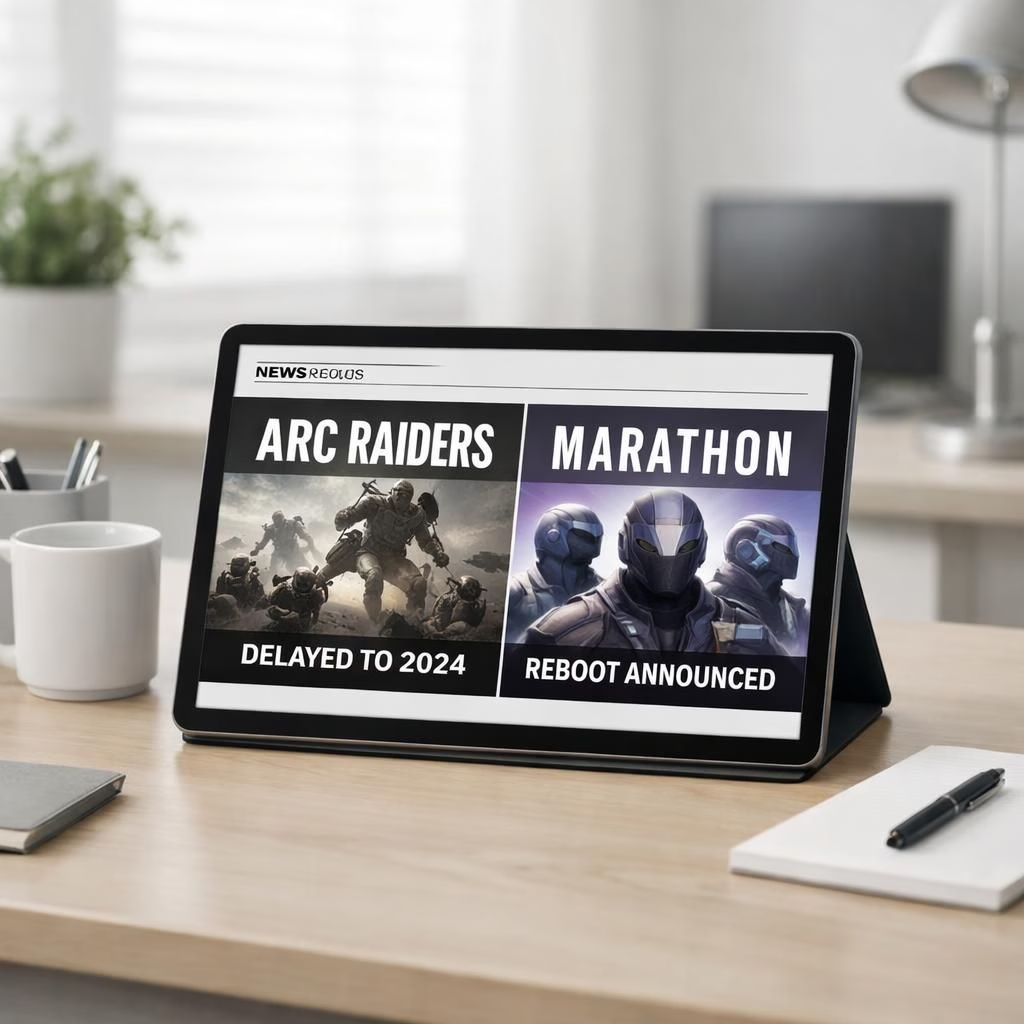
In ARC Raiders headlines and Marathon chatter, the post-release life of a game becomes a narrative sport of its own. The sprint from early buzz to late-stage patch notes often looks more like a marathon of social feeds than a straightforward review. Yet this week’s set of articles shows how the two ideas entwine: ARC Raiders as a case study in iteration, and Marathon as a symbol for long-form player engagement. Readers will find a mix of praise, critique, and pragmatic notes that remind us why tech journalism exists: to translate code into culture, and hype into something a bit more usable. The result is a playful, precise tour through the hype and the hard steps developers take to satisfy fans of ARC Raiders and Marathon alike.
ARC Raiders in the Marathon Era: Media, Metrics, and Mischief
Forbes celebrated an unusual turnaround, noting how ARC Raiders responded to feedback with patches, transparency, and a steady cadence. The piece shows a small studio reshaping expectations through clear timelines and practical notes. ARC Raiders Head Praises Unusual Marathon Turnaround became a clickable case study for this pattern. IGN then praised the studio’s responsiveness after a heavily critiqued playtest, framing the changes as a deliberate pivot rather than a defensible shrug. The thread ran longer as Forbes revisited the topic, highlighting map balance, extraction rhythm, and a community that tracks every patch like a scoreboard. Polygon chimed in with a sharper question: can the casual appeal of ARC Raiders coexist with deep system complexity in a Marathon-level long game? PC Gamer joined the chorus, noting real-time sentiment from streams and comment threads creates a daily, living audit of the game’s health.
Marathon Coverage and the ARC Raiders Fanbase: Signals vs Noise
The Marathon frame is not just about speed; it’s about endurance. Coverage often treats ARC Raiders as a rush of patches, but fans see a longer arc: a patch cadence that tests patience, then rewards it with meaningful balance tweaks. The media mix turns a single studio update into broader conversations about game design, resource allocation, and developer transparency. When outlets discuss Marathon as a metaphor for patient listening, ARC Raiders gains credibility as a live experiment in iterative design. Yet the dialogue can drift into noise: clickbait headlines, speculative predictions, and the occasional heated debate about who owns a game’s identity. The smart reader learns to separate signal from noise by watching what actually changes in code, not just what is claimed in press releases. This is where ARC Raiders shows a constructive paradox: a casual audience can grow into a dedicated community if the team maintains honest cadence and visible progress.
The Tech Details Behind the Hype: What the Turnaround Means for Players
From a player’s perspective, the turnaround’s value lies in concrete changes. Patch notes that explain what changed, why it mattered, and how it will be tested matter more than large promises. For ARC Raiders, balance tweaks to weapons, movement, and loot systems translate into faster, fairer matches. The Marathon tempo—frequent builds, open test windows, and accessible feedback channels—lets players feel heard without turning the game into a perpetual beta. This section highlights how a strong patch cadence reduces frustration and turns new content into something players actually experience as fresh rather than rumor. The takeaway is simple: good coverage aligns expectations with reality, and reality rewards clarity.
What the Coverage Gets Right and Where It Misreads
Many outlets capture the energy of ARC Raiders and the Marathon discussion, but some misread the fanbase’s needs. The best stories acknowledge that ARC Raiders isn’t merely a poster child for patch updates; it’s a living ecosystem where weekends, tournaments, streams, and fan theories shape the product. Critics who label the game as a one-note casual play hide the subtle mechanics that keep teams engaged for hours. In Marathon debates, some readers equate long-running updates with stagnation, when in fact cadence can reflect thoughtful iteration. The wiser take is to celebrate transparency, but demand measurable progress and credible test data. This combination helps the ARC Raiders brand stay resilient and the Marathon conversation stay grounded in code as well as commentary.
Practical advice for readers: track official patch notes, then test changes in a calm session. Favor sources that show before/after comparisons and real-world outcomes. When you see hype, search for specifics—numbers, dates, and reproducible behavior—before you commit to a strong opinion. The result is a healthier, more enjoyable ARC Raiders experience that respects the Marathon ethos: long-term, purposeful improvement rather than short-term sensationalism.
Final takeaways: ARC Raiders benefits from a transparent patch cadence; Marathon benefits from patient, thoughtful coverage that links game design to player experience. The synergy between developer communication and community feedback can turn a controversial launch into enduring engagement.
Original reporting and attribution: This analysis builds on a set of headlines covering ARC Raiders and Marathon from Forbes, IGN, Polygon, and PC Gamer. Special thanks to the original authors for their reporting, which inspired this playful synthesis. See the original article linked below for context and gratitude.
Original article (source): ARC Raiders Head Praises Unusual Marathon Turnaround (Forbes).
If you enjoyed this synthesis, share your thoughts in the comments and let us know how ARC Raiders and Marathon look from your screen.
Original sources gratefully acknowledged, and special thanks to Forbes, IGN, Polygon, and PC Gamer for their reporting that sparked this piece.
Practical steps for readers
- Track official patch notes and compare before/after changes.
- Test new updates in calm sessions to observe real-world impact.
- Follow a few credible outlets and note reproducible data instead of hype.
FAQ
- Why does ARC Raiders’ patch cadence matter?
- Because consistent updates help players trust the long-term design.
- How should readers approach Marathon discussions?
- Use Marathon as a lens for long-term engagement, not as a guarantee of balance.
- Why hyperlink Marathon in the body?
- To connect the discussion to a broader theme of patient iteration and listening to players.