

AI Security and Tag B in 2026 share a headline. Claude Mythos isn’t just a tech demo; it’s a talking point in regulators’ notebooks. Banks, insurers, and exchanges want to know if the model can spot vulnerabilities before criminals do.
AI Security in Practice: Mythos and the resilience playbook
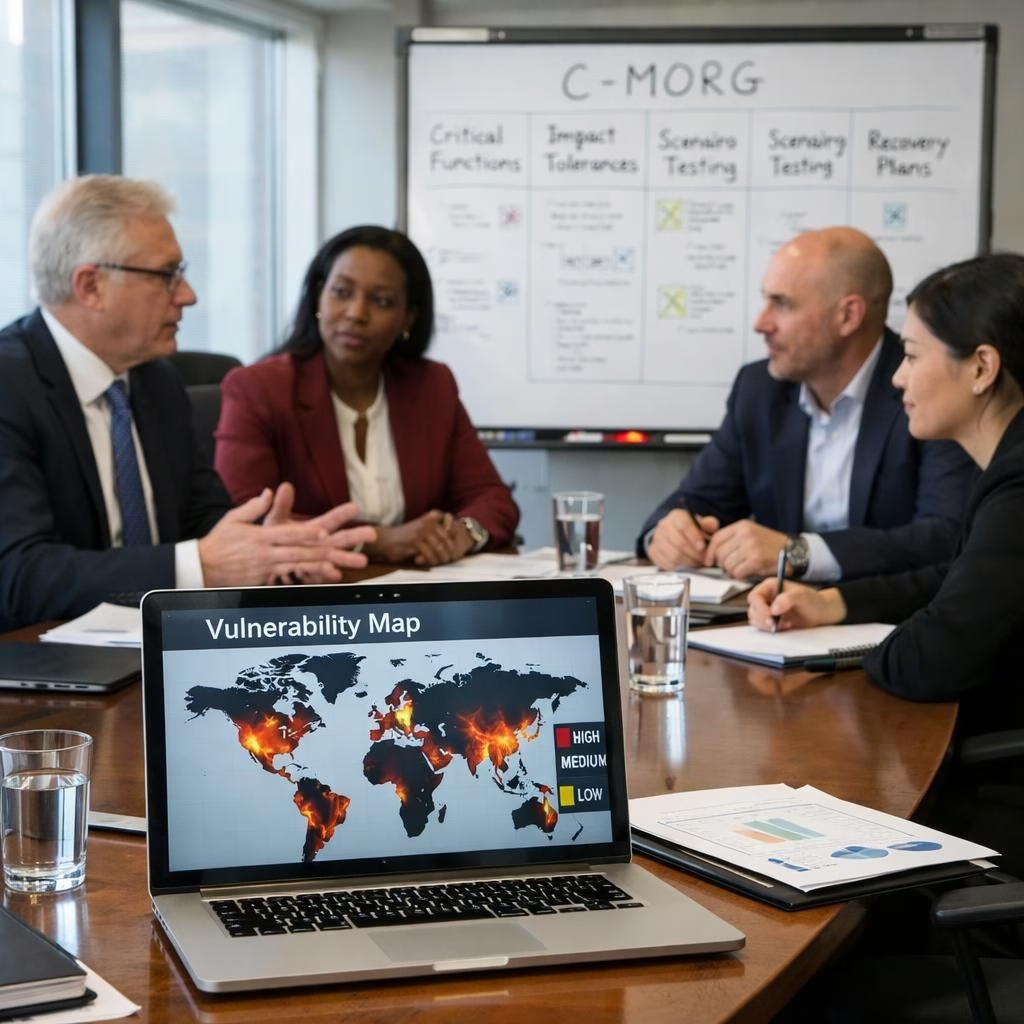
CMORG, the Cross Market Operational Resilience Group, sits at the table to translate AI Security risks into practical guardrails. The roster spans BoE supervisory risk leads and a major UK trade body, with eight banks, four infrastructure providers, two insurers, the NCSC, the FCA, and HM Treasury represented. Their aim isn’t to ban AI; it’s to keep critical financial services steady as new tools appear. They will discuss Mythos’ potential to change sector risk—from alerting and monitoring to incident response and recovery. The group operates like an orchestra: clear roles, shared aims, and simple data governance.
Regulators hope for a practical framework that helps lenders calibrate risk without damping innovation. The government’s Risk Institute has evaluated Mythos with Claude and ChatGPT, aiming for repeatable, trustworthy tests. The discussion also touches governance, access, and how to audit outputs from Mythos. No one pretends this is simple, but the goal is clarity, not catastrophe.
UK Finance and resilience: The cross-market roadmap
Beyond the boardroom chatter, the practical question is what this means for daily operations. The Bank of England can call a cross‑market session within hours if a threat appears, a readiness both lenders and infrastructure providers want to see in action. Tag B emphasis on data lineage and incident logging helps teams trace decisions and understand root causes. This matters for customers who rely on predictable service during volatile times.
Looking ahead, standardized testing for general‑purpose AI models used by lenders gains traction. The BoE’s PRA told bank leaders in 2025 that monitoring frequency matters more than dashboards, turning fear into facts with an auditable scorecard. That approach helps risk teams act decisively and keeps innovation on a sustainable leash. When Mythos sits in the risk picture, Tag B and policy must move in step, letting technology improve security without slowing growth. A clear focus on AI Security underpins risk scoring and mitigations.
External voices and ongoing scrutiny strengthen confidence. For a broader view, see official and industry analyses that discuss resilience, governance, and responsible AI use in finance.
FAQ
- Q: What is Claude Mythos and why does it matter to UK finance?
A: It’s Anthropic’s AI tool designed to detect vulnerabilities, with implications for resilience and governance in financial services. - Q: How are regulators preparing for AI‑driven risk?
A: They’re coordinating across CMORG with banks, insurers, and infrastructure providers to establish practical risk frameworks. - Q: What does this mean for daily operations in banks?
A: It means faster, coordinated responses and more transparent risk signals during incidents. - Q: Are there safety concerns with AI models?
A: Yes—safety, governance, and auditability are central to any deployment in finance.
References
External sources
- Bank of England — Operational resilience guidance
- National Cyber Security Centre (NCSC)
- Financial Times coverage