

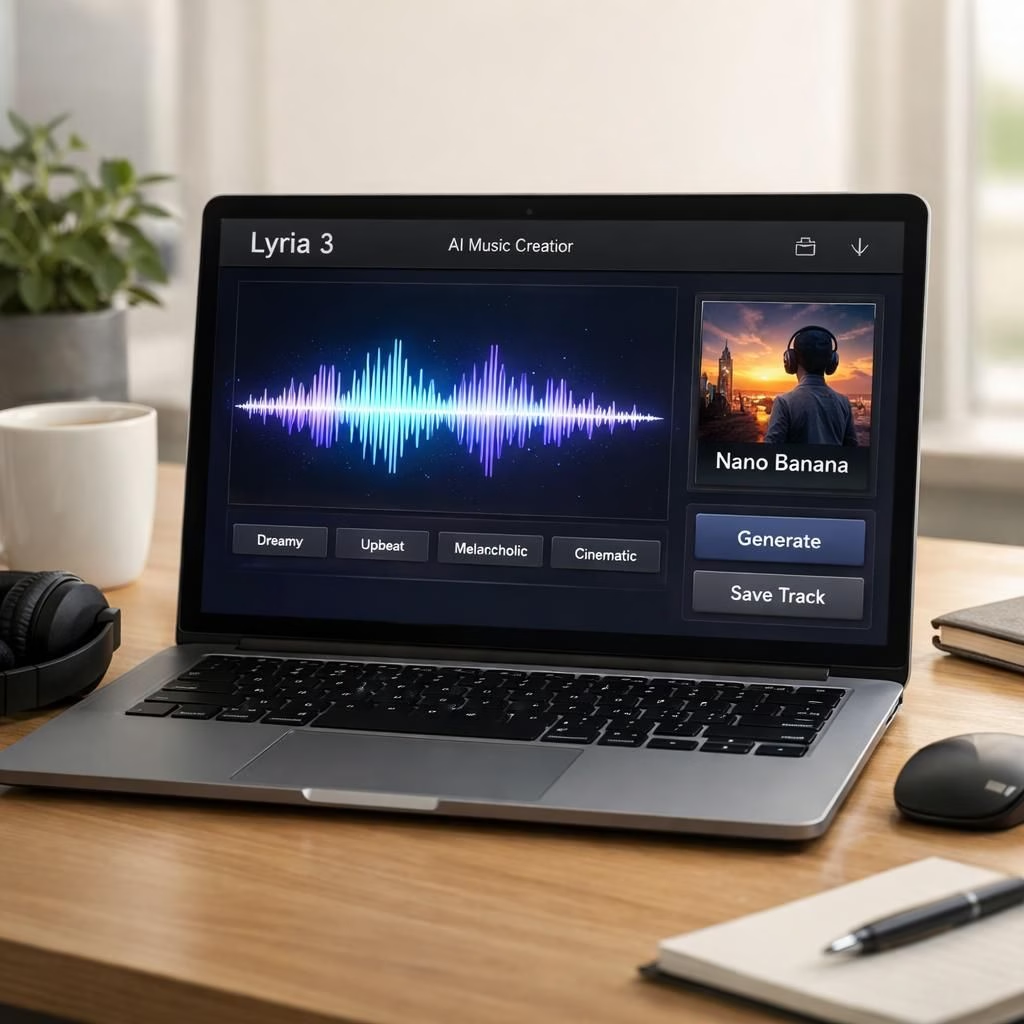
AI music and Gemini Lyria 3 are two words that feel like your favorite duo finally playing in the same studio. In 2026, Google is expanding access to AI music creation through the Gemini app, turning simple prompts, mood inputs, or even an image into a ready-to-listen 30-second track. If you want, lyrics can appear automatically, or you can skip straight to the vibes. The pairing of Gemini Lyria and AI music signals a playful, practical toolkit for creators who want speed without sacrificing curiosity. It’s not sci-fi; it’s a keyboard, a dream, and a little bit of algorithmic magic.
AI music in Gemini Lyria 3 era: what changes for creators in 2026
Here’s the win: you can describe what you want, drop in an image, and watch a track materialize in seconds. The process is friendly to non-musicians but robust enough for those who want nuance. The result is an AI-generated track that can include lyrics if you opt in. Google says Lyria 3 uses a fast, efficient engine, so you get results quickly with less waiting and more experimenting. The AI music you generate with Gemini Lyria also comes with an album-cover image created by the Nano Banana model, giving each track a tangible, shareable face. The remix catalog—preloaded AI tracks you can remix—provides a jumpstart for creators who enjoy tweaking rather than starting from scratch. This combination of AI music, fast generation, and remixability makes the creative cycle feel almost real-time, which is precisely what many modern creators crave.
Gemini Lyria 3 behind the scenes: prompts, lyrics, and SynthID
Need a quick example? The tool supports hints like nostalgia, mood, or a specific vibe. You can even rely on the model to generate lyrics for the 30-second piece, should you choose to let the device sing. More importantly, Google embeds an audio SynthID tag in each track. This helps verify AI origins and supports transparency for listeners who care about authenticity. On the copyright front, if you name a specific artist in your prompt, Gemini Lyria treats that as broad inspiration rather than a copy of that artist’s exact sound. The system insists it’s not foolproof, so user reports are encouraged when something feels too close to a real artist’s style. The practical upshot: creators get a legitimate tool, while listeners gain a way to confirm AI provenance when needed.
AI music and copyright: a friendly look at ethics and safeguards
Copyright concerns aren’t going away, but this approach is moving in a thoughtful direction. The goal is to respect agreements with partners while giving people room to experiment. If you request a sound that leans too heavily on a known artist, Gemini Lyria nudges you toward broad inspiration rather than direct copying. Still, the system acknowledges the edge cases where expression might tread into familiar territory. In those moments, Google invites users to report questionable outputs and flags potential infringements. The hope is to keep AI music fun and legal without stifling creativity or ignoring the real work artists put into revenue and recognition.
Practical tips for using Lyria 3 in 2026
Here are some handy pointers for tastemakers and hobbyists alike. Start with a mood or a brief, then add an image to help the robot lock in the vibe. With Gemini Lyria in your toolkit, ideas can turn into tracks almost instantly. If you’re pressed for time, let the model generate lyrics or skip them to keep things punchy. Explore the Nano Banana album-cover art generated for each track to give your piece a visual hook before you publish. If you love quick results, Dream Track integration extends to YouTube Shorts and Veo video, making it easier to publish short-form content that vibes with your audience. Some users will enjoy remixing from the built-in AI catalog to discover new textures and rhythms without reinventing the wheel. For power users, AI Pro or AI Ultra subscriptions promise higher generation limits, enabling longer projects and more iterations, though the specifics remain to be announced. AI music in 2026 isn’t just a toy; it’s a workflow.
Languages, accessibility, and the future of collaboration
Gemini Lyria 3 supports a growing list of languages—English, German, Spanish, French, Hindi, Japanese, Korean, and Portuguese—with more on the horizon. This makes AI music creation more accessible to a global audience. The collaboration angle is especially appealing: you can seed a track with human ideas, and Gemini Lyria 3 can fill in the rest with smart, respectful expansion. With tools like SynthID and clear safeguard guidelines, creators can navigate authenticity with more confidence. The result is a more inclusive, creative ecosystem where language barriers recede and ideas travel faster than ever.
From a user experience perspective, the combination of AI music and Gemini Lyria offers a streamlined, almost playful workflow. Yet it remains anchored in real-world concerns: copyright, attribution, and the ethics of machine-generated art. The mix of rapid generation, lyric optionality, and a visual album cover image makes each track feel like a complete package—ready to share, remix, or rework. And while the art may be created by an algorithm, the human touch of concept, mood, and intent remains central to the final result.
For listeners, this means more AI music options in the wild web of online tracks. For creators, it means new ways to experiment, test, and publish with confidence. The net effect is a more vibrant, if slightly surreal, musical landscape where technology and artistry meet at the click of a button. It’s not a guarantee of overnight fame, but it is a compelling invitation to explore if you have ever wondered what your inner composer would sound like if it rode shotgun with an efficient neural network.
Thanks to the original article for the summary and insights that helped shape this recap. If you want to dive deeper, you can read the primary source here: Original article.
We’d love to hear what you think about AI music in 2026. Do you see more opportunities or more risk? Share your thoughts in the comments below and join the discussion. Your perspective helps shape a kinder, smarter conversation about the future of AI in music.
Image credit and caption: This image depicts a simple, realistic desk setup with a laptop showing an AI music creation interface, a waveform, and a small album cover preview—capturing the vibe of Lyria 3 and its Nano Banana artwork. The scene is bright, clean, and approachable for readers exploring the topic.
References
- Ars Technica: Gemini can now generate AI music for you (no lyrics required)
- The Verge coverage on AI music and Gemini
- CNBC coverage on AI music and Google Gemini