

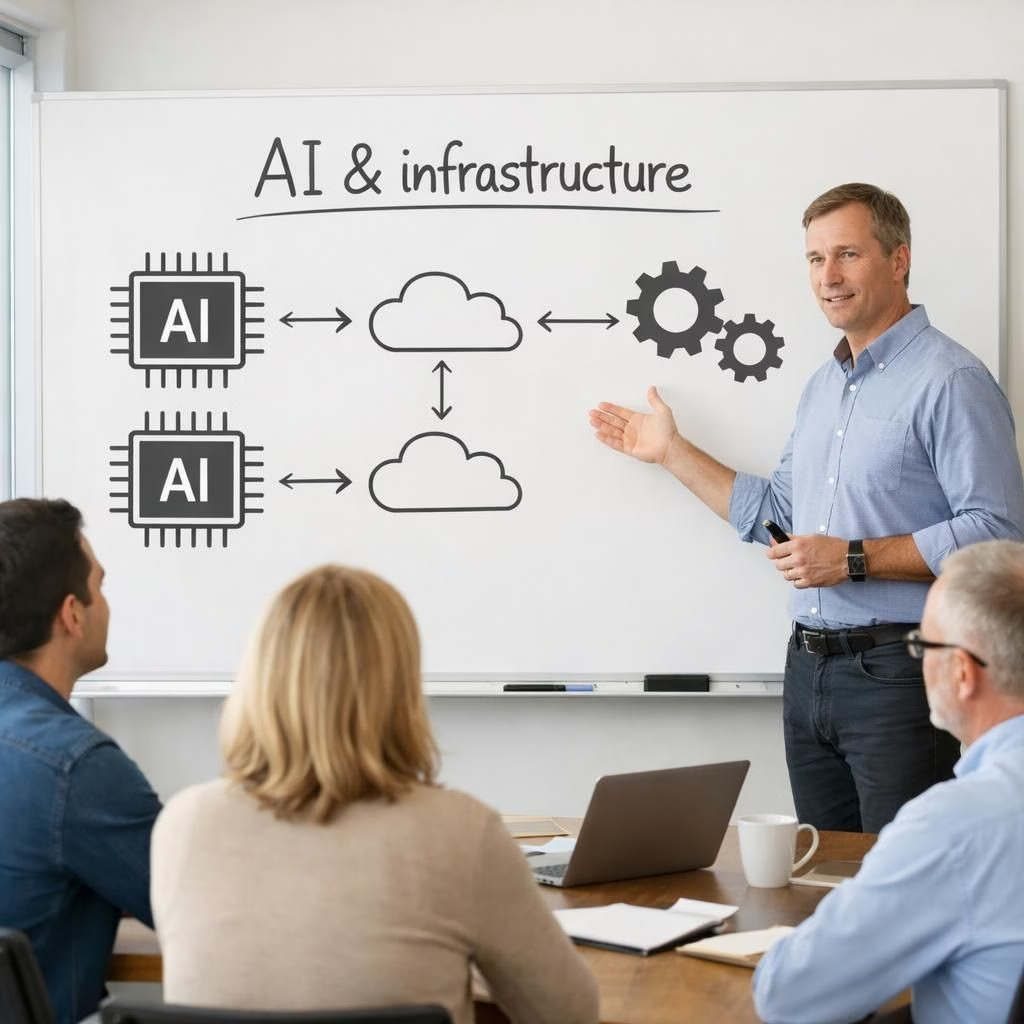
AI and infrastructure: 2026 turning point across industries
AI is not a flashy app; Huang argues it is foundational infrastructure, the essential backbone companies use to run, learn, and improve. AI is not a gadget to watch from the sidelines; it’s the platform that turns data into decisions, and decisions into momentum. The year 2026 marks a turning point. Models become more reliable and start delivering measurable economic value across industries such as drug discovery, logistics, customer service, software development, and manufacturing.
AI in practice across sectors
- Drug discovery and design are enabled by AI-driven screening and faster simulations.
- Logistics and supply chains gain speed and resilience from automated planning and optimization.
- Customer service and software development tooling improve with smarter automation and faster iteration.
- Manufacturing benefits include better quality control and predictive maintenance.
AI infrastructure in action: global buildout and governance
Huang notes the buildout is large and global. Products across drug discovery, logistics, customer service, software development, and manufacturing show clear product-market fit. This lifts demand for chips and AI infrastructure across the stack. The benefits are tangible: faster results, better quality, and smarter decisions.
This infrastructure wave is not a fad. It is the shared platform that helps teams reason about data, automate tasks, and move fast at scale.
Huang emphasizes practical progress. The AI infrastructure buildout will be large, global, and shared. It will touch many industries at once and not be confined to a single country or sector.
We are still early. Much of the infrastructure does not yet exist. Much of the workforce has not yet been trained. Much of the opportunity has not yet been realized. But the direction is clear. AI is becoming the foundational infrastructure of the modern world. The choices we make now—how fast we build, how broadly we participate, and how responsibly we deploy it—will shape what this era becomes.
Governance and infrastructure considerations
The practical question for 2026 is simple: who gets access to AI and how do we govern its use? The answer will emerge through procurement, deployment speed, standards, and safety guardrails. A well-orchestrated infrastructure approach promises faster, safer iterations and broader adoption across sectors, including drug design, supply chains, service desks, software tooling, and manufacturing.
Governance matters: clear rules, transparent processes, and inclusive access help ensure the benefits are shared. If we get this right, AI becomes not a luxury of the few but the shared backbone of modern business and government.
In sum, AI infrastructure is the new backbone of business. The trajectory will influence investments, labor-market shifts, and policy debates for years to come.
Takeaway: AI infrastructure underpins the next wave of digital transformation. Organizations should map where AI can unlock value and plan responsible deployment.
Share your thoughts in the comments below to join the conversation about how AI infrastructure will reshape your sector in 2026 and beyond.
Original article: Thank you to the original author for providing the source material.
External sources
For broader context on governance and responsible deployment, see:
OECD Principles on Artificial Intelligence,
World Economic Forum on AI governance, and
OpenAI safety research.