

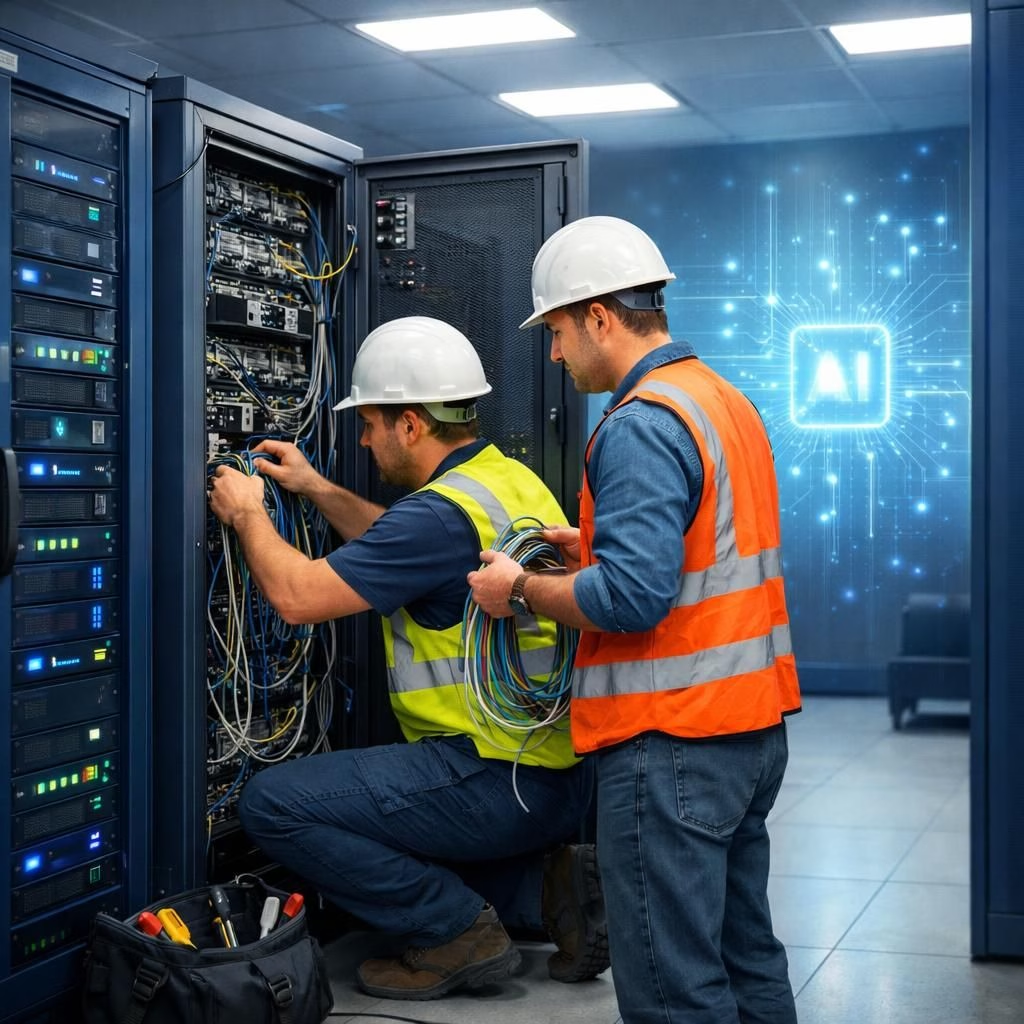
In 2026, AI and infrastructure get the glossy headline treatment as Nvidia CEO Jensen Huang reframes fears about automation into an invitation to ride a massive economic wave. In a March blog post, Huang notes that the current $700 billion wave of data-center investment tied to AI is only the opening act of a larger buildout. He writes, with a wink and a blueprint, that we have “only just begun this buildout” and that “trillions of dollars of infrastructure still need to be built.” The number game is bold, and the sentiment is sunnier than a server room on a summer day: scale matters, and the future is not merely a cautionary tale but a construction project with blueprints, cranes, and a lot of copper. When Fortune highlighted how this $700 billion figure dwarfs national GDPs and the market caps of major brands, Huang’s optimism lands as a practical dare: we’re just warming up. Meanwhile, McKinsey’s forecast for global data-center investment sits at a higher ceiling—about $6.7 trillion by 2030—hinting at a long runway for hardware, software, and the people who assemble and service them. Economists are already flagging AI-related capex as a driver of GDP growth, a sign that the economics of intelligence are moving from “cool tech” to “core macro.”
AI fuels the infrastructure wave
The core truth behind Huang’s message is simple and catchy: the AI data-center boom is a two-part feast. Part one is the dazzling capital expenditure—the GPUs, racks, power systems, cooling, and fiber that codify the age of hyperscale AI. Part two is the labor and opportunity that come with building, maintaining, and expanding that infrastructure network. The infrastructure is not merely a backdrop; it is the canvas on which AI learns to be reliable, scalable, and, most importantly, useful to real people. Nvidia’s GPUs sit at the center of this story, acting as the backbone for hyperscale AI facilities. Major tech players—Alphabet, Amazon, Meta, and Microsoft—are collectively dedicating hundreds of billions to expand data centers, with real-world construction spread across states like Virginia, Georgia, and Pennsylvania. This is not just about chips; it’s about wiring, power delivery, cooling, and the logistics of keeping thousands of racks humming smoothly. The data-center buildout is a national (and global) project of a scale rarely seen outside large infrastructure campaigns, and it’s happening in an era where speed and reliability are competitive advantages as much as voltage and bandwidth. In this mood, the headline reads: the opportunity is enormous, and the timeline is real.
Infrastructure jobs powered by the AI boom
Huang’s optimistic take is not a firewall against concern; it’s a map showing where the jobs are going to be. The AI wave isn’t only about software engineers drafting clever models; it’s about electricians wiring new facilities, plumbers ensuring reliable cooling loops, pipefitters installing hardened infrastructure, steelworkers crafting durable frames, and network technicians keeping data highways clear. The Bureau of Labor Statistics estimates show the growing demand for electricians—projected to rise about 9% through 2034, with roughly 81,000 openings each year. Construction and extraction jobs are also on a fast track, with around 650,000 openings annually. The message is pragmatic: the AI era is expanding the job market in skilled trades, not closing doors in front of them. When the AI builders scale up, the workforce scales up with them, and the economy benefits from hands-on, hard-won know-how. The optimistic forecast isn’t just theory; it’s a practical, boots-on-the-ground reality that rewards people for their trade skills, problem solving, and steady hands.
Beyond the shop floor, Huang frames AI as a tool that augments human capability rather than replaces it. He reflects on medicine, suggesting a radiologist’s job, at its core, remains about care and judgment. When AI handles routine tasks, radiologists can devote more attention to patient interaction and clinical judgment. Hospitals become more productive, serve more patients, and, yes, hire more people to keep the wheels turning. This is not a dystopian prophecy; it’s a productivity dividend that comes from letting AI take on repetitive duties while humans focus on nuanced decision-making, empathy, and complex problem-solving. The broader implication is a shift in the employment mix rather than a sudden disappearance of jobs. The AI-infrastructure ecosystem thrives by embracing collaboration between machines and people, turning fear into a carefully choreographed upgrade path.
Balancing fears with opportunity
Of course, the rhetoric around automation is never devoid of caveats. The risk remains that some white-collar roles could be automated, or at least streamlined, in ways that alter job descriptions and salary benchmarks. Huang’s response is pragmatic: automation will reshape tasks, but it will also unlock new roles, particularly in the trades and in roles that require judgment, care, and interpersonal skill. The infrastructure wave is as much about reliability and human-centered design as it is about speed. Hospitals, data centers, and industrial facilities all gain when AI handles the repetitive, while humans focus on interpretation, governance, and human-centered service delivery. The result could be a more productive economy with higher job satisfaction for those who adapt and upskill. In other words, the future is not a single monolith of automation; it’s a mosaic of roles that blend machine capability with human expertise.
The ecosystem is anchored by Nvidia’s hardware, but it isn’t a monopoly; it’s a broad, multi-player buildout. Giants like Alphabet, Amazon, Meta, and Microsoft are committing hundreds of billions to expand their data-center footprints, and the construction economy benefits from steady demand for electrical work, manufacturing, installation, and ongoing maintenance. The buildout in states like Virginia, Georgia, and Pennsylvania isn’t just about new facilities; it’s about safer energy grids, more robust cooling infrastructure, and the kind of long-tail engineering work that sustains an entire industry for years. The result is a virtuous cycle: investment in infrastructure spurs new jobs and skills, which in turn strengthens the capacity to innovate and deploy AI across sectors. It is a future that rewards careful planning, skilled labor, and a willingness to invest in physical and human capital alike.
For the reader, the key takeaway is simple: the AI era is not about a sudden replacement of people by machines. It’s about a transition to an economy where AI unlocks new productivity, and where infrastructure projects provide the platform for sustained growth. The big numbers are not obstacles; they are the scaffolding that will support the next generation of services, products, and industries. The mood among the builders is practical optimism: if you want to ride this wave, get skilled, stay curious, and be ready to adapt as the landscape shifts from “we can automate this” to “we can improve this process with AI, safely and responsibly.”
To all readers, I invite you to share your thoughts on how AI and infrastructure will shape jobs in your community. Do you see more opportunities in the trades, more efficiency in healthcare, or new roles that blend hardware, software, and human insight? Your questions and insights can help illuminate how this buildout will feel on the ground, in classrooms, on construction sites, and in the data centers that power our daily digital lives.
Original article: Fortune — Thank you for the thoughtful reporting that inspired this reflection on the AI infrastructure wave. You can read the original piece here: Fortune article on AI data-center investment.
Source note and gratitude: Special thanks to the original Fortune piece for the data points and the context that helped shape this overview.
Practical steps to align your skills with the AI + infrastructure wave
- Consider training in electrical, networking, or plumbing trades that keep data centers running at scale; demand is rising as infrastructure expands.
- Pursue certifications in data-center operations, safety, and facilities management to stay competitive as the buildout accelerates.
- Seek opportunities for hands-on apprenticeships or internships in tech and construction companies that manage large infrastructure projects.
- Stay informed about local infrastructure projects and how they intersect with business investments in AI.
FAQ: AI and infrastructure in the job market
- Is AI going to replace most white-collar jobs soon?
- No. Huang argues the move is toward task redesign and new roles, including skilled trades, rather than outright elimination.
- What kinds of jobs grow with the data-center buildout?
- Electricians, plumbers, pipefitters, steelworkers, network technicians, and facilities operators are in demand to support expanding infrastructure.
- Which sectors benefit most from AI-driven productivity?
- Healthcare, manufacturing, logistics, and energy typically gain from improved reliability, care, and efficiency as routine tasks shift to automation.
Conclusion: a practical takeaway
The AI-enabled infrastructure buildout is not a threat model; it’s a long-run growth program. By upskilling in trades and expanding steady, hands-on expertise, workers can ride the wave of this infrastructure expansion and participate in a more productive economy. The takeaway is clear: prepare for change, invest in skills, and stay adaptable as the landscape shifts from automation hype to tangible, human-centered outcomes.
References
Times of India source: Times of India – Nvidia Huang AI infrastructure buildout
Fortune article on the AI data-center investment: Fortune article on the AI data-center investment
BLS reference for electricians: BLS – Electricians
McKinsey reference: McKinsey & Company