

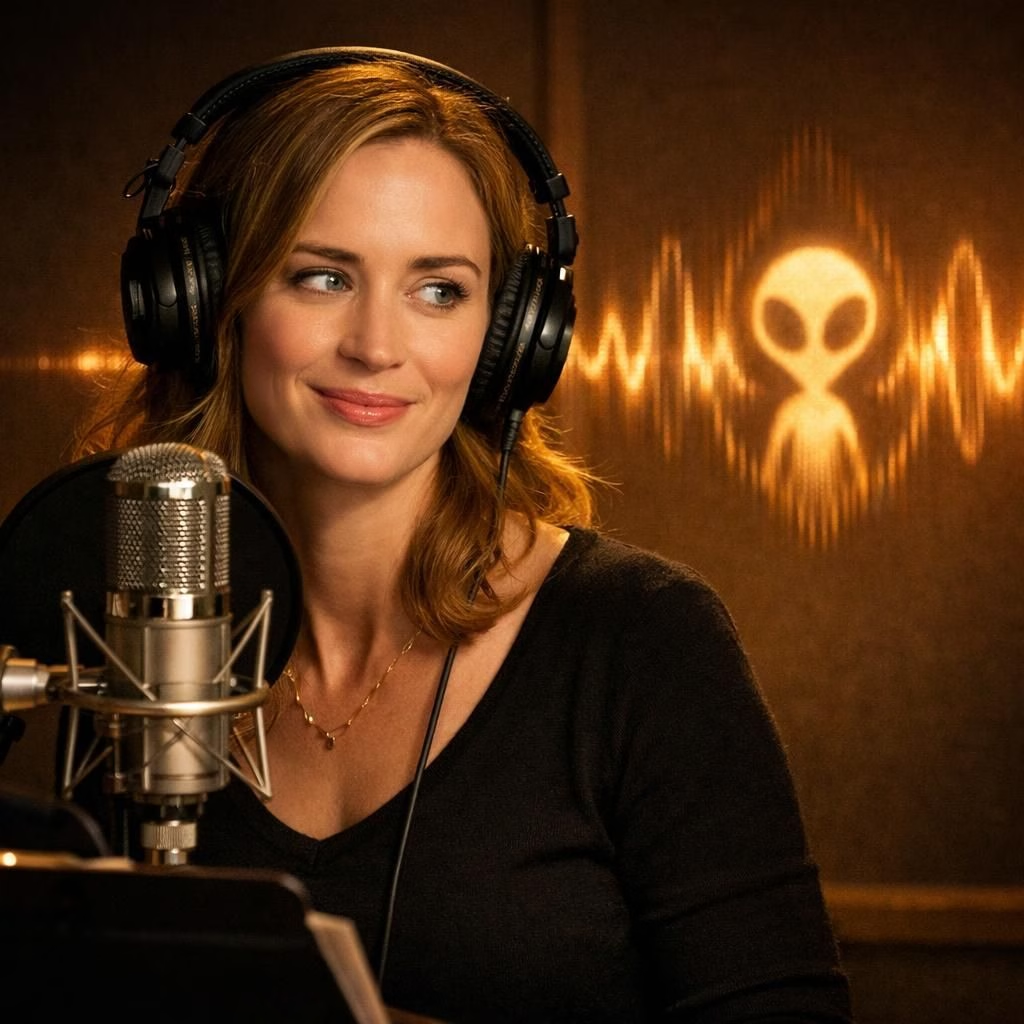
In a move many fans will call refreshingly human, Emily Blunt revealed she pressured Steven Spielberg to skip AI in film generated alien vocal effects for Disclosure Day. She insisted on recording the sounds herself, arguing that the creature’s voice should feel earned, not algorithmic. The duo tinkered with a buffet of noises—clicks, hums, Morse-like beeps, and a Barry White whisper—before the final blend finally emerged in the sound booth. This tale isn’t just about one actor’s preference; it quietly highlights two pillars of the modern set: AI in film and voice acting.
AI in film and voice acting: Blunt’s hands-on approach
Blunt described a kitchen-sink process that might amuse tech optimists and skeptics alike. She recorded dozens of textures in a sound booth, then sent rough sketches to Spielberg, who layered them, mixed them, and asked for a touch more mathematical without tipping into the terrifying. The result is a voice that feels tangible, not synthetic—an achievement that underscores the value of human craft within AI in film discussions, and celebrates voice acting as a craft rather than a shortcut.
Her enthusiasm wasn’t about ego; it was about the texture of listening. The voice she built demanded rhythm, breath, and a sense of mischief, not a single controlled algorithm. When Spielberg finally approved the blend, it felt earned, not manufactured. The process underscored a broader truth: AI in film can assist, but human artistry should steer the ship, especially in the domain of voice acting where nuance lives in small, deliberate movements of the larynx and timing of a whisper.
AI in film and voice acting: Industry concerns meet creativity
The final alien voice, Blunt explained, is not a single take but a mosaic: multiple sounds recorded separately, then stacked in layers. She mixed clicking, humming, and a low singing that owes something to Barry White while also hinting Morse code. Spielberg’s aim—to sound mathematical without being frightening—found its match in her studio sessions, proving that hands-on vocal artistry can coexist with cutting-edge tools. It’s a reminder that the most lasting alien vowels often come from human curiosity, curiosity that resists letting a keyboard replace a heartbeat.
Blunt’s stance aligns with broader worries about AI in film and beyond. In a September 2025 Variety interview, she warned agencies against turning performers into replaceable assets. She told USA Today that AI is a very scary bubble and compared it to inviting a drug dealer into the house. The language is blunt, but the message is hopeful: consent, transparency, and fair licensing keep human connection at the center of production.
In the broader industry chatter, creative professionals push back against unchecked automation. The concern isn’t merely about cheaper voices; it’s about the erosion of craft, the loss of chance for a fresh take, and the risk of reviving stale voices without real performers present. The use of AI in film raises practical questions: who owns a digital likeness, when is it acceptable to reuse a recording, and how do studios fairly compensate artists for digital appearances? The discussion continues, with AI in film often serving as a banner for both innovation and ethical debate.
Beyond Blunt, other high-profile names are taking steps to protect identity. Matthew McConaughey has reportedly secured trademarks for his likeness and well-known phrases, a move that makes clear a performer’s ongoing right to control representation. Taylor Swift and Lionel Richie have also filed trademark applications around likenesses tied to their brand personas. The message is consistent: while AI can speed up processes, it should not erase the unique signature an artist brings to a performance. The term AI in film recurs as a shorthand for a balancing act between innovation and accountability in the creative industries.
Disclosure Day, which was released last week, features Blunt with a strong cast, including Josh O’Connor, Colin Firth, Colman Domingo, and Eve Hewson. The production reportedly used traditional Foley and Blunt’s own vocal experiments rather than leaning on a fully AI-driven pipeline. The result is a performance that feels grounded in emotional truth, even as the setting projects a future full of possibility. The blending of hands-on voice work with modern production tools illustrates how AI in film can coexist with classic acting sensibilities, provided there are guardrails and clear consent.
As conversations about AI in film move from buzzwords to practice, studios, unions, and talent managers push for practical safeguards. Some projects leverage AI to handle repetitive tasks, but many creators insist on transparent licensing and revenue-sharing arrangements when digital likeness appears in a film or series. The core insight remains simple: successful AI integration respects the artist, honors the audience, and preserves the essence of human creativity that voice acting thrives on. The heart of the matter is not fear but thoughtful collaboration between technology and talent.
Ultimately, Blunt’s experience on Disclosure Day offers a sunny reminder: when performers stay hands-on, audiences feel it. The movie benefits from a voice that breathes, glitches, and glides with a natural cadence—one that a microphone and a human actor can craft far better than a cold algorithm. The project demonstrates that AI in film and voice acting can coexist in a way that keeps the art of performance central, not sidelined behind a glowing control panel.
We invite you to weigh in with your thoughts on this evolving conversation. How should voice acting and AI in film shape the next wave of storytelling? What boundaries would you insist upon to protect artistry and consent?
Practical steps for producers and performers
- Establish clear licensing terms for digital likenesses, with fair compensation and duration limits.
- Require transparent consent processes and ongoing rights management when AI tools are used in production.
- Maintain human oversight in vocal performances and ensure traditional Foley and voice work are valued alongside technology.
FAQ: AI in film and voice acting
- What does Blunt’s stance mean for AI in film? It signals a preference for human vocal artistry and careful licensing, showing that AI can be a tool but not a replacement for craft.
- How can actors protect their voices and likenesses? By pursuing trademarks, clear contracts, and licensing agreements that define when and how digital representations may be used.
- What should audiences expect from future productions? A balance where technology assists, but human nuance and consent remain central to storytelling.
Ultimately, Blunt’s experience on Disclosure Day offers a sunny reminder: when performers stay hands-on, audiences feel it. The movie benefits from a voice that breathes, glitches, and glides with a natural cadence—one that a microphone and a human actor can craft far better than a cold algorithm. The example suggests AI in film and voice acting can coexist with guardrails and consent, keeping the art of performance central.