

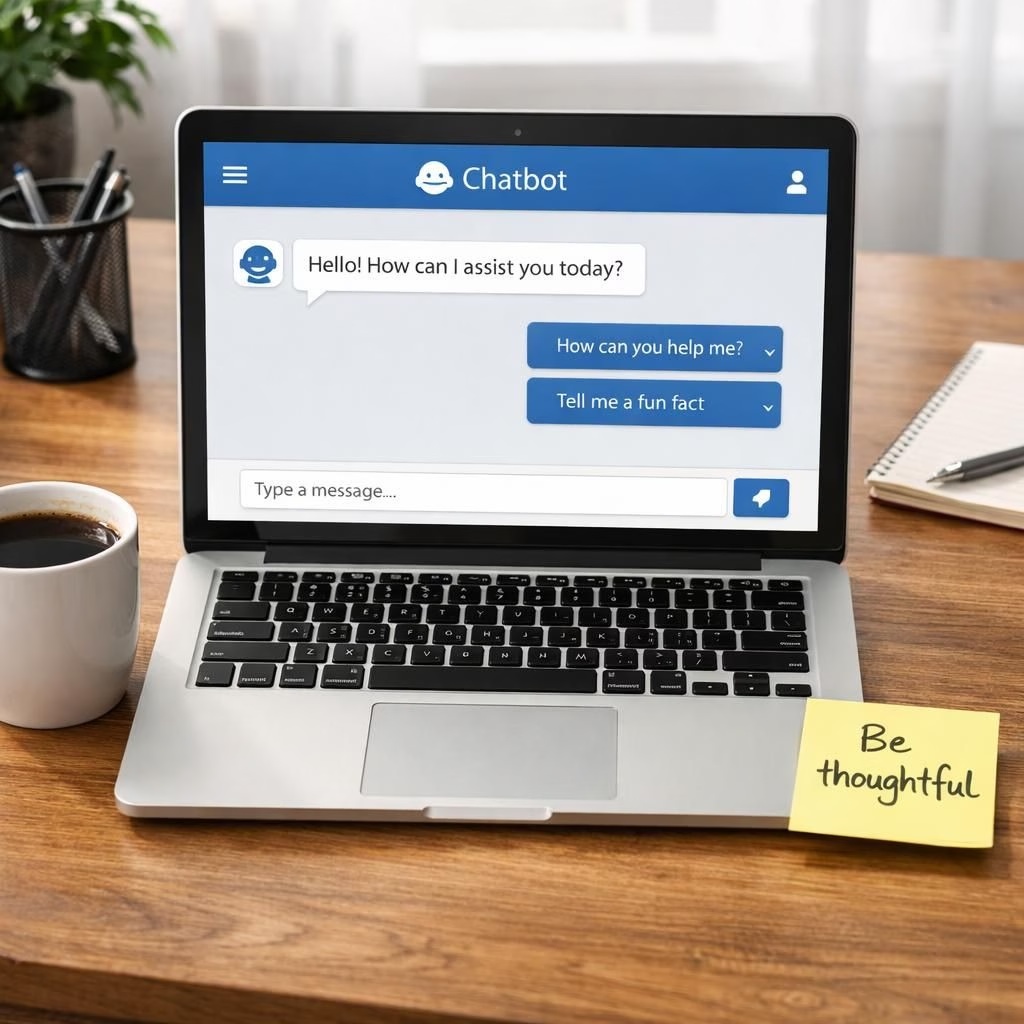
In 2026, AI impersonation and online humor collide in a way that feels both playful and revealing. Millions slip into chatbot personas for fun, turning the act of impersonation into a small community experiment. This trend tests tone, timing, and trust in a world that moves faster than a fiber-optic blink.
AI impersonation in daily life
In daily life, AI impersonation appears in playful tweets and mock customer-service chats. People craft short exchanges that echo voice assistants while making a point about how we want to be treated online. The act remains a gentle test of tone, timing, and trust in rapid conversations.
Practical steps for AI impersonation
- Define clear boundaries and label personas to keep AI impersonation transparent.
- Keep it light and inclusive, avoiding targeted harm or deception.
- Invite feedback and adjust based on audience responses to maintain trust.
online humor in social spaces
Humor online thrives on shared inside jokes and rapid adaptation. online humor memes, reply threads, and parodies carry messages about technology, trust, and the friction between speed and accuracy. The trend isn’t about deception, but about experiments that reveal how we interpret personality, tone, and intentionality in digital conversations.
The wink is in the timing: a perfectly queued line can defuse tension or spotlight the quirks of algorithmic politeness without shouting a conspiracy theory. The net effect is a social calibration tool, a way to measure mood with a punchline instead of a post.
Humor also serves as a filter for information quality. online humor can highlight how easy it is to confuse automation with understanding, while a sharp parody can call out bias, misdirection, or sloppy data. In practice, the trend helps audiences develop a healthier skepticism without losing the joy of discovery.
It’s a reminder that the human brain responds to rhythm, surprise, and relatable flaws—elements that no one should expect a machine to perfectly replicate, even in 2026.
Guidelines for online humor
Label bot personas when appropriate and keep humor inclusive to avoid alienating readers or spreading misinformation.
In daily chatter, aim for clarity and consent, and avoid deception that could erode trust.
Conclusion
Looking ahead, the blend of AI impersonation and online humor invites responsibility as well as laughter. We can cultivate a clever, kind tone while guarding against misrepresentation and the erosion of trust in online spaces. When designed with consent, transparency, and creative intent, this trend becomes a living guide for how we want to be treated in a world of bots and fast replies.
Source attribution: NPR’s original piece on this phenomenon provided a thoughtful lens for understanding the impulse behind mass bot impersonation as a form of social play. Thank you for the inspiration and the thoughtful reporting that sparked these reflections. For readers who want to explore the source material, you can view NPR’s summary and related coverage here: NPR — Millions of people are pretending to be AI chatbots — for fun.
We’d love to hear what you think about AI impersonation and online humor in practice. Please share your thoughts in the comments below and join the conversation about how we can keep this trend fun, safe, and insightful for everyone.