

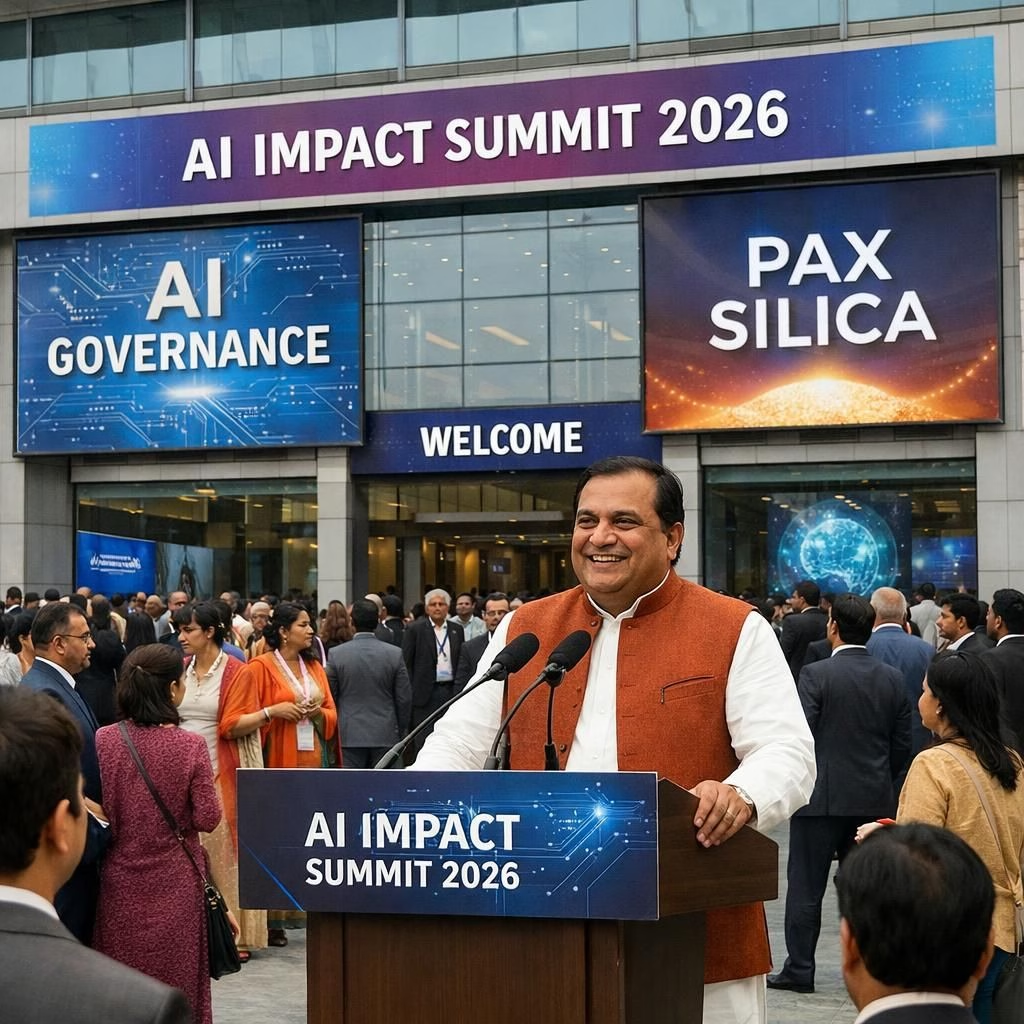
At India’s AI Impact Summit, the mood was unusually sunny for policy talk as delegates discussed AI Governance and the AI Impact Summit with a grin. IT Minister Ashwini Vaishnaw noted near-universal consensus about a joint declaration on global AI governance, and he joked about maximizing the number of signatories while keeping the tone transparent and practical.
AI Governance Sparks Global Dialogue at the AI Impact Summit
From the opening banners to hallway chatter, the event delivered a rare mix of ceremony and street-smart pragmatism. The Pax Silica Declaration with the United States signaled a deeper tie in semiconductor supply chains, digital infrastructure, and cross-border tech standards. AI Impact Summit conversations also centered on practical collaboration between policymakers and industry leaders, with OpenAI’s Sam Altman meeting Prime Minister Modi in a moment many described as policy meets platform where ideas got a good caffeinated push.
On the partnerships front, Andhra Pradesh announced a bold collaboration with IBM to skill one lakh youths in AI, cybersecurity, and quantum computing over the next three to five years. The Letter of Intent formalizing the plan was signed during the AI Impact Summit, and attendees heard that the program would mix structured training with hands-on labs and industry-aligned certifications that actually lead to jobs.
Amid the tech spectacle, politics intruded in a memorable way: Indian Youth Congress workers staged a shirtless protest at the Bharat Mandapam, drawing cross-party criticism and a swift security response. Supporters framed the act as a democratic expression; critics argued it risked India’s image on the world stage. The episode echoed the broader tension between youthful energy and statecraft at a gathering built on global optics.
Security hardened as delegations multiplied and reporters swarmed the venue. Officials noted a robust posture to protect participants and the process, while diplomats teased that Pax Silica-like collaborations may become the new normal for dealing with semiconductors, digital infrastructure, and shared standards. The mood remained constructive, with attendees praising transparency and the willingness to discuss contours of policy in public-facing forums.
The Modi-Altman moment and a wave of bilateral engagements dominated the news cycle inside the hall, and the atmosphere suggested that governments and tech firms can walk in step if there is accountability and practical regulation. Leaders highlighted the importance of scalable, globally competitive products that also respect digital sovereignty. The takeaway: governance and innovation can coexist and even cooperate when parties share a clear sense of purpose and a dash of good humor.
Beyond the ceremonial filings, industry voices suggested the declarations could evolve into living frameworks, inviting ongoing multilateral input. The talks stressed a balanced approach: guardrails against misuse, interoperable standards that ease cross-border tech trade, and open channels for continuous dialogue. The summit also reinforced the link between big policy and practical training, with Andhra Pradesh’s program serving as a test case for how talent pipelines meet real-world demand. AI Governance experts see this as a turning point for how governments and industry co-create talent pipelines that match real-world needs.
As the five-day crescendo winds down, the message is clear: AI Governance is not a vacation from ambition but a compass for it. The Pax Silica momentum, the deepening U.S.-India tech partnership, and the surge of international participation point toward an era where governance accelerates deployment while keeping safety at the steering wheel. AI Governance and innovation can coexist and reinforce each other when there is a shared sense of purpose and cautious optimism. The mood reflected a cautious confidence that policy can keep pace with rapid technical change.
In short, the India AI Impact Summit 2026 delivered a blend of spectacle, policy, and practical steps that could help nations ride the AI wave without losing the shore. If you enjoy a narrative that blends policy with progress, you’ve got it here: a federation of ideas, partnerships, and people ready to co-create the next chapter of responsible technology.
We invite readers to share their thoughts in the comments. Your perspectives help shape the conversation and we’d love to hear your take on how AI Governance should balance innovation with safety.
Original article: Thank you to the original publication for coverage at https://originalsource.example.com/article/india-ai-impact-summit-2026
AI Impact Summit: Global participation and partnerships
During the event, delegates underscored how AI Impact Summit momentum can translate into practical, cross-border cooperation. The discussions highlighted scalable products, interoperable standards, and responsible AI adoption across sectors such as health, education, and industry. The gathering also showcased how international partners are aligning on a shared vision for governance that supports deployment without compromising safety.
Key outcomes and immediate next steps at the AI Impact Summit
- Designing guardrails that reduce misuse while preserving innovation in AI systems and products.
- Expanding talent pipelines through state-civic partnerships like the Andhra Pradesh-IBM program to train 1 lakh youth in AI-related fields.
- Advancing open, interoperable standards to ease cross-border collaboration and trade in digital infrastructure.
Practical steps for readers and organizations
To put the discussions into action, consider these steps: map your organization’s AI risk profile, adopt clear governance policies, and invest in transparent data handling and model governance. Emphasize AI Governance by setting measurable safety targets and public accountability. For teams evaluating partnerships, review alignment with AI Governance principles before adopting new technologies that touch users’ lives.
FAQ
- What is the Pax Silica momentum? It refers to efforts to strengthen the semiconductor supply chain and digital infrastructure in a trusted, global framework. This aligns with AI Governance goals for secure tech collaboration and responsible deployment.
- How can governments balance innovation with safety in the AI Impact Summit context? By establishing clear guardrails, interoperable standards, and ongoing multilateral dialogue that invites industry input.
- What role do skills programs play in AI Governance? They bridge the gap between policy and practice, ensuring a steady pipeline of talent ready to build and govern advanced AI technologies.
Conclusion and next steps
The India AI Impact Summit 2026 demonstrated how AI Governance can coexist with bold innovation. As global participation grows, the emphasis on practical training, transparent policy, and trustworthy collaboration is likely to shape future deployments. The path ahead combines ambition with accountability, so nations and firms can advance together.
References
- Times of India live blog on the India AI Impact Summit 2026
- NITI Aayog: National Strategy for Artificial Intelligence
- OECD AI Principles