

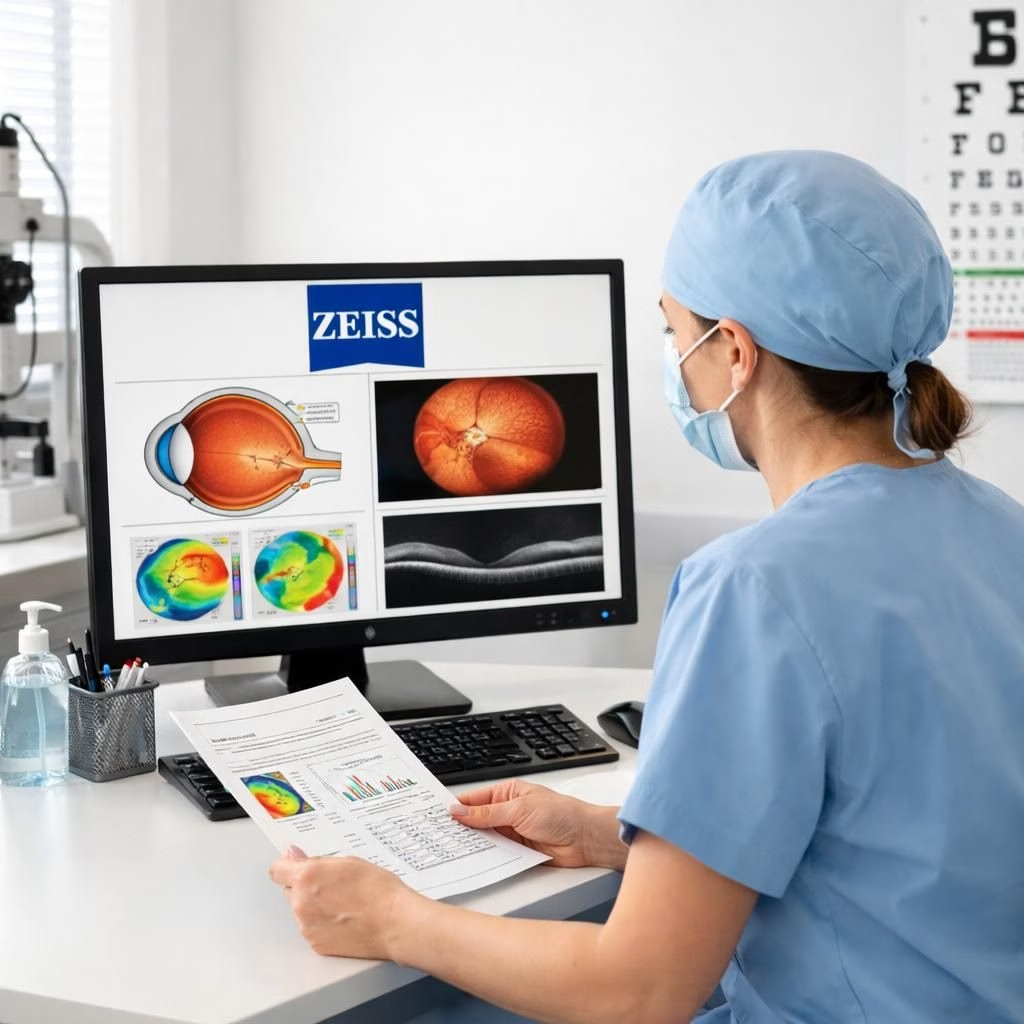
In Washington, D.C., April 10–12, 2026, ZEISS Medical Technology rolled out a practical lineup of digital and surgical tools. The tone is upbeat but grounded, with a clear aim: better patient outcomes and smoother workflows. This is a moment for AI-powered ophthalmology to step into the clinic with a light touch and a heavy dose of reliability. It is also a moment for Collaborative Care to become a shared language among doctors, staff, and patients. The message is straightforward: upgrades for cataract, refractive, and retinal surgery workflows will blend software, hardware, and governance into a single ecosystem.
AI-powered ophthalmology: ZEISS at ASCRS 2026
The DORC EVA NEXUS ecosystem gains expanded irrigation/aspiration handpieces, tips, and sleeves manufactured by MST. These options offer more single-use and reusable choices, support a broader range of incision sizes, and improve sustainability.
For surgeons, that means fewer bottlenecks and more time with the patient in focus. The ZEISS IOLMaster 700 gains a broader toolkit: Kane Suite for enhanced calculations and an upgraded Barrett Suite with two additional formulas. Security updates bolster patient data safety and compliance. New formulas join VERACITY Surgery Planner, including Barrett RX and an AI IOL Calculator for post-LVC patients. The updated suite improves toric IOL calculations in complex cases and aids post-LVC cataract management.
Beyond hardware, AI-powered ophthalmology features begin to thread through the care pathway, from intake to diagnostics to planning. The goal is to reduce guesswork and improve predictability in outcomes. The result is smoother operations and clearer communication for patients and teams alike.
Collaborative Care: Cloud-based coordination for patient journeys
ZEISS VisioGen debuts as a governed, AI-assisted patient engagement platform. It captures patient demand around the clock, while keeping humans in the loop to review responses. The system helps clinics answer common questions and guide patients toward evaluations across cataract, refractive, and premium procedure pathways. Governance minimizes variability, supports compliance, and protects the brand’s trusted voice.
In tandem, ZEISS Collaborative Care arrives as a browser-based collaboration tool. It enables eye care professionals to share data securely, refer patients, and coordinate across providers. Built on the ZEISS Health Data Platform, it can function as a standalone cloud service or blend with ZEISS FORUM data management. The aim is reduced fragmentation and a coherent patient journey as care moves across settings. The cloud enables stronger, cross-provider coordination and more efficient workflows.
ZEISS previews CLINIC 360, an all-in-one analytics solution that aggregates clinical data at scale to power advanced ophthalmic workflows. It’s pending 510(k) clearance and not yet available in the U.S., but the preview invites clinics to imagine the potential of real-time analytics for scheduling, throughput, and outcomes.
As ZEISS celebrates a century in the U.S., the message remains practical. The company’s long history of R&D translates into tangible improvements for today’s clinics. The first surgical microscope of 1953 evolved into today’s integrated AI and cloud-enabled tools, with robotics and ergonomics enhancing patient outcomes and surgeon comfort. The centennial milestone is a reminder that consistent engineering and clinical insight yield durable advances. AI-powered ophthalmology and Collaborative Care continuing to evolve in meaningful, tested ways.
In short, the ASCRS 2026 lineup shows ZEISS turning technology into practical workflows. The DORC EVA NEXUS expansion broadens instrument options, the IOLMaster 700 gains advanced calculation suites, VisioGen adds governance-aware patient engagement, and Collaborative Care with CLINIC 360 sketches a future of cross-provider coordination and analytics. The result is a more connected, efficient, and patient-centered ophthalmology ecosystem that respects safety, compliance, and the realities of busy clinics.
We invite readers to share their thoughts in the comments below. Original source materials and a heartfelt thank you to ZEISS for the material behind this article: ZEISS press release and related materials.
AI-powered ophthalmology: practical steps for clinics
- Align tools with workflow: map how DORC EVA NEXUS components integrate with existing cataract and refractive procedures.
- Leverage advanced planning: use Kane Suite, Barrett Suite, and VERACITY planning for more precise IOL calculations.
- Engage patients responsibly: deploy VisioGen with governance to balance accessibility and safety.
- Coordinate care across teams: adopt Collaborative Care and CLINIC 360 for seamless data sharing and analytics.
Frequently asked questions
- What is ZEISS VisioGen? A governance-aware, AI-assisted patient engagement platform designed for ophthalmology practices, operating around the clock with human oversight.
- What will CLINIC 360 offer? Real-time analytics and scalable data aggregation to optimize scheduling, throughput, and outcomes (product pending clearance in the U.S.).
- Are these tools available in the United States now? Some components are in deployment or pilot phases; others align with regulatory clearances and regional approvals.
- Why is Collaborative Care important for clinics? It enables secure data sharing, referrals, and coordinated care across providers, improving the patient journey.
In wrapping up, ZEISS continues translating research into practical tools that fit busy ophthalmology practices, reinforcing a century-long commitment to safer, more efficient care.
References
- Original source: ZEISS advances connected cataract and refractive workflows (PR Newswire)
- ASCRS conference information: American Society of Cataract and Refractive Surgery
- ZEISS Medical Technology: ZEISS Medical Technology