

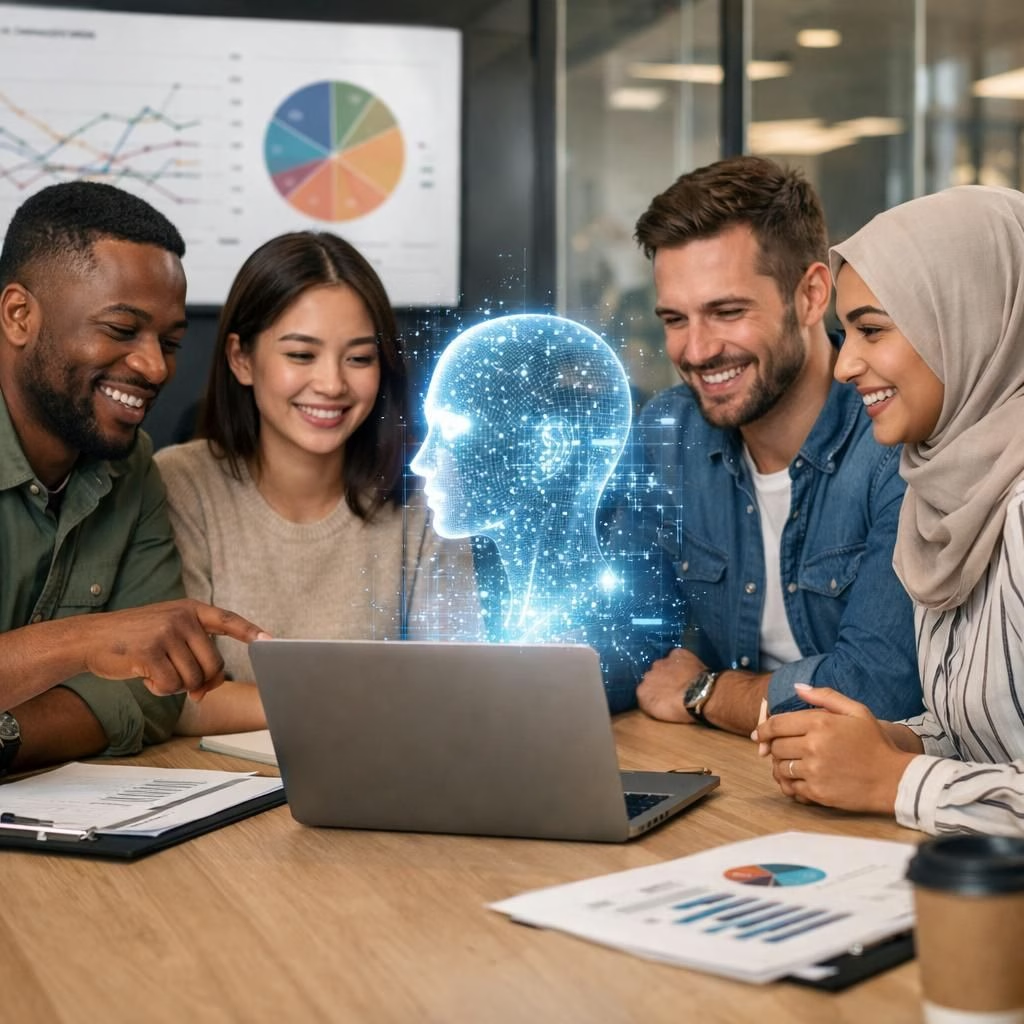
AI is redefining how we work, and Anthropic‘s real-world study tracks this shift in the wild. The Claude model is observed across millions of worker interactions, mapped against O*NET tasks.
The takeaway is clear: AI exposure is highest in roles tied to language, writing, analysis, and digital communication. Anthropic‘s researchers show this pattern across many occupations.
Importantly, the study highlights augmentation over automation. Productivity grows when Anthropic tools aid work rather than replace it, and this trend extends into 2026.
In plain terms, AI acts as a cooperative partner for workers across coding, writing, data interpretation, and reporting.
- AI-assisted coding helps speed up task completion while humans stay in the loop.
- Content creation benefits from drafting and editing aided by Anthropic tools, with final edits by people.
- Data interpretation is sharper when AI flags patterns and humans confirm conclusions.
Across tasks, the numbers tell the story: about 57% of AI usage augments work, while 43% automates parts of a task. That split matters because it signals a future where humans and machines trade tasks, not a world where humans stand idle while machines do everything.
AI in Everyday Tasks — Anthropic’s Insights
In plain terms, AI is not here to steal your job. It acts as a cooperative partner. In occupations tied to coding, writing, data interpretation, and reports, AI tools show high engagement. Programmers use AI to suggest code, debug hints, and generate boilerplate, while humans review and refine. Writers leverage AI to draft, summarize, and polish, but still decide the voice and direction. Researchers use AI to sift through data, propose hypotheses, and assemble findings for quick readouts. The Anthropic researchers emphasize that AI events typically augment tasks rather than replace entire job responsibilities.
- AI-assisted coding helps speed up task completion while humans stay in the loop.
- Content creation benefits from drafting and editing aided by Anthropic tools, with final edits by people.
- Data interpretation is sharper when AI flags patterns and humans confirm conclusions.
Across tasks, the numbers tell the story: about 57% of AI usage augments work, while 43% automates parts of a task. That split matters because it signals a future where humans and machines share tasks, not a world where humans stand idle while machines do everything.
AI-Driven Patterns Across Industries — Anthropic View
The strongest activity shows up in tech/software, publishing/media, communications/marketing, and data analytics. Each area features recurring language processing, code generation, dashboards, and report generation. Anthropic data illustrates the pattern across these sectors.
In contrast, exposure is lower in hands-on, people-facing roles such as construction workers, electricians, plumbers, and some healthcare support jobs. The practical reason is that physical work and direct human interaction pose harder constraints for AI at present.
Still, there is room for optimism. Teams that embrace AI tend to rethink workflows, not just replace tasks. People who learn to curate AI outputs gain a competitive edge and can shift into advisory roles where human judgment matters most. That shift aligns with the broader forecast that automation reshapes jobs more than it erases them, a pattern economists have long anticipated and now reinforced by real-world data.
Anthropic View on AI and Work
For workers, the takeaway is pragmatic: augmentation is the norm, and opportunities grow as tasks evolve. This aligns with the view that automation reshapes jobs rather than eliminates them, a stance long discussed by economists and now supported by the real-world data from Anthropic.
- Upskill on AI interaction, data literacy, and ethical judgment.
- Let Anthropic tools handle repetitive tasks so humans can tackle higher-value work.
- Keep a human in the loop for nuance, ethics, and context.
Industries with strongest AI activity skew toward tech/software, publishing/media, communications/marketing, and data analytics. Fields with lower exposure include many hands-on, people-facing roles. That said, new roles—such as AI workflow designers, data storytelling specialists, and AI governance coordinators—are already emerging as teams adapt to the new toolbox. The trend is clear: AI is not a black hole but a new collaborative space for work.
For readers curious about the underlying data, Anthropic‘s approach—tracking real-world usage and mapping it to O*NET classifications—offers a transparent view of how Claude intersects with jobs. The big takeaway is pragmatic: AI boosts productivity where it fits, while automation takes on routine parts of tasks. The combined effect is a reshaped job market that still values human creativity, communication, and judgment.
This post is inspired by and grateful for the original analysis from the team at Anthropic and their data-backed exploration of AI usage across occupations. Linkback and gratitude to the original article and source material below.
Original article credit and thank you: Special thanks to Business Insider for reporting on Anthropic AI usage study — Business Insider.
We’d love to hear your thoughts and experiences with AI in your work—share them in the comments below.
References
- Times of India: Is your job safe from AI? Anthropic graph reveals the roles that may be most at risk
For broader context, see World Economic Forum: The Future of Jobs and McKinsey: Automation and the labor market.